Imagine if doctors could predict mental disorders before they even manifest—just like a weather forecast warns us of an upcoming storm. That’s exactly what the new AI tool NeuroTree aims to do by analyzing brain patterns through fMRI scans. This revolutionary approach could open the door to proactive mental health care, allowing for interventions long before symptoms take hold.
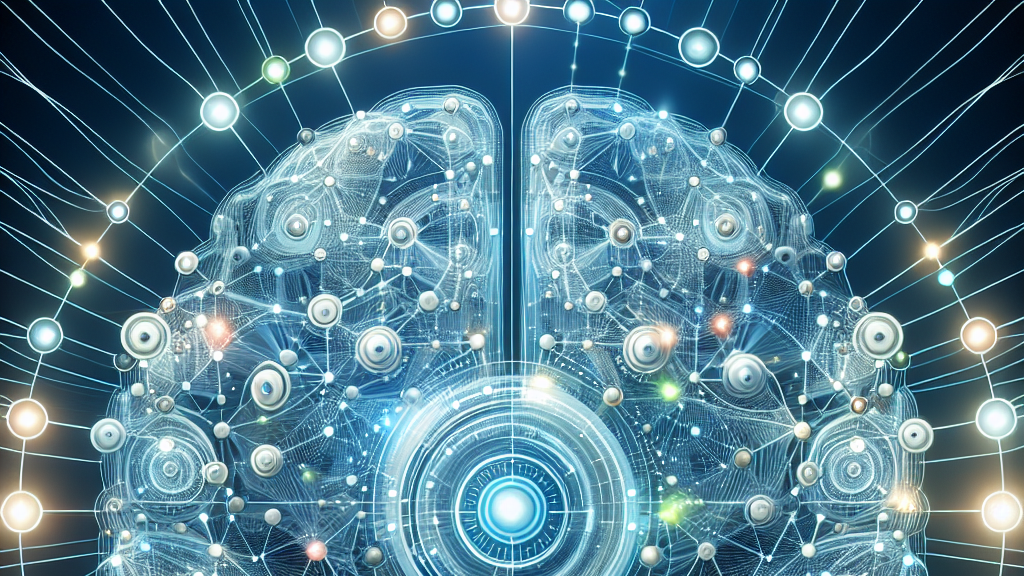
NeuroTree is a cutting-edge technology that combines advanced graph convolutional networks with neural ordinary differential equations. Essentially, it uses AI to map out the complex interactions between different parts of the brain. This approach not only captures existing brain connections but also deciphers how these connections change over time, which is key to understanding psychiatric conditions. By transforming these brain networks into tree-like structures, NeuroTree enhances our ability to recognize patterns linked to different mental disorders.
Think about the potential impact: NeuroTree could help doctors create personalized treatment plans for individuals based on their unique brain patterns. Imagine knowing which mental health issues you might be at risk of and taking proactive steps to maintain your well-being. This is the future NeuroTree is leading us towards—an era where mental health care is as proactive as it is reactive.
Did you know? NeuroTree can deconstruct brain activity into ‘tree structures’ that reveal how different brain regions communicate, helping predict and understand psychiatric disorders.
FAQs
What is NeuroTree and how does it work?
NeuroTree is a pioneering AI framework that uses fMRI scans to analyze brain patterns. It leverages advanced algorithms to transform complex brain interactions into interpretable tree structures, which helps in understanding and predicting psychiatric disorders.
How does NeuroTree improve mental health care?
By predicting potential mental disorders early, NeuroTree allows for proactive interventions. This personalized approach can lead to tailored treatment plans, reducing the likelihood of severe mental health episodes.
Why is understanding brain networks important for mental health?
Brain networks are the pathways through which different brain regions communicate. Understanding these connections can reveal patterns linked to psychiatric conditions, thereby aiding in diagnosis and treatment.
What makes NeuroTree different from other AI models?
Unlike traditional models, NeuroTree uses an attention mechanism to optimize functional connectivity, allowing it to capture dynamic changes in brain networks and provide insights into high-order brain pathways.
Can NeuroTree help with age-related mental health issues?
Yes, NeuroTree’s ability to decode age-related patterns in brain activity means it can offer valuable insights into age-related mental health issues, potentially improving care for the elderly.
Background
Functional magnetic resonance imaging (fMRI) allows researchers to visualize brain activity by measuring changes in blood flow, effectively mapping out which areas of the brain are active during certain tasks or at rest. This detailed insight is crucial for understanding brain disorders, as it helps identify how different brain regions communicate. Graph convolutional networks (GCNs) are advanced AI models that can analyze these complex networks. However, traditional GCNs struggle to capture the dynamic and high-order interactions necessary for understanding mental disorders.
History
The study of brain networks using fMRI began in the late 1990s, providing a non-invasive tool to explore the human brain’s functional architecture. Graph-based methods like GCNs have gained traction in recent years for their ability to handle complex data, yet they often miss out on dynamic changes crucial for mental health applications. NeuroTree builds on these foundations by integrating neural ordinary differential equations, which allow for the continuous capture of evolving brain network patterns.
Based on “NeuroTree: Hierarchical Functional Brain Pathway Decoding for Mental Health Disorders” by Jun-En Ding, Dongsheng Luo, Anna Zilverstand, Feng Liu, available on arXiv (arxiv.org/abs/2502.18786), used under CC BY 4.0 (creativecommons.org/licenses/by/4.0/).