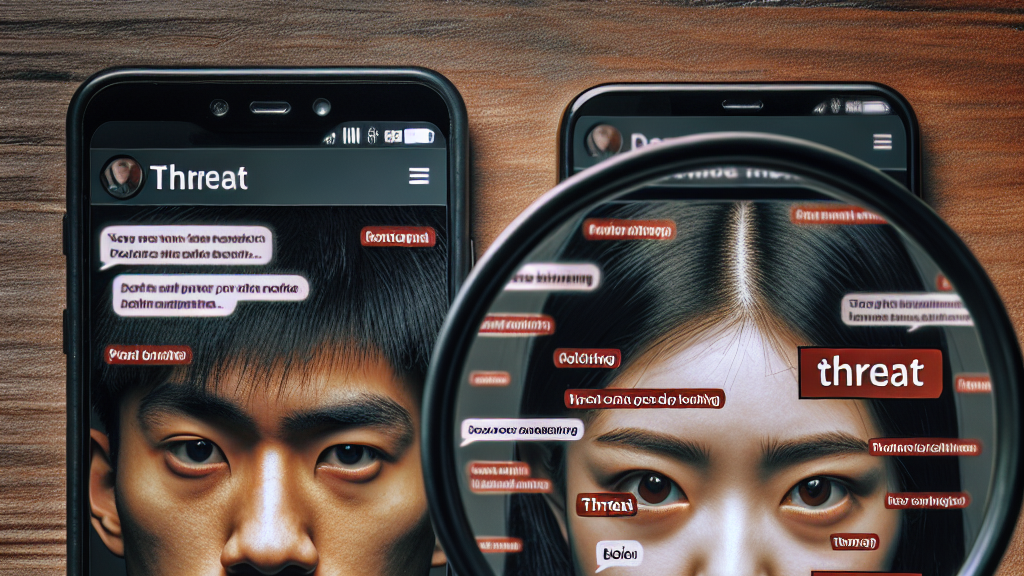
Social media can be like a bustling city street—full of life, connection, and unfortunately, danger. While most of us scroll past harmless cat videos and updates from friends, hidden threats may lurk just beneath the surface. Many platforms are still struggling to effectively catch and manage violent threats, which can range from political threats to more personal, harmful content.
The game-changer here is a groundbreaking dataset of 30,000 social media posts meticulously categorized for violent threats. This dataset is like a giant microscope, revealing dangerous content that may otherwise slip through the cracks. Researchers used this dataset in combination with comments from YouTube to see if they could train machines to correctly identify violent threats. The results were impressive, showing high accuracy even when the data came from different platforms. This means that we may soon have smarter tools to detect harmful content across the internet.
Imagine a future where social media platforms can proactively remove threats before they ever reach your newsfeed, making your online experience safer and less stressful. Perhaps your favorite social media site could even send alerts to authorities about potential dangers in real time. This kind of technology could revolutionize how we interact online, ensuring our virtual spaces are places of trust and safety.
Did you know that every minute, over 500 hours of video are uploaded to YouTube? That’s a lot of content to keep safe from violent threats!
FAQs
How does this social media research help with violent threats?
The research uses a new dataset to train machine learning models to identify and classify violent threats more accurately, making online platforms safer.
Why is a cross-platform dataset important for threat detection?
Cross-platform datasets provide a broader view by combining information from different social media platforms, increasing the effectiveness of threat detection across the internet.
What do machine learning models learn from this dataset?
The models learn to recognize patterns and identify different types of violent threats, such as political or sexual violence, which can improve automated moderation.
Can this research prevent real-world harm?
Yes, by detecting and managing violent threats more efficiently, it can reduce the risk of real-world harm by alerting authorities or preventing harmful content from spreading.
Will this make my online experience safer?
Absolutely! Improved threat detection means less exposure to harmful content, creating a more secure virtual environment for everyone.
Background
Social media platforms often struggle with the enormous volume of content that needs moderation. Identifying violent threats is like finding a needle in a haystack. Machine learning, a type of artificial intelligence, can help by identifying patterns in data to automatically classify harmful content. However, the effectiveness of machine learning depends heavily on having a large and diverse dataset to learn from, which is where this study contributes significantly.
History
Over the years, social media platforms have attempted various strategies to combat violent threats, from manual moderation to employing artificial intelligence. Previous studies have mostly focused on homogeneous datasets from one platform, limiting their effectiveness. This new research builds on those efforts by using a cross-platform dataset, showcasing broader applicability and accuracy than ever before.
Based on “Cross-Platform Violence Detection on Social Media: A Dataset and Analysis” by Celia Chen, Scotty Beland, Ingo Burghardt, Jill Byczek, William J. Conway, Eric Cotugno, Sadaf Davre, Megan Fletcher, Rajesh Kumar Gnanasekaran, Kristin Hamilton, Marilyn Harbert, Jordan Heustis, Tanaya Jha, Emily Klein, Hayden Kramer, Alex Leitch, Jessica Perkins, Casi Sherman, Celia Sterrn, Logan Stevens, Rebecca Zarrella, Jennifer Golbeck, available on arXiv (arxiv.org/abs/2506.03312), used under CC BY 4.0 (creativecommons.org/licenses/by/4.0/).