Imagine a world where your gig work decisions are guided by AI, but the twist is that the AI doesn’t claim to have all the answers. Instead, it shows you its uncertainty upfront, letting you make informed choices. This might sound like science fiction, but it’s exactly what researchers are exploring: how AI can earn our trust by being honest about what it doesn’t know.
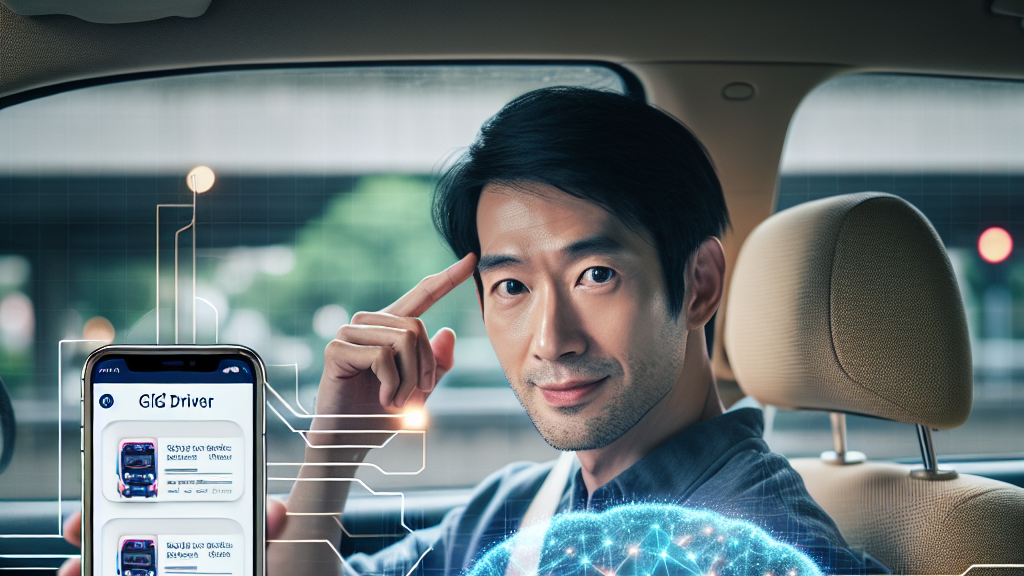
In a study involving gig drivers, researchers looked at how trust in AI recommendations changes over time. They found that when drivers saw the AI occasionally getting things wrong, but were also able to see why, they actually began to trust it more. The AI’s ability to display uncertainty helped drivers integrate it into their decision-making process, making them feel more in control and confident in the system.
This approach could revolutionize how we interact with technology. Imagine if all the apps we use every day – from choosing a movie to mapping a drive – were transparent about their limitations. By being upfront about uncertainty, we could make better choices, leading to a future where technology feels less like a black box and more like a reliable partner in our daily lives.
Did you know? Trust in AI can actually increase when it admits its own uncertainties!
FAQs
How does exposing AI’s uncertainty affect gig drivers’ trust?
Exposing AI’s uncertainty allows gig drivers to see the potential risks and benefits before making a decision, which enhances their trust in the technology. It’s like having a backup plan in case things don’t go as predicted.
Why is understanding AI trust important for gig work?
In gig work, decisions can often be high-stakes and frequent. Building trust in AI tools means drivers can rely on these tools for efficient and profitable decision-making, improving their work experience.
What role do drivers’ characteristics play in trusting AI?
Drivers’ personal experiences and decision-making styles influence how they perceive and trust AI recommendations. Understanding these characteristics helps tailor AI tools to better fit users’ needs.
Background
Artificial Intelligence (AI) decision aids are tools that help users make choices based on data-driven predictions. In this study, the focus is on gig drivers using an AI tool to receive schedule recommendations. Recognizing uncertainty is key – it means that the AI can show how sure (or unsure) it is about a predicted outcome to better guide decisions.
History
The concept of AI has long been used for decision aid, but only recently have researchers begun to understand its role in the gig economy. Earlier studies focused on AI’s accuracy, but this research builds on that by examining the impact of revealing AI’s uncertainties, a novel approach that could change technological trust dynamics.
Based on “Missing Pieces: How Do Designs that Expose Uncertainty Longitudinally Impact Trust in AI Decision Aids? An In Situ Study of Gig Drivers” by Rex Chen, Ruiyi Wang, Fei Fang, Norman Sadeh, available on arXiv (arxiv.org/abs/2404.06432), used under CC BY 4.0 (creativecommons.org/licenses/by/4.0/).