Connect with us

Search by keyword

Materials

Is Quantum Reality Shaping Our Decisions?

New insights suggest quantum mechanics might influence macroscopic decisions, giving a fresh perspective on how reality is formed during big events.

Is Quantum Reality Shaping Our Decisions
✨Researched by humans. Explained by robots. Learn more.

Have you ever wondered if our reality is influenced by the tiniest particles we’re made of? Recent research delves into how quantum mechanics, often thought to be just a microscopic world phenomenon, might have a say in shaping the decisions or outcomes we perceive in the larger world during significant events.

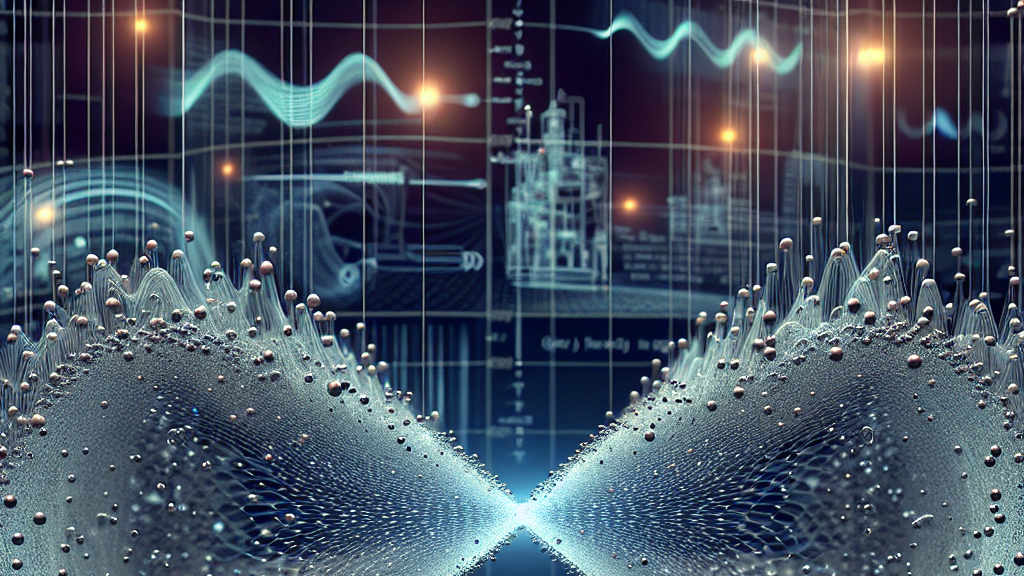
In a fascinating twist, scientists have built upon Schrödinger’s famous equation. Their approach combines two ideas: one that uses particles guided by waves and another that explains how particles might make waves collapse into specific realities. Think of it as a light guiding the path of a traveler while the traveler’s steps adjust the light’s direction. When a big measurement, like a decision point, occurs, this dance solidifies a more defined reality.

Imagine a world where each decision is like a pebble causing ripples in a pond. This research suggests those ripples are influenced by quantum mechanics, making you the Bohmian traveler, potentially changing the outcome by merely observing. It’s a mind-bending concept that could redefine how we think about cause and effect on a grand scale.

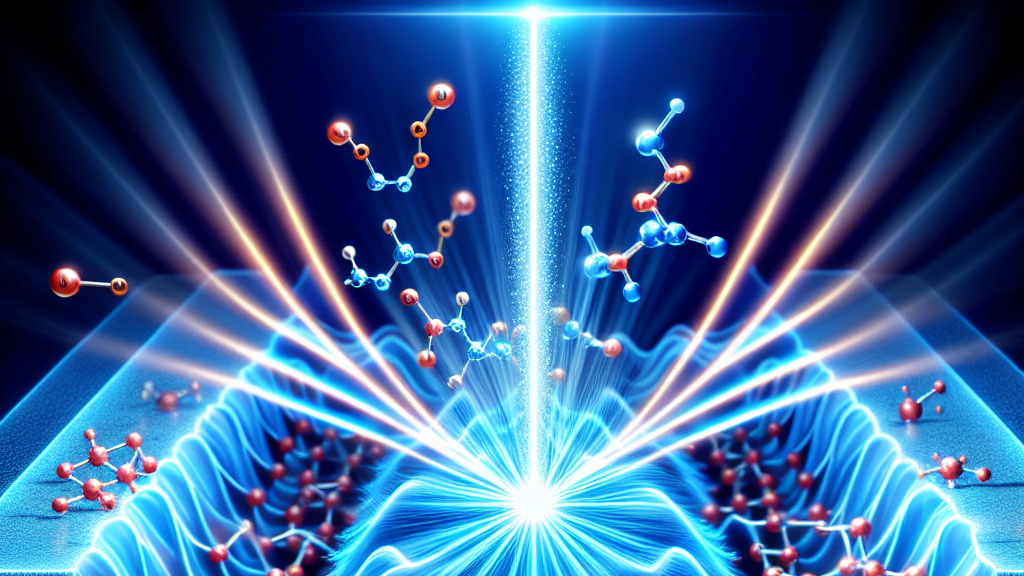
The double-slit experiment shows that observing particles can change how they behave, making quantum mechanics a mysterious blend of reality and possibility!

FAQs

How does quantum mechanics influence reality during macroscopic events?

Quantum mechanics suggests that even in large-scale events, the underlying quantum particles might guide and adjust realities, potentially affecting outcomes by influencing how measurement collapses wavefunctions.

What is the significance of incorporating Bohm-de Broglie pilot-wave ideas?

The Bohm-de Broglie pilot-wave theory provides a unique perspective by suggesting particles themselves might choose paths through guide waves, adding depth to our understanding of how waves and particles interact.

Why is the double-slit experiment important in this research?

It illustrates how measurement affects particle behavior, showing that decisions and outcomes at a larger scale could be influenced by quantum phenomena.

Can this theory change our understanding of decision-making?

Yes, if quantum mechanical foundations influence macro-level outcomes, it could introduce new ways of interpreting how decisions manifest from possibilities to realities.

How does this research affect conventional views on wavefunction collapse?

It proposes a model where wavefunctions naturally localize in macroscopic scenarios, offering a fresh angle on how reality stabilizes around certain states using quantum mechanics.

Background

Schrödinger’s equation is central to quantum mechanics, describing how the quantum state of a physical system changes over time. This study aims to expand it by incorporating real-world measurement impacts, blending concepts from the particle-following method of the Bohm-de Broglie theory and objective collapse that addresses how—and why—wavefunctions ‘collapse’ as seen in classical measurements.

History

For years, the debate about quantum mechanics has revolved around interpreting how particles exist in multiple states until observed. Early quantum theory primarily focused on particle-wave duality, sparking debates about observer effects. This study combines these classical ideas with a new theory, aiming to bridge the gap between unpredictable quantum behaviors and perceivable, stable realities.

Based on “Pilot-waves and copilot-particles: A novel approach to objective collapse” by Axel van de Walle, available on arXiv (arxiv.org/abs/2506.08168), used under CC BY 4.0 (creativecommons.org/licenses/by/4.0/).

Trending

Latest

Can AI Save Water Discover How

Computers

AI is transforming the tech world, but it uses lots of water! A new tool, SCARF, helps us measure and reduce AI's water footprint,...

Whats a Forbush Decrease and Why Should We Care Whats a Forbush Decrease and Why Should We Care

Space

Scientists just observed the biggest solar storm event in years, revealing unexpected cosmic ray patterns. Understanding these changes could help us protect our technology...

Can Cars Spot Danger Faster Than Humans Can Cars Spot Danger Faster Than Humans

Computers

Think about how quickly you react when something unexpected happens on the road. This research brings us closer to creating self-driving cars that can...

Can Fear of the Other Stop Social Harmony Can Fear of the Other Stop Social Harmony

Physics

Fear of the unknown might make it harder for people to agree and get along. This study shows that when people have strong xenophobic...

Can AI Revolutionize Breast Cancer Diagnosis Can AI Revolutionize Breast Cancer Diagnosis

Electricity

This research introduces a groundbreaking AI model that can accurately assess HER2-positive breast cancer using widely accessible staining methods, potentially revolutionizing how we diagnose...

Can AI Transform Your Singing into a Choir Can AI Transform Your Singing into a Choir

Computers

Imagine singing solo and having AI turn you into a choir. This research unveils a groundbreaking AI tool that transforms your voice into rich...

You May Also Like

Computers

Discover how language models might not be as random as we thought! By examining their decision-making processes, researchers found that these models can sometimes...

General Relativity and Quantum Cosmology

Imagine using a tabletop setup to mimic the intense gravitational effects of a black hole! These 'gravity simulators' are pushing the boundaries of what...

Computers

This research reveals how gig workers' trust in AI grows when uncertainty is embraced, changing how they approach gig decisions.

General Relativity and Quantum Cosmology

Scientists are bringing the mysteries of black holes into the lab by creating small-scale experiments that simulate their incredible gravitational forces. This means we...

Physics

Ever wondered where the universe decides to play by completely different rules? This research suggests the boundary between classical and quantum physics might not...

Computers

Discover why AI might struggle with making sharp decisions as the complexity of inputs grows and how a little tweak could make them smarter...

Physics

Scientists have found a way to use light to make a material, that normally behaves one way, act like it’s breaking the laws of...

General Relativity and Quantum Cosmology

Ever wondered what happens to information once it falls into a black hole? This thrilling research delves into the discrepancies of quantum theories and...

General Relativity and Quantum Cosmology

Did you know black holes might actually be cosmic time machines? This research reveals two new ways of looking at black holes, hinting they...

Copyright © 2024 8ig8rain.

Disclaimer: The content on 8ig8rain.com consists of AI-generated summaries of scientific abstracts from arXiv. Please note that most arXiv abstracts are preprints and may not have undergone formal peer review. While these summaries aim to convey key ideas and potential applications, they are provided for informational purposes only and should not be interpreted as validated scientific findings or professional advice. The summaries are intended to educate, spark curiosity, and inspire further exploration of science.