Imagine sitting in a crowded room, surrounded by conversation, yet every word feels like it’s being spoken directly to you. That’s the future that NeuroVoc is working towards! This groundbreaking system reconstructs sound in a way that could transform the hearing experience for cochlear implant users, making it closer to natural hearing.
NeuroVoc utilizes a technique where it takes the signals that mimic how the brain’s auditory nerves react to sound and translates them back into actual sounds that we can hear. It doesn’t stick to one method; it can be easily adapted to various hearing models. This means researchers can directly compare how different hearing models process sound, leading to even more personalized and effective hearing aids over time.
In real-world terms, think of the clarity you experience when watching a movie with surround sound—NeuroVoc aims to make everyday listening that immersive for cochlear implant users. By understanding and replicating how our brains naturally process sound, this innovation could make it easier for individuals to follow conversations in noisy places, enhancing their overall quality of life.
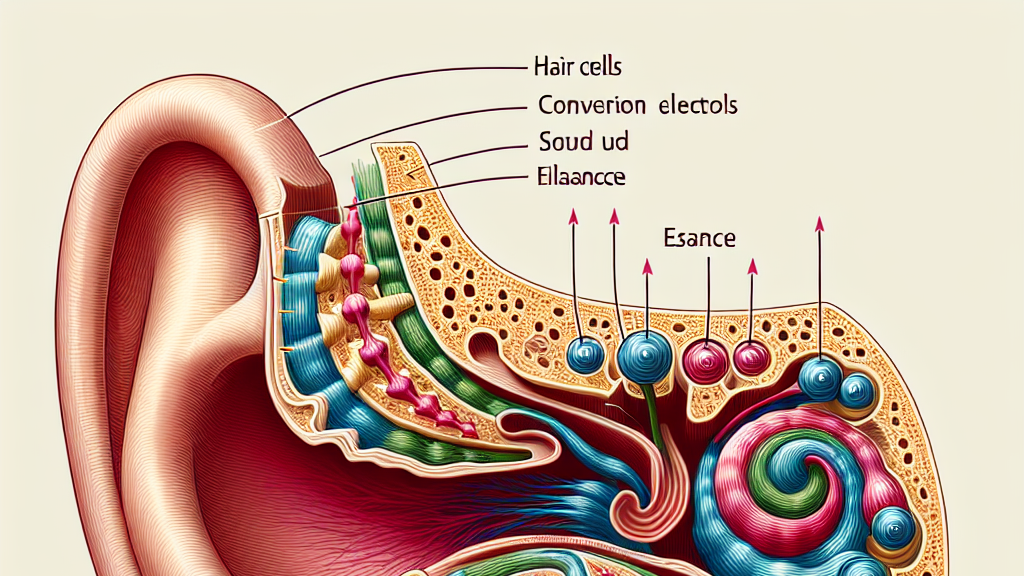
Cochlear implants convert sound into electrical signals to bypass damaged ears and directly stimulate the auditory nerve, letting the brain perceive sound.
FAQs
How does NeuroVoc improve understanding in loud environments?
NeuroVoc mimics how normal hearing processes sound, especially in noisy settings, by using signals similar to those the brain naturally receives. This provides more clarity for cochlear implant users, making speech easier to understand.
What makes NeuroVoc different from traditional vocoders?
Traditional vocoders are often designed specifically for one type of hearing model, but NeuroVoc’s flexible and modular architecture allows it to adapt to various models, enhancing research and practical applications for diverse hearing needs.
How does NeuroVoc compare normal and electrical hearing models?
NeuroVoc facilitates direct comparisons between normal hearing and electrical hearing models, preserving distinct features of each. This comparative approach helps refine hearing assistance technologies based on individual hearing profiles.
What study results demonstrate the effectiveness of NeuroVoc?
The study used a Digits-in-Noise test to show that NeuroVoc could preserve intelligible speech in both normal and electrical hearing models, reflecting typical performance levels reported in clinical settings for hearing aid users.
Can NeuroVoc’s technology be used to create better hearing aids?
Yes, by providing a clearer understanding of how sound is processed by the brain, NeuroVoc can lead to advancements in hearing aid technology, offering customized solutions that improve sound clarity and intelligibility in varied settings.
Background
At its core, the research involves a vocoder, a tool that reconstructs sound into a form that can be more easily perceived by users of hearing devices like cochlear implants. Using inverse Fourier transform, it converts simulated neural activity back into audible sound. The flexibility of this system means it can adapt to different auditory models, reflecting how sound is processed by normal hearing compared to those with hearing devices.
History
Vocoder technology has been around for decades, primarily in audio processing like in music production. However, applying it to hearing aid technology is relatively recent. Previous research made strides in understanding how cochlear implants can process sounds, but these were often rigid, focusing on specific hearing models. NeuroVoc builds on this by introducing flexibility, so researchers can evaluate and improve hearing aids across various auditory conditions.
Based on “From Spikes to Speech: NeuroVoc — A Biologically Plausible Vocoder Framework for Auditory Perception and Cochlear Implant Simulation” by Jacob de Nobel, Jeroen J. Briaire, Thomas H. W. Baeck, Anna V. Kononova, Johan H. M. Frijns, available on arXiv (arxiv.org/abs/2506.03959), used under CC BY 4.0 (creativecommons.org/licenses/by/4.0/).