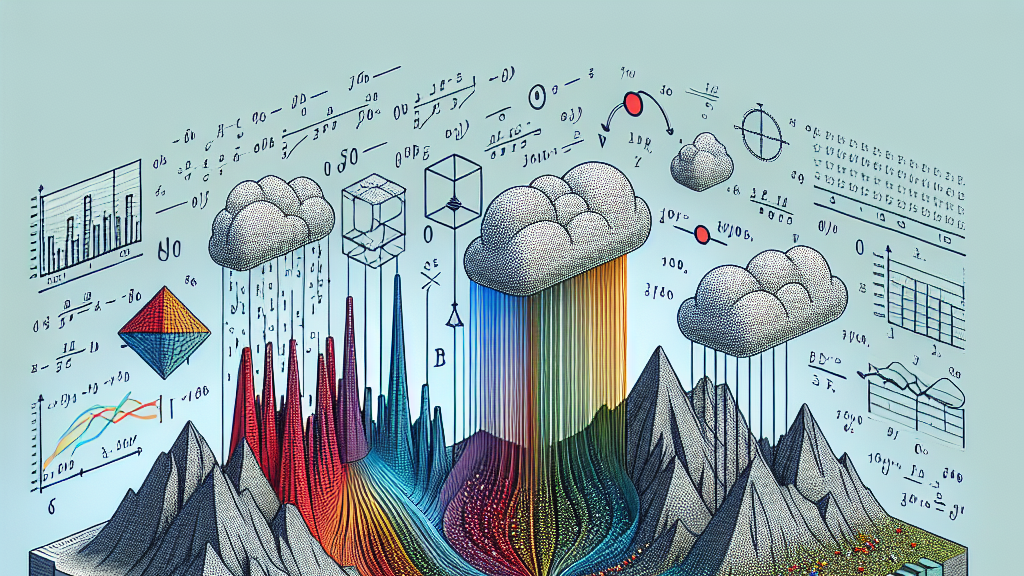
Choosing the best scientific model to explain the mysteries of the universe is not an easy task. Scientists use a method called Bayesian model comparison to figure out which models best match what we observe in space. But as our models become more complex, doing this gets really hard! Enter the AI hero of this story: a technique called the neural Savage-Dickey density ratio, which makes things much simpler and faster.
Bayesian model comparison involves calculating something called the Bayesian evidence, which is like a scorecard for different models. The trick is, it can be tough to calculate. Traditional methods often fall short when dealing with high-dimensional data—imagine trying to draw an incredibly detailed 3D map! The neural approach introduced here uses a type of AI called normalizing flows to handle even the most complex data, helping researchers pick the best models without breaking a sweat.
In the real world, this research might mean faster, more accurate insights into cosmic phenomena, such as how galaxies grow or why the universe is expanding. Imagine uncovering hidden secrets about black holes or dark matter more efficiently than ever before. It’s like having a super-powered telescope that not only sees far and wide but also helps decode what it sees, turning cosmic mysteries into solved puzzles.
The universe is around 13.8 billion years old, and we’re using AI to understand it better than ever before!
FAQs
How does this research use AI to improve model comparison in cosmology?
This research uses a neural method called normalizing flows to efficiently calculate the Bayes factor, which helps in comparing different scientific models in cosmology, making the process faster and more accurate.
Why is Bayesian model comparison important for astrophysics?
Bayesian model comparison allows scientists to determine which scientific models best explain what we observe in space, helping us better understand phenomena like the expansion of the universe and the formation of galaxies.
What is the Savage-Dickey density ratio and why does it matter?
The Savage-Dickey density ratio is a statistical method used to calculate the Bayes factor between two models. It’s important because it provides a way to compare models using existing data without needing additional calculations, saving time and resources.
How can normalizing flows benefit scientific research?
Normalizing flows help handle complex, high-dimensional data efficiently, which is essential for comparing detailed scientific models, especially in fields like cosmology, where data complexity is high.
Is this new method accessible to researchers?
Yes, the neural SDDR method is implemented in an open-source Python package, meaning researchers around the world can use it to enhance their studies in cosmology and astrophysics.
Background
Understanding the universe requires comparing different scientific models to see which ones align best with what we observe. Bayesian model comparison is a method that does this using statistical calculations called Bayes factors. These factors help scientists determine which theories about space phenomena hold water. But calculating these factors can be tricky, especially when dealing with massive amounts of data—enter AI and advanced techniques like neural networks and normalizing flows to save the day.
History
The concept of model comparison in space science has evolved significantly over time. Initially, classical statistical methods like histograms were used, but as data grew more complex, new approaches became necessary. The introduction of Bayesian model comparison represented a significant milestone, providing a more structured way to evaluate models. This latest leap using AI and normalizing flows is the next step, addressing the challenges of high-dimensional data that older methods couldn’t manage as effectively.
Based on “Savage-Dickey density ratio estimation with normalizing flows for Bayesian model comparison” by Kiyam Lin, Alicja Polanska, Davide Piras, Alessio Spurio Mancini, Jason D. McEwen, available on arXiv (arxiv.org/abs/2506.04339), used under CC BY 4.0 (creativecommons.org/licenses/by/4.0/).