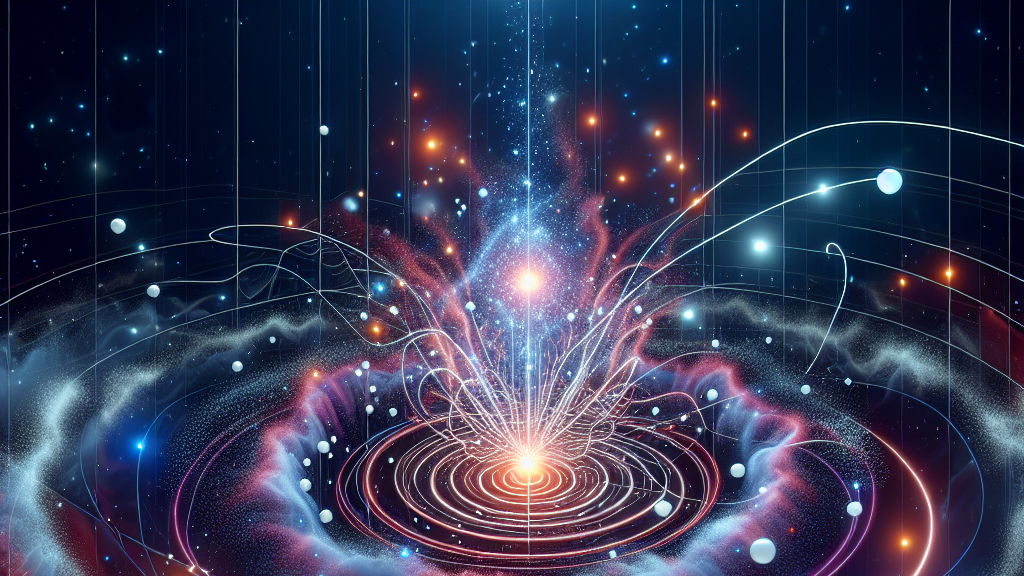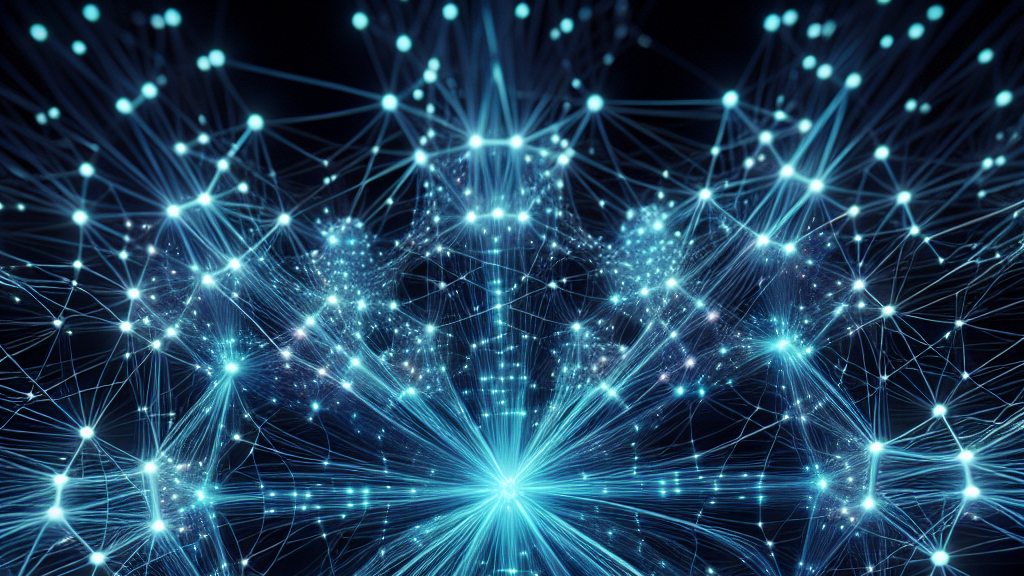
Dark matter is like the universe’s best-kept secret. We know it’s there because it affects the way galaxies move, but despite years of research, no one has actually seen it. That’s why scientists are on a mission to track it down using any means possible, and the latest technology in their arsenal just might be something out of science fiction: quantum networks. Imagine a network of quantum sensors, like tiny detectives spread across the universe, linked together by a form of science magic known as quantum entanglement. Each sensor is a superconducting qubit. By connecting these qubits in different patterns – think of them like people holding hands in a circle, line, or star – scientists can make the sensors super-sensitive to the faintest whispers of dark matter interacting with them. In this study, researchers fine-tuned these quantum networks, adjusting the way the qubits are linked and analyzed the information they gather using something called Bayesian inference. What makes this so exciting is how effective these networks can be, even handling pesky disturbances or ‘noise’ that usually mess up quantum readings. If these networks can successfully detect dark matter, it could be a game changer. Just like how GPS satellites revolutionized navigation, quantum networks can take our understanding of the universe to new heights. We could unlock the secrets of dark matter and learn more about the very fabric of our cosmos.
Superconducting qubits can perform operations a million times faster than the blink of an eye!
FAQs
How can quantum networks detect dark matter?
Quantum networks use superconducting qubits connected in specific patterns. These qubits are highly sensitive and can detect minute interactions with dark matter, capturing data that traditional methods might miss.
What makes superconducting qubits suitable for detecting dark matter?
Superconducting qubits operate with great precision and can process information rapidly. Their sensitivity to small changes makes them ideal for detecting the subtle signals that dark matter might produce.
How does Bayesian inference contribute to this research on dark matter?
Bayesian inference helps in analyzing measurement outcomes from quantum sensors. It allows researchers to better understand and extract the phase shifts induced by dark matter, leading to more accurate detection.
Why is network structure important in quantum sensing?
The way superconducting qubits are interconnected influences the network’s sensitivity. Different structures like lines, rings, or stars can enhance detection capabilities, making networks more effective at sensing dark matter.
What might the future hold if this method successfully detects dark matter?
Discovering dark matter could revolutionize our understanding of the universe, potentially leading to new physics models and insights into how galaxies and the cosmos function.
Background
Dark matter is a mysterious substance that makes up about 27% of the universe. It doesn’t emit, absorb, or reflect light, making it invisible and detectable only through its gravitational effects. Quantum sensors, particularly those using superconducting qubits, are cutting-edge technology that can perform incredibly precise measurements. By using quantum entanglement and network structures, scientists can enhance these sensors’ sensitivity to detect elusive dark matter.
History
The hunt for dark matter began decades ago, with early theories suggesting its existence due to unexplained gravitational effects in galaxies. Traditional detection methods, like particle colliders or large-scale detectors, haven’t conclusively found dark matter. This study builds on attempts to use quantum technology, which has recently gained traction in scientific circles due to its potential for groundbreaking detection capabilities.
Based on “Optimized quantum sensor networks for ultralight dark matter detection” by Adriel I. Santoso, Le Bin Ho, available on arXiv (arxiv.org/abs/2505.21188), used under CC BY 4.0 (creativecommons.org/licenses/by/4.0/).