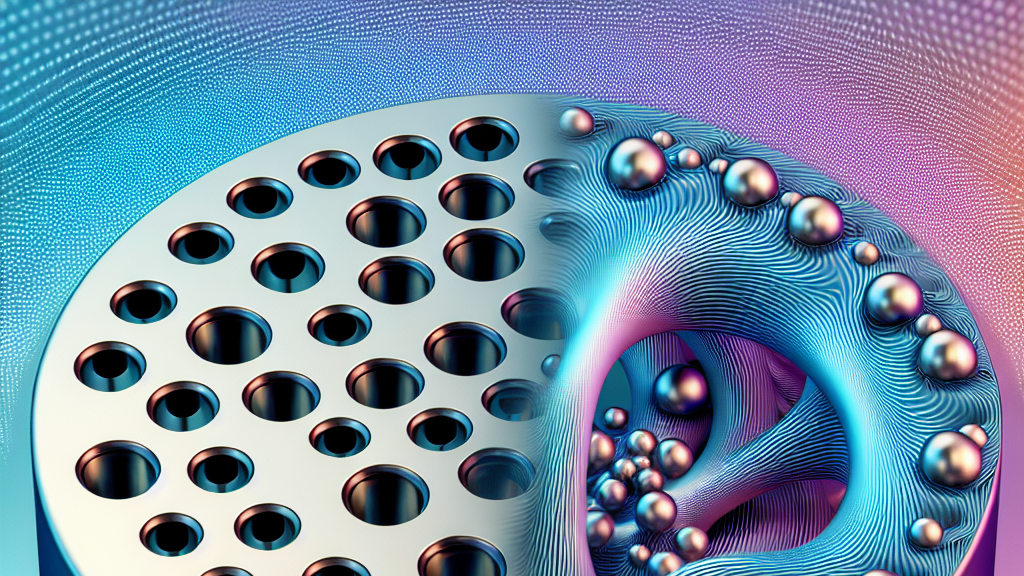
Imagine uncovering a secret about superconductors that scientists have been scratching their heads over for years. Superconductors are materials that can conduct electricity flawlessly—no energy wasted. But when these amazing materials have holes in them and are in a magnetic field, things don’t go as smoothly as expected according to conventional science.
Recent research reveals that these ‘holey’ superconductors can’t reach their expected state comfortably. It’s like trying to fit a square peg into a round hole—literally! This finding is crucial because it challenges long-standing theories about how magnets and superconductors mix. While earlier theories assumed these systems would behave predictably, it turns out the rules might need a rewrite, which could revolutionize how we think about powering everything from trains to smartphones.
So what does this mean for the future? Imagine if your phone could charge in seconds or your electric car had way more range—all thanks to understanding this quirky superconducting behavior. By tweaking how we view and utilize superconductors, especially when they have these bizarre holes, we could unlock a whole new level of energy efficiency that would literally change the way we live.
Did you know? Superconductors can conduct electricity with zero resistance!
FAQs
Why do superconductors with holes struggle in magnetic fields?
Superconductors with holes can have trouble maintaining their expected state in magnetic fields because the process doesn’t fit conventional models, suggesting that a different mechanism might be at play.
What does this mean for current superconductivity theories?
These discoveries imply that existing theories, like the BCS theory of superconductivity, may be missing crucial physical elements needed to explain the behavior of holey superconductors.
How could this research impact everyday technology?
This research could lead to more efficient ways to harness energy, potentially making everyday technology like electric cars and smartphones more powerful and longer-lasting.
What is the Meissner effect?
The Meissner effect is the phenomenon where a superconducting material will expel a magnetic field as it transitions into its superconducting state.
How might this understanding of the Meissner effect change practical applications?
By understanding the unique behaviors involved in the Meissner effect when holes are present, we could design superconductors that enhance the performance of various technologies, making them safer and more efficient.
Background
Superconductors are special materials that can conduct electricity perfectly, without any electrical resistance. This means no energy is wasted, which is a big deal for efficiency! But when you add holes into the mix, the rules change, especially in a magnetic field. Typically, superconductors expel magnetic fields when cooled down, a phenomenon known as the Meissner effect.
History
For decades, the BCS theory has been the go-to explanation for how superconductors work. This theory doesn’t fully explain the behavior of superconductors with holes in them, which suggests that our understanding needs to evolve. Researchers have now pinpointed that these systems might require a new way of thinking, hinting at a shift in how we approach superconductivity.
Based on “What holes in superconductors reveal about superconductivity” by J. E. Hirsch, available on arXiv (arxiv.org/abs/2506.07361), used under CC BY 4.0 (creativecommons.org/licenses/by/4.0/).