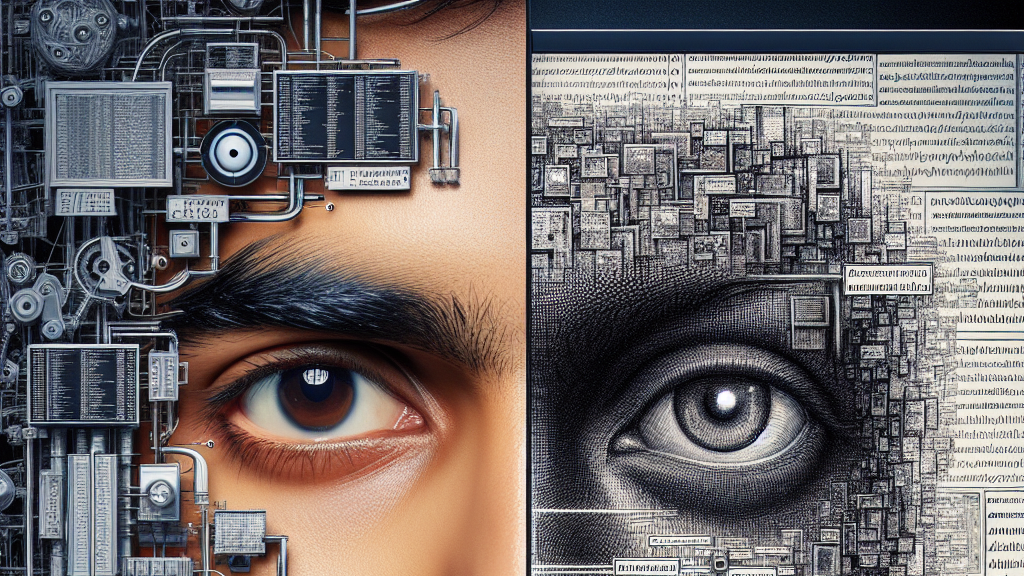
Imagine if your smart device could truly understand everything you see and say, blending images with words just like you do. That’s the goal of vision-language models, the tech behind AI that tries to make digital devices ‘see’ and ‘hear’ like humans. But recent research has found that these models might not be measuring up as well as we thought, thanks to some tricky biases in the tests we use to check them.
Scientists took a close look at 17 popular benchmarks, or tests, that evaluate these vision-language models. They found these tests often use unfair tricks, like stacking lots of similar-looking images or captions, which can mess with the results. Surprisingly, even simple tricks like counting word lengths can match the performance of complex models. This suggests the models might not truly understand the content as we expect.
This research is crucial because, in the future, we rely on these models to power everything from smart assistants to advanced security systems. By figuring out how to test these models more fairly, we can improve technology to better understand and interact with us, making our gadgets more helpful and our interactions with machines more natural.
Did you know? Even simple word tricks can fool advanced AI, making it as effective as some complex models!
FAQs
What are vision-language models trying to achieve?
Vision-language models aim to allow computers to understand and combine both visual and textual information similarly to how humans process images and text together.
Why do biases in benchmarks matter for vision-language models?
Biases can lead to inaccurate measurements of a model’s true abilities, meaning technology might not be as reliable or effective in real-world applications as we assume.
How can these biases affect everyday technology use?
If biases lead to faulty model assessments, everyday technologies like virtual assistants and security systems may not work as well or interpret user inputs accurately.
Background
Vision-language models are systems that integrate image processing with natural language understanding. They are fundamental in AI advancement as they enable machines to ‘see’ and ‘understand’ like humans, making them capable of tasks such as image captioning and multi-lingual translation. However, these models need to be tested for their efficiency, which is where benchmarks come in. Benchmarks assess how well the models comprehend compositional inputs, combining image and text data. But biases in these benchmarks can skew perceptions of model performance.
History
The field of vision-language models has been growing rapidly with advances in neural networks and data processing. Early models focused solely on text or image recognition, but over time, the integration of both has become a key goal. Benchmarks arose as a way to systematically evaluate these models. However, as AI capabilities grew, so did the complexity of tests and, inadvertently, the introduction of biases. This study highlights these issues and suggests improvements, building on previous work to refine benchmarks and ensure robust AI performance.
Based on “A Good CREPE needs more than just Sugar: Investigating Biases in Compositional Vision-Language Benchmarks” by Vishaal Udandarao, Mehdi Cherti, Shyamgopal Karthik, Jenia Jitsev, Samuel Albanie, Matthias Bethge, available on arXiv (arxiv.org/abs/2506.08227), used under CC BY 4.0 (creativecommons.org/licenses/by/4.0/).