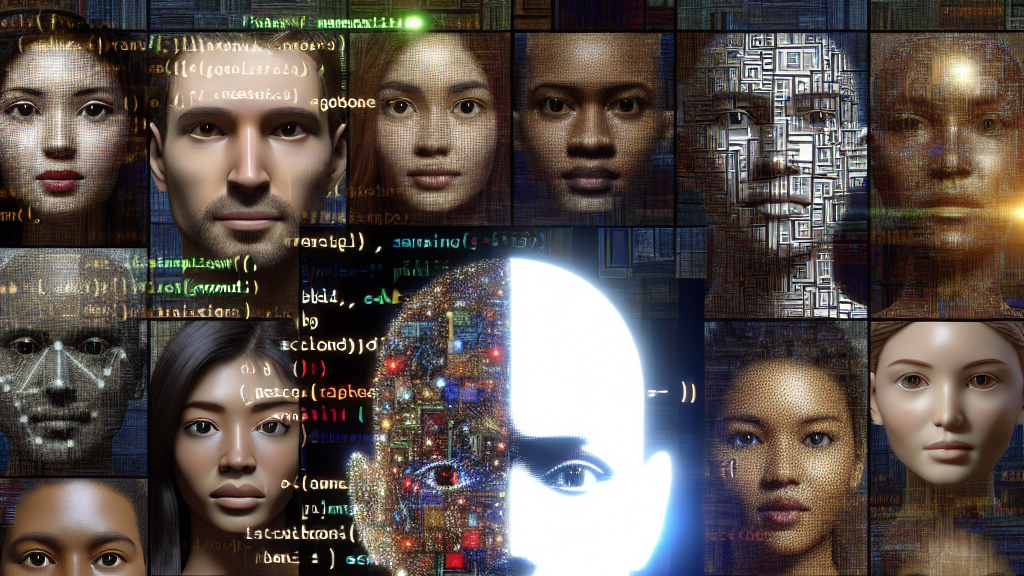
Imagine if every time you asked your AI assistant a question, it unknowingly favored certain people over others based on gender or race. That’s the reality we face with the AI technology of today. Researchers have discovered that large vision-language models, which are like the brains behind AI tools that understand both pictures and text, are not as unbiased as we’d hope. These models often produce responses that are skewed by social biases, sometimes confidently claiming fairness while actually leaning towards particular groups.
To tackle this, researchers evaluated these models using specific tests that measure bias. They found that while these AI systems might declare their responses fair, their confidence is often misguided, pointing out hidden layers where fairness fluctuates. They’ve introduced a clever solution that doesn’t require retraining the AI: a method to adjust how the model thinks on-the-fly, ensuring it acts more fair. By focusing on minimizing bias-prone areas in the AI’s decision-making process, they aim to guide these systems towards more equitable outcomes.
Imagine a world where AI can fairly assist people regardless of who they are. With this new technique, we’re a step closer to achieving technology that respects everyone. This could mean fairer hiring practices, balanced news reporting, and inclusive suggestions on shopping platforms. This research not only spotlights the biases within AI but also offers a tangible way forward—towards a future where technology serves all of us equally.
Did you know that some AI models confidently claim fairness while actually favoring certain social groups? This quirky confidence can make them seem unbiased even when they’re not!
FAQs
What is social bias in vision-language models?
Social bias in vision-language models refers to the tendency of these AI systems to produce outputs or responses that are skewed based on social categories like gender or race, often favoring certain groups over others.
How do researchers identify social bias in AI models?
Researchers use specific datasets and tasks, such as the multiple-choice selection task with PAIRS and SocialCounterfactuals, to evaluate how AI models respond to different scenarios, checking for biases in gender or race.
What method did researchers introduce to reduce social bias?
The researchers proposed a post-hoc method that adjusts AI models at the inference stage, focusing on reducing bias-prone areas and enhancing fairness-focused aspects without the need for retraining the model.
Why is it important to address social bias in AI?
Addressing social bias is crucial because AI systems are increasingly used in decision-making processes. Ensuring fairness helps prevent discrimination and promotes equality across diverse social groups.
How can this research impact everyday AI use?
This research could lead to fairer AI applications in areas like hiring, news curation, and personal assistants, ensuring technology benefits everyone equally, without favoritism.
Background
Vision-language models are advanced AI systems that process and understand both visual and textual data. They’re used in applications like virtual assistants, image recognition, and more. However, these models can inadvertently learn and replicate societal biases present in their training data, leading to unfair outcomes. This study sheds light on these biases and introduces a technique to address them after the model is deployed, without needing to retrain it.
History
The field of AI has long grappled with the challenge of bias, as early image recognition systems often misidentified individuals because they were trained on biased datasets. Over time, researchers have developed more sophisticated models, like vision-language models, which integrate visual and textual understanding. Yet, despite these advancements, bias persists. This study builds on previous research by not just identifying bias but also offering a practical solution to mitigate it during the model’s inference stage.
Based on “My Answer Is NOT ‘Fair’: Mitigating Social Bias in Vision-Language Models via Fair and Biased Residuals” by Jian Lan, Yifei Fu, Udo Schlegel, Gengyuan Zhang, Tanveer Hannan, Haokun Chen, Thomas Seidl, available on arXiv (arxiv.org/abs/2505.23798), used under CC BY 4.0 (creativecommons.org/licenses/by/4.0/).