Connect with us

Search by keyword

Physics

Can We Predict Earthquakes Before They Happen?

Imagine a world where we can predict earthquakes in advance, potentially saving lives and money! This groundbreaking research uses deep learning to forecast tiny earthquakes triggered by underground fluid injections, paving the way for safer geo-engineering applications and better seismic risk management.

Can We Predict Earthquakes Before They Happen
✨Researched by humans. Explained by robots. Learn more.

Imagine a future where we can see earthquakes coming, allowing us to prepare and minimize damage. That’s the exciting potential behind recent research using advanced deep-learning technologies to predict microearthquakes, which are tiny tremors caused by injecting fluids deep underground. These systems could help industries safely harness geothermal energy, store carbon dioxide, or even manage underground water resources more effectively.

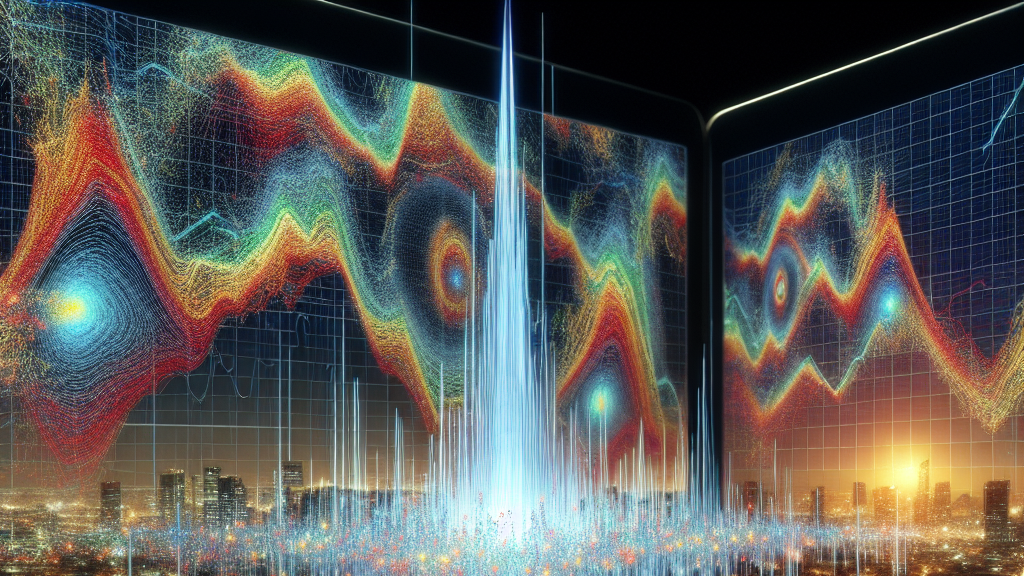
The new method involves a type of artificial intelligence that learns from past earthquake data and fluid injection histories. This smart system can predict the number of small earthquakes, their size, and how far they’ll reach. It’s kind of like having a weather forecast but for underground movements. And it’s super accurate, with predictions that hold up even over a 15-second horizon, giving us valuable time to assess risk and take action.

Imagine applying this technology to enhance geothermal systems, a renewable energy source, by ensuring that the risks of earthquakes are minimized. It could transform geo-engineering fields by providing real-time insights into the stress and permeability of subsurface reservoirs, helping decision-makers design safer operations. It’s not just about predicting earthquakes—it’s about creating a safer, more efficient future.

Microearthquakes are so small that humans can’t feel them, but they carry crucial information about underground stress and permeability!

FAQs

What are microearthquakes and why are they important?

Microearthquakes are tiny tremors often too small for humans to feel, but they provide vital information about the underground stress and permeability changes due to fluid injections, which are key for safe geo-engineering operations.

How does deep learning help in earthquake prediction?

Deep learning uses artificial intelligence to learn from past earthquake data and predict future seismic activity accurately, helping industries like geothermal energy safely manage seismic risks.

What are the practical applications of predicting microearthquakes?

Predicting microearthquakes can improve safety in geothermal energy systems, carbon dioxide sequestration, and other subsurface operations by providing real-time insights into underground stress and helping to design safer, more efficient operations.

Background

Microearthquakes are tiny seismic events that happen when fluids are injected deep underground, such as in geothermal energy production or carbon storage. Monitoring these small quakes helps scientists understand how stress and permeability change in the earth, which is crucial for managing the risks associated with these processes. Deep learning, a form of artificial intelligence, excels at recognizing patterns in data, making it ideal for predicting how these microearthquakes will unfold over time.

History

The study of earthquakes has fascinated scientists for centuries, but predicting them has always been a challenge. Traditional methods relied on historical data and complex physical models, but they often fell short in accuracy. The emergence of deep learning has revolutionized many fields, including earthquake prediction, by offering more precise and timely forecasts. This research builds on previous work by integrating advanced AI techniques to forecast microearthquakes triggered by human activities, refining our ability to assess and mitigate seismic risks.

Based on “Forecasting the spatiotemporal evolution of fluid-induced microearthquakes with deep learning” by Jaehong Chung, Michael Manga, Timothy Kneafsey, Tapan Mukerji, Mengsu Hu, available on arXiv (arxiv.org/abs/2506.14923), used under CC BY 4.0 (creativecommons.org/licenses/by/4.0/).


Trending

Latest

Can AI Save Water Discover How

Computers

AI is transforming the tech world, but it uses lots of water! A new tool, SCARF, helps us measure and reduce AI's water footprint,...

Whats a Forbush Decrease and Why Should We Care Whats a Forbush Decrease and Why Should We Care

Space

Scientists just observed the biggest solar storm event in years, revealing unexpected cosmic ray patterns. Understanding these changes could help us protect our technology...

Can Cars Spot Danger Faster Than Humans Can Cars Spot Danger Faster Than Humans

Computers

Think about how quickly you react when something unexpected happens on the road. This research brings us closer to creating self-driving cars that can...

Can Fear of the Other Stop Social Harmony Can Fear of the Other Stop Social Harmony

Physics

Fear of the unknown might make it harder for people to agree and get along. This study shows that when people have strong xenophobic...

Can AI Revolutionize Breast Cancer Diagnosis Can AI Revolutionize Breast Cancer Diagnosis

Electricity

This research introduces a groundbreaking AI model that can accurately assess HER2-positive breast cancer using widely accessible staining methods, potentially revolutionizing how we diagnose...

Can AI Transform Your Singing into a Choir Can AI Transform Your Singing into a Choir

Computers

Imagine singing solo and having AI turn you into a choir. This research unveils a groundbreaking AI tool that transforms your voice into rich...

You May Also Like

Electricity

This research introduces a groundbreaking AI model that can accurately assess HER2-positive breast cancer using widely accessible staining methods, potentially revolutionizing how we diagnose...

Computers

Have you ever thought your internet was safe, only to find out that its security system misses crucial issues? This research shows us that...

Electricity

Learn how blending advanced deep learning with cutting-edge wireless technology could supercharge your internet speed, making those buffering days a thing of the past.

Electricity

Discover Brain2Vec, a groundbreaking tool that uses brainwave data to spot stress, paving the way for personalized stress management and healthier living.

Statistics

In a world obsessed with AI, could old-school statistical methods still be the real MVPs? This study shows they might just outperform AI when...

Electricity

AI is changing the game in breast cancer diagnosis by accurately identifying cancer types from biopsy images. This means faster, less invasive tests, and...

Physics

Scientists used machine learning to study earthquakes in Greece, revealing that a combination of shifting underground fluids and stress transfers could predict future quakes...

Computers

Discover how cutting-edge AI models can transform random noise into structured, useful data. This research delves into the incredible efficiency of these models, potentially...

Physics

This research explores how artificial intelligence, specifically deep learning models, can automatically interpret complex brain scans with remarkable precision, potentially revolutionizing brain disease diagnosis.

Copyright © 2024 8ig8rain.

Disclaimer: The content on 8ig8rain.com consists of AI-generated summaries of scientific abstracts from arXiv. Please note that most arXiv abstracts are preprints and may not have undergone formal peer review. While these summaries aim to convey key ideas and potential applications, they are provided for informational purposes only and should not be interpreted as validated scientific findings or professional advice. The summaries are intended to educate, spark curiosity, and inspire further exploration of science.