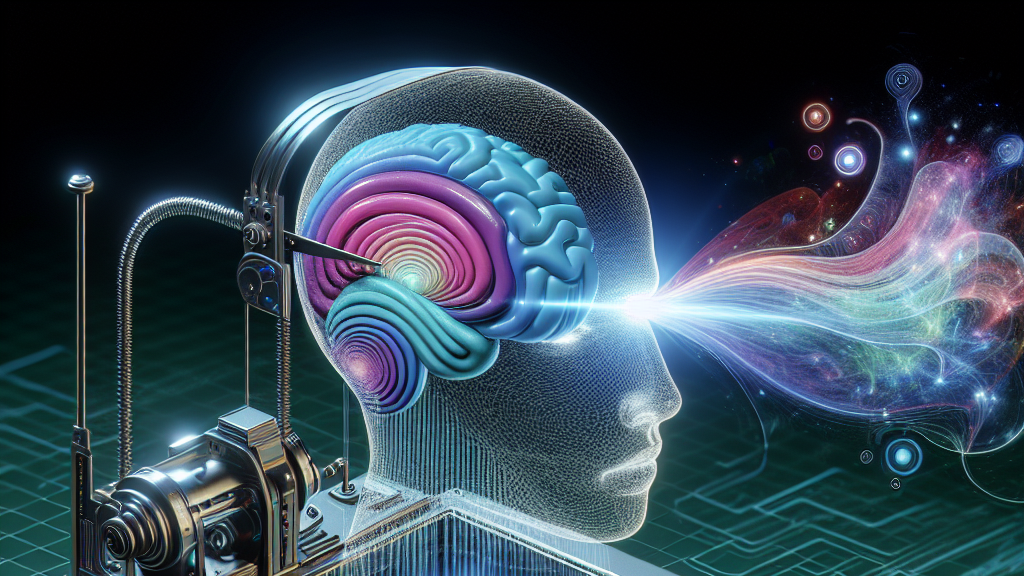
Imagine if you could understand your stress levels just by looking at your brain waves—no more guesswork about how stressed you truly are. This exciting prospect is on the horizon, thanks to a new tool called Brain2Vec that uses deep learning technology to analyze your brain’s electrical activity, or EEG signals, in a way that’s both innovative and non-invasive.
Brain2Vec is a cutting-edge system that combines different types of machine learning techniques to interpret the complex and ever-changing signals from your brain. It starts by analyzing small chunks of these complex signals to understand localized patterns, then examines longer sequences to understand how these patterns change over time. Finally, it uses an attention mechanism to focus on the most informative parts of the signal—kind of like putting a spotlight on the most interesting parts of a movie.
In the future, this technology could be integrated into wearable devices, allowing you to monitor your stress levels as easily as checking the time. Imagine having a smart band that alerts you when your stress is building, helping you find moments to relax and better manage your day. Brain2Vec could significantly enhance personalized healthcare, empowering people to take control of their mental well-being and lead healthier lives.
Your brain emits tiny electrical signals when you’re stressed, detectable through a method as non-invasive as wearing a cap.
FAQs
How does Brain2Vec work to detect stress?
Brain2Vec analyzes brainwave data using a hybrid of convolutional, recurrent, and attention mechanisms to identify stress states with high precision.
Why is detecting stress through EEG important?
EEG offers a non-invasive way to monitor brain activity, providing essential insights into overall cognitive health and stress management.
What makes Brain2Vec different from other stress detection tools?
Brain2Vec uses a unique architecture that combines localized pattern recognition, sequence analysis, and attention mechanisms, resulting in more accurate stress detection compared to traditional models.
Can Brain2Vec be used in everyday life?
Yes, Brain2Vec has the potential to be integrated into wearable devices for continuous stress monitoring, making it highly practical for personal healthcare.
What is the potential impact of Brain2Vec on healthcare?
By providing real-time stress monitoring, Brain2Vec could improve personalized healthcare, allowing individuals to better manage their mental health and reduce stress-related issues.
Background
Modern neuroscience uses EEG, a method that involves placing sensors on the scalp to detect the brain’s electrical activity. These signals are complex and constantly changing, posing a challenge for scientists to accurately interpret. The new field of deep learning, a type of artificial intelligence, offers powerful tools to analyze these complex patterns and make sense of them, leading to promising applications in health and well-being.
History
EEG has been used for decades to study brain activity, but its non-stationary nature made data analysis complex. Advances in deep learning have transformed this field by providing sophisticated tools to model intricate patterns, leading to improved understanding of brain functions. Brain2Vec builds upon these advancements by combining multiple machine learning techniques for more accurate stress detection.
Based on “Brain2Vec: A Deep Learning Framework for EEG-Based Stress Detection Using CNN-LSTM-Attention” by Md Mynoddin, Troyee Dev, Rishita Chakma, available on arXiv (arxiv.org/abs/2506.11179), used under CC BY 4.0 (creativecommons.org/licenses/by/4.0/).