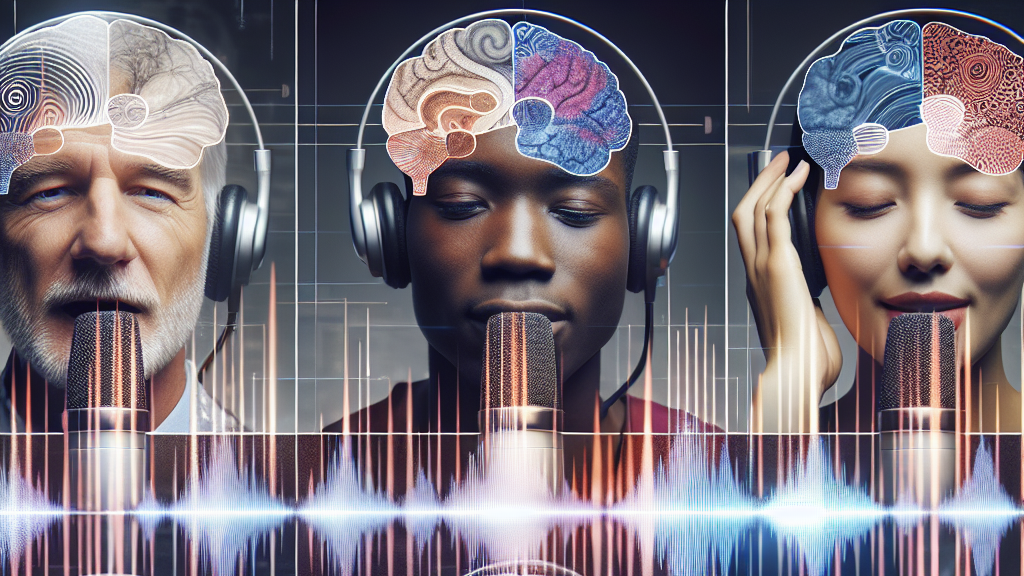
Imagine talking to a robot, and it feels like you’re having a heart-to-heart with a therapist! That’s exactly what researchers are exploring by comparing conversations with human therapists to those with social robots. These robots use advanced language models to understand and respond to people’s emotional concerns. It’s like finding a new friend who can listen and offer support anytime you need it.
Researchers dove into two datasets: one from professional therapist sessions and another from interactions with a social robot. They used smart tech methods like sentence embeddings and clustering to see if the topics and responses matched up. The results? A whopping 90.88% of what people shared with these robots could be linked to human therapy topics. Plus, the responses from robots and human therapists showed a lot of common ground, proving that robots are getting pretty good at understanding us!
Think about the possibilities: robots might soon play a big role in mental health care, offering support to those who might not have easy access to human therapists. Maybe one day, your new best friend and emotional supporter will be a small, comforting presence right in your home, ready to help whenever you’re in need.
Did you know that around 90% of topics people share with therapy robots also come up in human therapy sessions?
FAQs
How similar are robot and human therapist conversations?
A study found that 90.88% of topics discussed with therapy robots can be linked to those in human therapy sessions, highlighting a significant overlap in themes.
Why are robots being used in therapy?
Robots are being explored in therapy to provide emotional support and accessible mental health care, especially for people who might not have easy access to human therapists.
What technology powers these therapy robots?
Therapy robots use advanced language models like GPT-3.5 to understand and respond to emotional concerns, mimicking human-like conversation dynamics.
Background
In recent years, conversational artificial intelligence has advanced to the point where robots can engage in emotionally supportive dialogues. This means they are programmed to understand and respond to human emotions and conversations much like a human would. Technologies like Transformer models, Word2Vec, and BERT help analyze language and ensure machines can comprehend and produce human-like language. In this study, researchers used these tools to compare the interactions between humans and robots with traditional therapy sessions.
History
The idea of engaging robots in therapy has evolved as artificial intelligence and natural language processing have developed. Early conversational agents were limited to basic interactions, but with advancements like the GPT series, robots can now engage in complex, emotionally nuanced conversations. This study builds on this progress by directly comparing robot-led conversations to traditional human therapy, marking a significant step in validating their potential role in mental health treatments.
Based on “Do We Talk to Robots Like Therapists, and Do They Respond Accordingly? Language Alignment in AI Emotional Support” by Sophie Chiang, Guy Laban, Hatice Gunes, available on arXiv (arxiv.org/abs/2506.16473), used under CC BY 4.0 (creativecommons.org/licenses/by/4.0/).