Connect with us

Search by keyword

Computers

Simplifying 3D Material Design for Graphics

This research finds a way to make designing 3D materials easier by simplifying how we adjust their properties like stiffness and flexibility. This could make creating realistic animations and models much more straightforward.

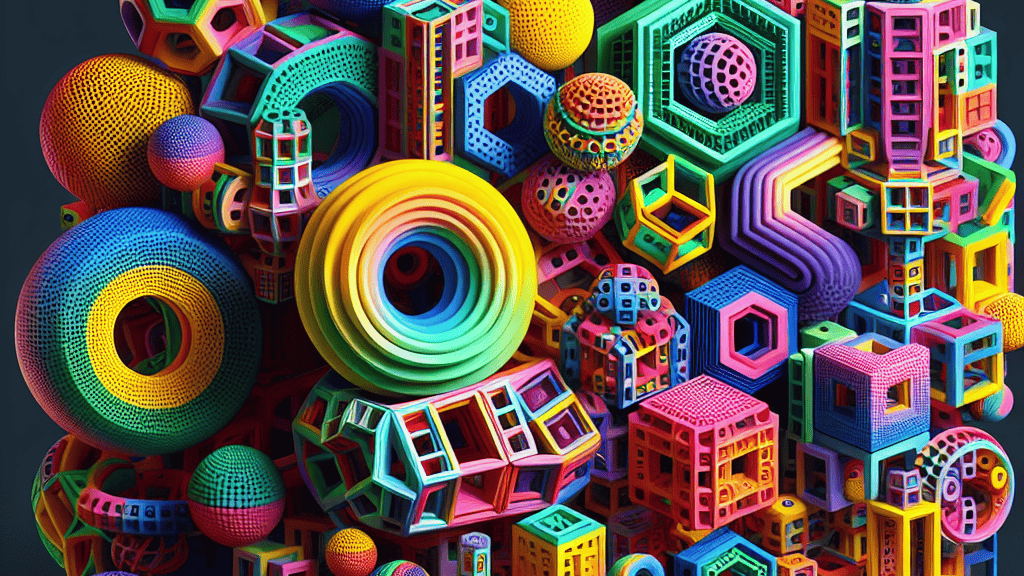
Simplifying 3D Material Design for Graphics 1024x576

**Imagine designing a 3D object that feels just right, not too stiff and not too flexible, with little hassle.** Creating lifelike graphics and models isn’t just about how things look; it’s also about how they behave. Until now, adjusting the ‘feel’ of 3D materials—like how stiff or bendy they are—required choosing from complex material equations and parameters.

This can be a real headache for designers and engineers working on animations, simulations, and virtual models. But recent scientific discoveries are changing the game. New methods have been found to adjust the main features of materials used in 3D graphics easily, without the usual trial and error of mixing and matching different parameters. This research introduces a way to tweak three main properties—how stiff something is, how much it holds its shape, and how it behaves when stretched—to make designing these materials straightforward and independent of one another. The result? A streamlined process that opens doors for more innovation in computer graphics and engineering.

What makes this breakthrough exciting is its potential impact on other fields too. Beyond just gaming and movies, industries like virtual reality or even architecture could benefit from more realistic and efficient material designs, making virtual experiences more lifelike and saving time in manufacturing processes.

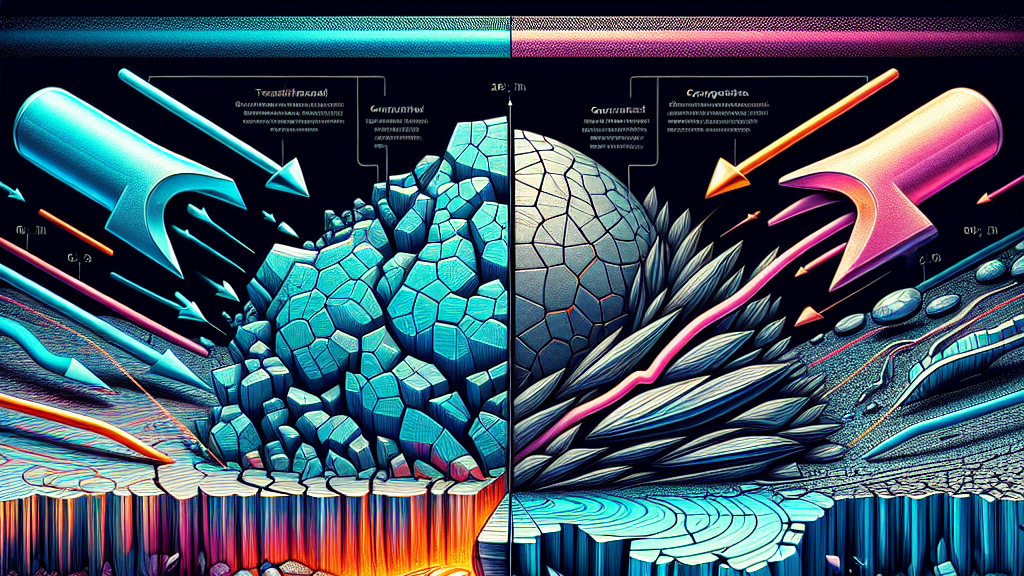
Linear Corotational materials, commonly used in graphics, are the simplest non-linear materials.

FAQs

What surprising discovery did scientists make about 3D materials?
They found a way to independently adjust key properties of 3D materials, making it easier to create realistic models.

How does this research transform 3D graphics?
By separating material properties like stiffness and flexibility, designers can more easily create objects with specific behaviors.

Why does adjusting 3D material properties matter?
It helps create more accurate and realistic animations and models, which are essential for virtual simulations and manufacturing.

Background

When designing materials in 3D models or graphics, scientists and engineers use mathematical models called ‘material families’ to predict how a material will react under different forces. Each family of materials, like Neo-Hookean or Ogden, uses specific parameters to define behaviors like stiffness and elasticity. However, these parameters can be complex, making it difficult to predict exactly how a material will behave once it is created.

History

In the past, creating realistic materials for 3D models involved choosing a material family and then experimenting with different parameter values until the desired effect was achieved. The process was imprecise, often requiring trial and error. This study builds on past research by providing a clear method to adjust material properties in a more predictable and independent way, streamlining the creation process for 3D material designers.

Based on “Tuning Nonlinear Elastic Materials under Small and Large Deformations” by Huanyu Chen, Jernej Barbic, available on arXiv (arxiv.org/abs/2412.18631), used under CC BY 4.0 (creativecommons.org/licenses/by/4.0/).

Trending

Latest

Can AI Save Water Discover How

Computers

AI is transforming the tech world, but it uses lots of water! A new tool, SCARF, helps us measure and reduce AI's water footprint,...

Whats a Forbush Decrease and Why Should We Care Whats a Forbush Decrease and Why Should We Care

Space

Scientists just observed the biggest solar storm event in years, revealing unexpected cosmic ray patterns. Understanding these changes could help us protect our technology...

Can Cars Spot Danger Faster Than Humans Can Cars Spot Danger Faster Than Humans

Computers

Think about how quickly you react when something unexpected happens on the road. This research brings us closer to creating self-driving cars that can...

Can Fear of the Other Stop Social Harmony Can Fear of the Other Stop Social Harmony

Physics

Fear of the unknown might make it harder for people to agree and get along. This study shows that when people have strong xenophobic...

Can AI Revolutionize Breast Cancer Diagnosis Can AI Revolutionize Breast Cancer Diagnosis

Electricity

This research introduces a groundbreaking AI model that can accurately assess HER2-positive breast cancer using widely accessible staining methods, potentially revolutionizing how we diagnose...

Can AI Transform Your Singing into a Choir Can AI Transform Your Singing into a Choir

Computers

Imagine singing solo and having AI turn you into a choir. This research unveils a groundbreaking AI tool that transforms your voice into rich...

You May Also Like

Computers

AI, like ChatGPT, is getting close to passing college courses with flying colors, revealing both its capabilities and areas for improvement. This research shows...

Computers

Imagine AI taking your college engineering course and getting a B-grade! This research digs into how well Artificial Intelligence can handle a semester-long engineering...

Materials

Innovative fracture models can accurately predict how cracks grow in materials, potentially saving money and boosting safety in engineering projects by preventing unexpected failures.

Math

A groundbreaking math method is transforming complex engineering problems into simpler ones, offering high accuracy and broad applications, which could revolutionize fields like aerospace...

Computers

New AI models could revolutionize how we predict the behavior of materials, making engineering processes smarter and more efficient, potentially impacting everything from construction...

Physics

This research reveals how bundles of fibers can hold onto droplets of liquid up to a surprising point, with big implications for engineering and...

Computers

This research explores how humans and artificial intelligence evaluate creativity differently, revealing that our ways of judging new ideas are more complex than we...

Materials

Imagine materials that could change and evolve on their own, much like living organisms. This cutting-edge research introduces a new software, BARCODE, that simplifies...

Computers

This new approach in 3D technology could drastically improve the way we experience digital worlds in games, virtual reality, and even movies. By enhancing...

Copyright © 2024 8ig8rain.

Disclaimer: The content on 8ig8rain.com consists of AI-generated summaries of scientific abstracts from arXiv. Please note that most arXiv abstracts are preprints and may not have undergone formal peer review. While these summaries aim to convey key ideas and potential applications, they are provided for informational purposes only and should not be interpreted as validated scientific findings or professional advice. The summaries are intended to educate, spark curiosity, and inspire further exploration of science.