Imagine if lies could tickle your funny bone—sounds interesting, right? In today’s world, fake news and misinformation spread like wildfire, and sometimes they come wrapped in a cloak of humor. This new research takes a deep dive into how jokes and falsehoods mix, creating something called ‘deceptive humor.’ It’s like sneaking spinach into a brownie; you don’t realize what you’re really consuming until it’s too late.
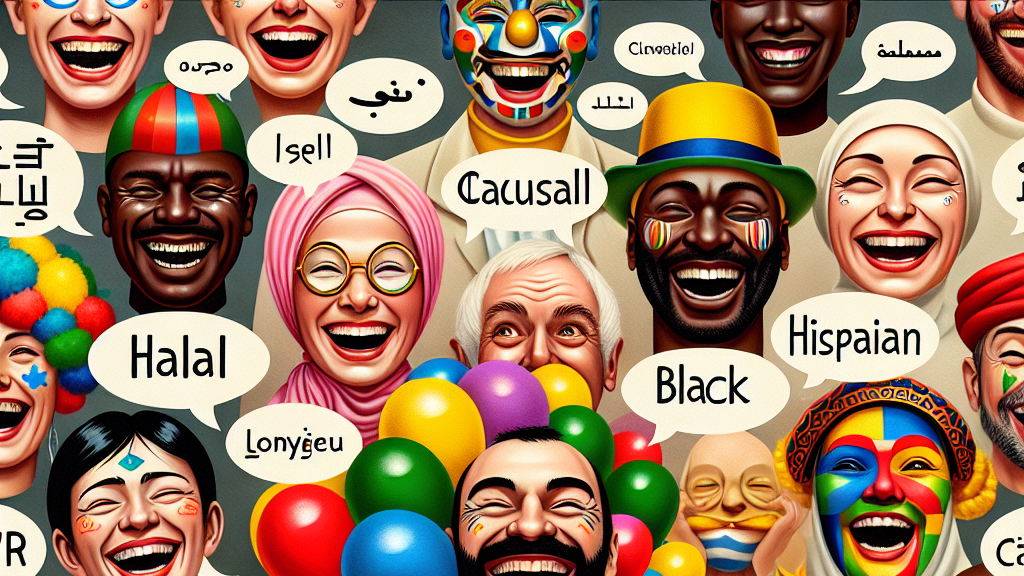
The study has crafted a special dataset that includes humor-inflected statements originating from made-up claims, categorized by type of humor and ‘satire level.’ It examines various forms of humor including dark comedy, irony, and pure absurdity. But here’s the kicker: it spans across several languages! Picture a joke in English being just as effective in Tamil or Hindi—and you get a taste of this dataset’s power. Researchers hope that by setting a baseline for identifying humorous deceit, they can help develop algorithms to catch misinformation dressed as jokes.
But why should this matter to you? Well, the next time you laugh at a tweet or a meme, you might want to think twice about its source. Imagine an app that warns you when a funny post is actually bending the truth. Such tech could change how we interact with online content, protecting us from the sneaky spread of false information. Even more fascinating is that this technology could work across languages, truly making it a global solution.
Did you know? Misinformation wrapped in humor can be even more convincing than plain fake news!
FAQs
What is the Deceptive Humor Dataset?
The Deceptive Humor Dataset is a research collection that explores how humor interacts with misinformation. It includes humor-filled comments derived from fabricated claims and categorizes them by humor type and satire level.
Why is studying humor with deception important?
Understanding how humor intertwines with deception helps us recognize when fake news is made more convincing or appealing through jokes. This can aid in developing better tools for identifying and mitigating the spread of misinformation.
How does the Deceptive Humor Dataset handle multiple languages?
The dataset encompasses multiple languages such as English, Telugu, Hindi, Kannada, and Tamil, as well as their mixed versions. This makes it a valuable resource for studying the interaction of humor and deception in different cultural contexts.
What are the humor categories in the Deceptive Humor Dataset?
The dataset classifies humorous content into five categories: Dark Humor, Irony, Social Commentary, Wordplay, and Absurdity. Each piece is also labeled based on its ‘Satire Level’ to denote the intensity of the humor.
How can this research affect our understanding of online content?
The insights from this dataset could lead to the development of tools that flag humorous content that disguises misinformation, helping us be more critical of what we consume online.
Background
Humor is a powerful tool that can frame information in a way that makes it more memorable or palatable, even when it is deceptive. This study focuses on how humor can be used to manipulate information and spread misinformation, particularly in a multilingual context. Understanding these dynamics can help develop technologies that are sensitive to both the cultural nuances of humor and the global challenge of misinformation.
History
Previous studies mostly focused on misinformation in a straightforward context, such as fake news articles or misleading headlines. This research builds on those studies by incorporating the element of humor, which has not been extensively explored. By including multiple languages, it also addresses a gap in previous research that often focused solely on English-language content.
Based on “Deceptive Humor: A Synthetic Multilingual Benchmark Dataset for Bridging Fabricated Claims with Humorous Content” by Sai Kartheek Reddy Kasu, Shankar Biradar, Sunil Saumya, available on arXiv (arxiv.org/abs/2503.16031), used under CC BY 4.0 (creativecommons.org/licenses/by/4.0/).