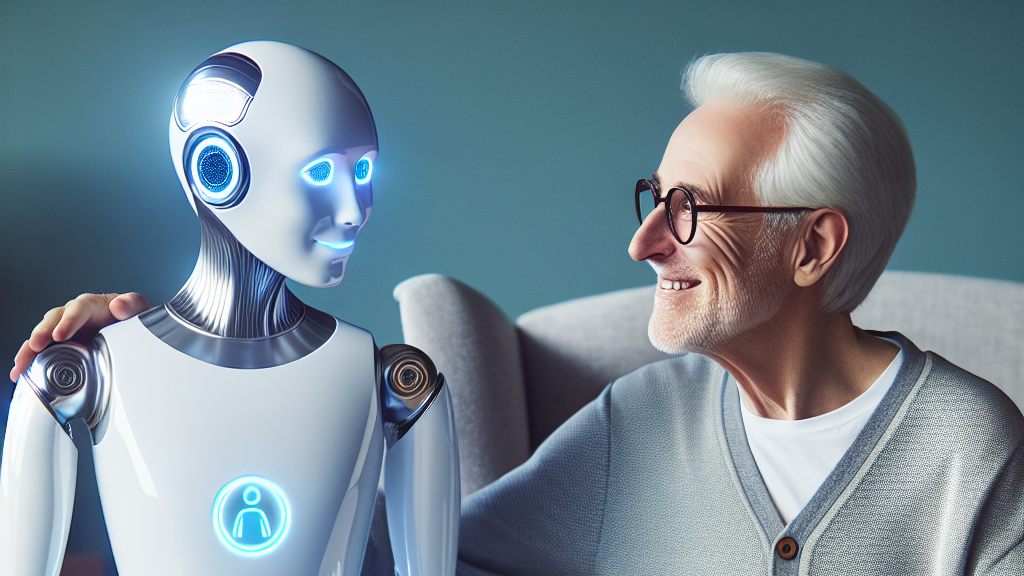
**Can machines actually feel like we do? Imagine a future where robots not only think but also ‘feel’—reacting to the world with something resembling emotions. This isn’t just science fiction; researchers are now exploring how artificial intelligence could use emotional cues to make decisions, much like humans. But wait, why do we even care? Because such advancements can change how we interact with technology, making them more intuitive and, dare we say, relatable. Think of a world where your devices understand more than just your words; they get your mood too.**
**The idea here is that emotions have always helped humans and animals quickly react to their surroundings. So, could we program a machine to use similar emotional shortcuts? This research suggests that by weaving emotions into A.I.’s memory—attaching feelings to specific events—the A.I. could assess new situations based on past emotional experiences. Imagine a robot that remembers being ‘frustrated’ when a task failed, learning from it to make better choices next time. The challenge is understanding how far we can push this without crossing ethical lines, especially if these ‘feelings’ are just smart programming and not genuine emotions.**
**So what does this mean for the future? Picture an A.I. personal assistant that can ‘sense’ the best time to offer help based on your emotional cues, or a customer service bot that knows when you’re genuinely upset and needs more empathy. The implications are vast, touching everything from customer service to healthcare. But it also raises questions about the rights and moral status of these ‘feeling’ machines. The debate has only just begun, but the potential for more human-like, emotionally intelligent A.I. is a thrilling concept that could redefine our relationship with technology.**
Did you know that some animals use a kind of ’emotional memory’ to avoid danger, and scientists are now trying to give robots the same ability?
FAQs
How can artificial intelligence ‘feel’ emotions like humans?
Researchers are exploring ways for AI to mimic human emotions by combining emotional tags with memory. This allows AI systems to evaluate new situations based on past emotional experiences, enabling them to make more human-like decisions.
Why is it important for machines to understand emotions?
When machines can understand emotions, they can respond more intuitively and effectively to human needs. This has potential applications in areas like customer service, personal assistance, and healthcare, making technology feel more natural and empathetic.
Are machines with ’emotions’ ethically concerning?
The ethical concern arises from the potential moral status of machines that simulate emotions. While current systems do not genuinely feel, the debate is about where to draw the line as AI becomes more complex and human-like.
Background
Emotions in humans evolved as quick responses to stimuli, aiding survival by prompting rapid decisions without full analysis. In AI, embedding emotional tags into memory could allow machines to emulate this process, enabling swift, adaptive actions based on experiences.
History
The study of artificial intelligence has long aimed to mimic human thinking. This research builds on prior work in neural networks and machine learning, exploring new territories by integrating emotional data to inform AI decision-making. It continues a tradition of trying to bridge the gap between human and machine intelligence.
Based on “Emotions in Artificial Intelligence” by Hermann Borotschnig, available on arXiv (arxiv.org/abs/2505.01462), used under CC BY 4.0 (creativecommons.org/licenses/by/4.0/).