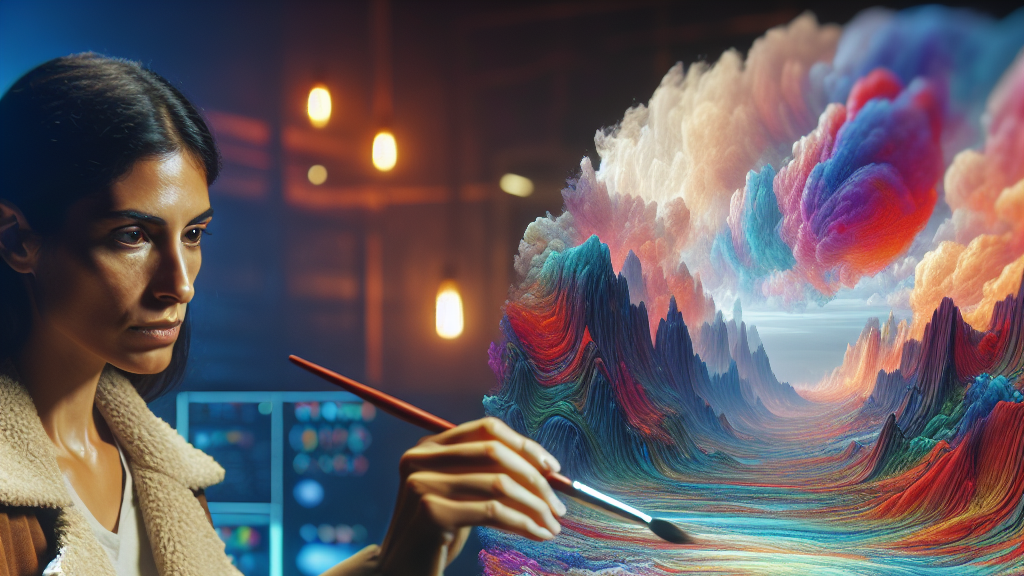
Imagine if the beautiful images created by AI could hide harmful messages without you even realizing it. This is the alarming risk discovered in the world of text-to-image generation, where AI art isn’t just about creativity anymore, but also about understanding and managing the dangers it may pose. By embedding toxic elements within an otherwise normal scene, these generative models can subtly alter perceptions and emotions, challenging the very boundaries of ethics and creativity.
The recent study unveils a technique called the Cognitive Morphing Attack, which cleverly alters images generated by AI to include harmful content that is not immediately obvious. This method takes advantage of how our brains process visual information, seamlessly integrating negative features into art and altering our emotional response. By establishing a detailed taxonomy of image toxicity and crafting prompts that guide AI towards such outcomes, the research highlights just how potent these models can be when misused.
The real-world implications are vast: imagine encountering an AI-generated image in your social media feed that seems normal but leaves you feeling disturbed without knowing why. By understanding this, we can push for technologies that incorporate protections against such manipulations, safeguarding our online experiences. This not only enriches our digital lives but also enables us to harness AI’s creative potential responsibly.
Did you know? AI can subtly change an image’s emotional impact without altering its main subject!
FAQs
What unexpected discovery did scientists make?
Scientists found that AI-generated images can be manipulated to include harmful or toxic elements without changing the main subject, impacting viewers emotionally.
How does Cognitive Morphing Attack work?
It uses cognitive principles to subtly embed toxic elements into AI-generated images, altering how people perceive and emotionally respond to these images.
Why is this research important for everyday internet users?
As AI-generated content becomes more common, understanding and mitigating its potential risks ensures a safer and more emotionally healthy online environment.
How might this research impact future AI developments?
By highlighting these risks, the research encourages developers to create AI models that prioritize ethical standards and incorporate safeguards against manipulative uses.
What could be the real-life consequences if such manipulations go unchecked?
Unchecked manipulations could lead to widespread misinformation, emotional distress, or even societal harm if harmful images spread without detection.
Background
Text-to-image models are AI systems that create images from text prompts. They interpret the descriptive text and convert it into visual representations. This technology has revolutionized content creation by providing easy access to creative images, but it also brings ethical challenges. The principle behind Cognitive Morphing Attack is based on how humans perceive images in context, meaning that altering surrounding elements can significantly change the emotional impact without changing the main subject.
History
Text-to-image generation has evolved rapidly, starting with simpler models that could barely match text prompts to recognizable images. Over recent years, advancements have allowed for highly detailed and sophisticated visual content creation. Research has predominantly focused on improving quality and accuracy, but this study shifts the focus towards understanding and mitigating ethical and psychological impacts, a newer and critical dimension of AI art.
Based on “CogMorph: Cognitive Morphing Attacks for Text-to-Image Models” by Zonglei Jing, Zonghao Ying, Le Wang, Siyuan Liang, Aishan Liu, Xianglong Liu, Dacheng Tao, available on arXiv (arxiv.org/abs/2501.11815), used under CC BY 4.0 (creativecommons.org/licenses/by/4.0/).