Ever wondered what your wildest dreams really mean? Imagine a machine that could decode those dreams as easily as you read a text message. That’s the kind of magic now possible with DreamNet, an artificial intelligence that dives deep into your subconscious, analyzing dream narratives to reveal hidden fears, desires, and emotional states. It’s like having a personal dream analyst in your pocket, ready to tell you what your dreams are whispering about your innermost thoughts.
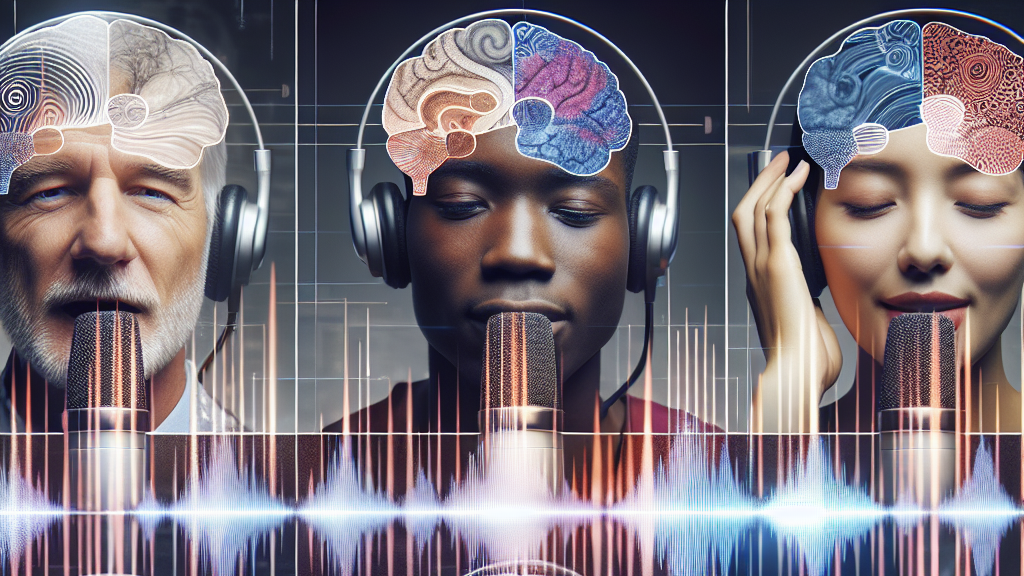
Developed using cutting-edge artificial intelligence technology, DreamNet analyzes dream stories using deep learning. By examining dream reports and even incorporating brainwave data from REM sleep stages, this AI is able to identify recurring themes and emotional patterns with incredible accuracy. Its technology is so advanced that it can recognize connections between certain dreams and emotional states, like how falling might signal anxiety.
In the future, this technology could change how we understand and treat mental health issues, providing therapists with a tool to tailor treatments based on individual dream patterns. Imagine a world where your dreams could guide your therapy sessions, offering clues to your psychological well-being and helping you maintain better mental health over time. With DreamNet, the realm of dreams is no longer just a mystery; it’s a window into your mind and emotions.
Our dreams contain hidden clues about our emotions, and DreamNet can decode these clues with over 99% accuracy when using brainwave data!
FAQs
How does DreamNet analyze dreams using artificial intelligence?
DreamNet uses a deep learning framework that decodes semantic themes and emotional states from textual dream reports. It leverages a transformer-based architecture with multimodal attention to achieve high accuracy in dream analysis.
Why is EEG data used in conjunction with dream reports in DreamNet?
EEG data from REM sleep stages enhance DreamNet’s ability to interpret dreams by providing additional insights into the dreamer’s brain activity, leading to more accurate decoding of emotional states and themes.
What type of real-world applications does DreamNet have for mental health diagnostics?
DreamNet could be used as a scalable tool in mental health diagnostics by identifying and analyzing dream-emotion correlations, which might aid therapists in creating personalized treatment plans based on individual emotional patterns.
What is the accuracy of DreamNet when analyzing dreams?
DreamNet achieves 92.1% accuracy in text-only mode and can reach 99.0% accuracy when integrating REM-stage EEG data for dream analysis.
What kind of correlation does DreamNet find between dreams and emotions?
DreamNet finds strong correlations between certain dream themes and emotional states, such as falling dreams being linked to anxiety, with a correlation coefficient of 0.91.
Background
Understanding dreams has puzzled humans for centuries, with many believing they hold secrets to our subconscious minds. Dreams often reflect our emotions and thoughts, though decoding these narratives has traditionally been subjective and unreliable. Artificial Intelligence, especially deep learning models, can process vast amounts of text and recognize patterns that humans might miss. This research uses AI to interpret dream narratives, enhancing traditional methods with precision and consistency.
History
The exploration of dreams dates back to ancient civilizations that attributed dreams to divine messages. Modern psychology brought a scientific lens with theorists like Sigmund Freud and Carl Jung interpreting dreams as reflections of our inner psyche. Recently, AI has become integrated into psychological research, but its application to dream interpretation is relatively new and unexplored until now. DreamNet represents a significant leap as it combines AI with neuroscientific data, such as brainwave analyses, offering a more holistic approach to dream analysis.
Based on “DreamNet: A Multimodal Framework for Semantic and Emotional Analysis of Sleep Narratives” by Tapasvi Panchagnula, available on arXiv (arxiv.org/abs/2503.05778), used under CC BY 4.0 (creativecommons.org/licenses/by/4.0/).