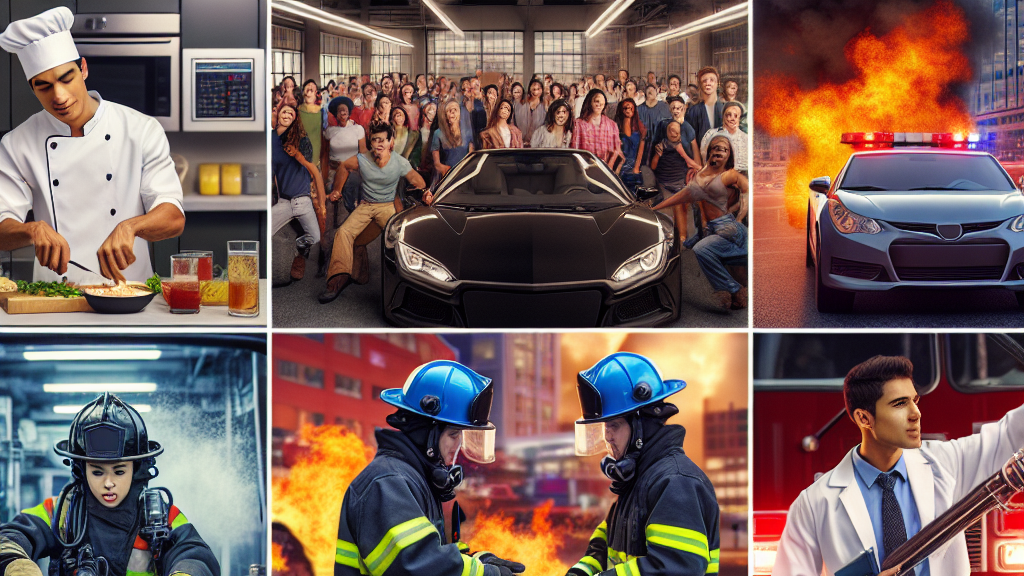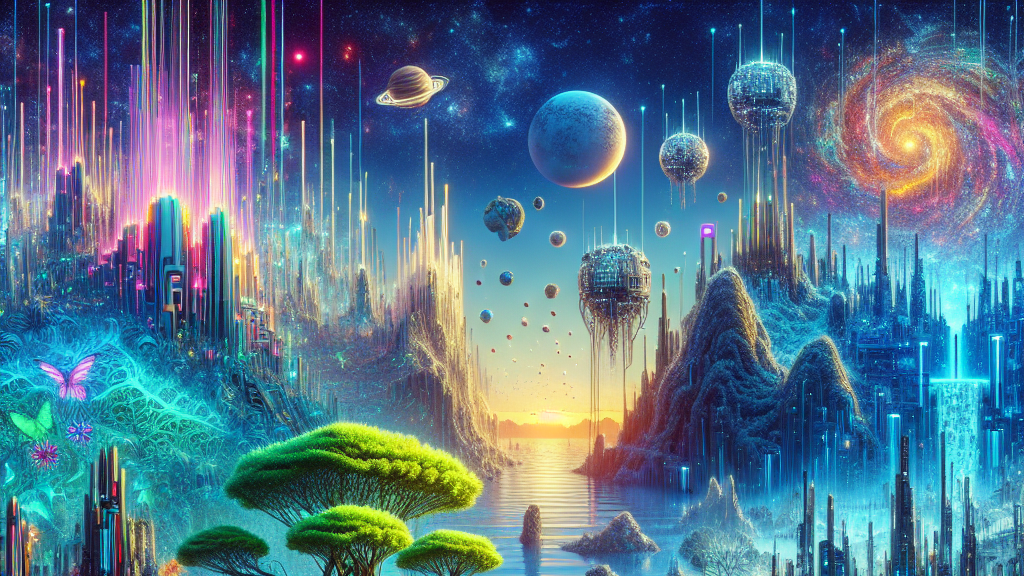
Imagine a world where computers can paint pictures full of unique characters and sceneries that look almost real. That’s the dream behind Generative Adversarial Networks, or GANs, which are all about teaching machines to create images. However, there’s a catch—GANs sometimes get stuck producing the same thing over and over, a problem known as ‘mode collapse.’ But fear not, recent research has cracked the code to overcome this issue.
Scientists have come up with a smarter, more creative way for GANs to work. By using something called the Wasserstein loss and Gradient Penalty, they can teach AI to capture all the varied details that make images interesting. Think of it as giving a machine an artist’s eye for diversity. Not only that, but they’ve also tinkered with how these networks learn, finding that a style called ResNet is particularly good at making sure the images are as diverse as the world we live in. The cherry on top is the creation of the HingeRLC-GAN, a new method that blends regularization rules with an innovative loss function to make sure we get vibrant, lifelike images.
So why should we care? Picture this: in the near future, artists, advertisers, and developers could use this technology to generate breathtaking visuals and immersive experiences that were once only possible in our imaginations. Whether you’re creating a video game, a movie, or even just a stunning backdrop for an ad, this leap in AI-generated diversity could make our digital worlds as rich and varied as the real one. It’s not just about pretty pictures; it’s about opening up new realms of creativity and possibility.
Did you know? The new AI model, HingeRLC-GAN, boasts a FID Score of 18, making it better at producing realistic images than many of its predecessors!
FAQs
What makes Generative Adversarial Networks (GANs) special for creating images?
Generative Adversarial Networks, or GANs, are a type of AI that can create images by learning from real-world photos. They consist of two parts: a generator that creates images and a discriminator that evaluates them. This process helps GANs produce surprisingly realistic and detailed images.
How does the issue of ‘mode collapse’ affect GANs?
The problem of mode collapse occurs when GANs get stuck creating a few repetitive patterns instead of diverse images. This means the AI fails to capture the full range of details and variations found in the dataset, limiting its creative potential.
What is the innovation behind the HingeRLC-GAN?
The HingeRLC-GAN is a new approach that combines two advanced techniques in AI training: RLC Regularization and the Hinge loss function. Together, they improve the GAN’s ability to produce a wide array of diverse and realistic images, overcoming previous limitations like mode collapse.
Why are FID and KID Scores important?
FID (Fréchet Inception Distance) and KID (Kernel Inception Distance) Scores are metrics used to evaluate how closely the AI-generated images resemble real images. Lower scores reflect more realistic and diverse outcomes, making these metrics vital for assessing improvements in AI image synthesis.
How could these GAN advancements change industries like advertising and entertainment?
The improvements in GAN technology mean creatives can generate more lifelike and varied images, transforming how visual content is produced. Industries like advertising and entertainment stand to benefit from creating more engaging and personalized experiences for audiences.
Background
Generative Adversarial Networks are a fascinating AI technique where two neural networks, a generator and a discriminator, compete against each other. The generator tries to create believable images, while the discriminator attempts to discern real images from those generated. This back-and-forth aims to improve the quality of generated images. Mode collapse is a problem where generated images lack diversity, leading to similar and less varied outputs.
History
Since their introduction in 2014, GANs have become a cornerstone in the field of AI image generation. Initial studies showed the potential, but also revealed limitations like mode collapse, where diversity was a challenge. Over the years, different architectures and loss functions were explored to improve GAN performance. The emergence of techniques like the Wasserstein loss and architectural innovations like ResNet have pushed the envelope, leading to the development of the HingeRLC-GAN.
Based on “HingeRLC-GAN: Combating Mode Collapse with Hinge Loss and RLC Regularization” by Osman Goni, Himadri Saha Arka, Mithun Halder, Mir Moynuddin Ahmed Shibly, Swakkhar Shatabda, available on arXiv (arxiv.org/abs/2503.19074), used under CC BY 4.0 (creativecommons.org/licenses/by/4.0/).