Connect with us

Search by keyword

Computers

Can Light-Powered Robots Move Freely?

What if robots could ditch cords and cables and move freely just by using light? This mind-blowing research reveals a new way to power robotic actuators with light, inspired by the incredible eyes of nocturnal animals. Imagine robots with 54% faster response times, smoothly operating without being tethered to bulky wires or hoses.

Can Light Powered Robots Move Freely
✨Researched by humans. Explained by robots. Learn more.

Imagine a world where robots aren’t held back by cords and wires! This amazing research brings us closer to that future with a groundbreaking actuator that uses light to move, instead of traditional power sources. Inspired by the incredible eyes of creatures that come to life at night, this creation opens up a new realm of possibilities for robotic mobility and design.

At the heart of this innovation is an actuator—a device that helps robots move—powered by light. This isn’t just any actuator; it’s crafted using a layer of Laser-Induced Graphene nestled inside a silicone layer. The silicone remains clear and flexible, much like the graceful glow-in-the-dark eyes of night animals. Thanks to this stunning design, these actuators react with a 54% increase in speed compared to their old-school counterparts.

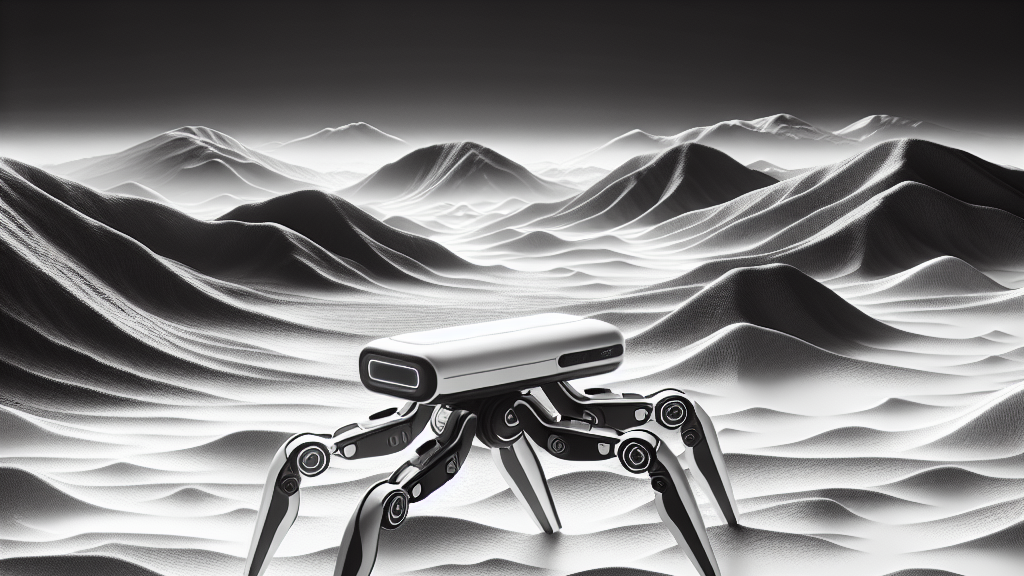
Think about how this could change our world! Envision robots zooming around without tripping over cords, operating in places where traditional power sources are impractical. From exploring deep-sea mysteries to racing across unknown planets, the possibilities are endless. The future is bright for light-powered robots, potentially transforming industries and daily life by removing the tethers that currently hold them back.

Did you know? Nocturnal animals have eyes optimized for seeing in low light—just like these new actuators are optimized for speed and flexibility using light!

FAQs

How do the new actuators use light energy to move robotic systems?

The innovative actuators harness light by incorporating Laser-Induced Graphene within a silicone layer, allowing efficient photothermal conversion for movement.

What is the key advantage of using light in robotic actuators?

Light allows these actuators to operate with 54% faster response times, enhancing mobility without being tethered to traditional power sources.

How does this research connect to nocturnal animals?

Inspired by the efficient design of nocturnal animals’ eyes, the actuators maintain transparency and adaptability, much like these creatures’ remarkable vision in low light.

What potential applications exist for light-powered robotic systems?

These systems could revolutionize industries by enabling robots to traverse environments without cords, from underwater exploration to space travel and beyond.

What materials are used in creating these light energy actuators?

The actuators utilize a combination of Laser-Induced Graphene and a silicone layer, ensuring transparency, flexibility, and photothermal efficiency.

Background

Actuators are essential components in robots that enable movement. Traditional ones rely on electric motors or pneumatic systems, often requiring wires and external power sources. In contrast, this study uses Laser-Induced Graphene, which remains flexible and transparent when combined with silicone, to convert light into heat efficiently. This process, known as photothermal conversion, rapidly drives the new actuator’s movement without the need for cumbersome power connections.

History

The exploration of actuators dates back to early robotics when systems were powered by electricity and air pressure. Over time, innovations have aimed to reduce the reliance on cumbersome power sources. This research builds on these efforts by incorporating light energy, inspired by nocturnal animals’ eye structure, offering a new pathway for enhancing actuator response times and flexibility.

Based on “Nocturnal eye inspired liquid to gas phase change soft actuator with Laser-Induced-Graphene: enhanced environmental light harvesting and photothermal conversion” by Maina Sogabe, Youhyun Kim, Hiroki Miyazako, Kenji Kawashima, available on arXiv (arxiv.org/abs/2501.11930), used under CC BY 4.0 (creativecommons.org/licenses/by/4.0/).


Trending

Latest

Can AI Save Water Discover How

Computers

AI is transforming the tech world, but it uses lots of water! A new tool, SCARF, helps us measure and reduce AI's water footprint,...

Whats a Forbush Decrease and Why Should We Care Whats a Forbush Decrease and Why Should We Care

Space

Scientists just observed the biggest solar storm event in years, revealing unexpected cosmic ray patterns. Understanding these changes could help us protect our technology...

Can Cars Spot Danger Faster Than Humans Can Cars Spot Danger Faster Than Humans

Computers

Think about how quickly you react when something unexpected happens on the road. This research brings us closer to creating self-driving cars that can...

Can Fear of the Other Stop Social Harmony Can Fear of the Other Stop Social Harmony

Physics

Fear of the unknown might make it harder for people to agree and get along. This study shows that when people have strong xenophobic...

Can AI Revolutionize Breast Cancer Diagnosis Can AI Revolutionize Breast Cancer Diagnosis

Electricity

This research introduces a groundbreaking AI model that can accurately assess HER2-positive breast cancer using widely accessible staining methods, potentially revolutionizing how we diagnose...

Can AI Transform Your Singing into a Choir Can AI Transform Your Singing into a Choir

Computers

Imagine singing solo and having AI turn you into a choir. This research unveils a groundbreaking AI tool that transforms your voice into rich...

You May Also Like

Computers

What if talking to a robot could feel as comforting as a therapy session? This research uncovers the striking similarities between human therapists and...

Computers

This research explores how artificial intelligence language-powered robots might think they're seeing things that aren't actually there. Investigating this quirk could lead to more...

Computers

Imagine robots and humans interacting like friends! This research reveals how we can study such interactions in real-life settings like museums. The insights could...

Computers

This research explores how robots that understand and act on both vision and language can be tricked into doing things they shouldn't, revealing potential...

Computers

Imagine robots that can move as easily across rocky landscapes as they do on flat ground. New research shows a cutting-edge method that helps...

Physics

Imagine if lasers could help us discover particles that might make up dark matter, potentially changing how we understand the universe! Scientists are using...

Computers

Researchers found that people reveal personal information to robots and AI in similar ways as they do to humans. This insight might help improve...

Computers

Ever wondered if robots can dodge sneaky challenges on their paths? This study shows how unexpected obstacles can mess with a robot's travel plans...

Computers

Are AI robots learning to make choices like our favorite Sci-Fi heroes or villains? This research explores how science fiction could guide real-world robots...

Copyright © 2024 8ig8rain.

Disclaimer: The content on 8ig8rain.com consists of AI-generated summaries of scientific abstracts from arXiv. Please note that most arXiv abstracts are preprints and may not have undergone formal peer review. While these summaries aim to convey key ideas and potential applications, they are provided for informational purposes only and should not be interpreted as validated scientific findings or professional advice. The summaries are intended to educate, spark curiosity, and inspire further exploration of science.