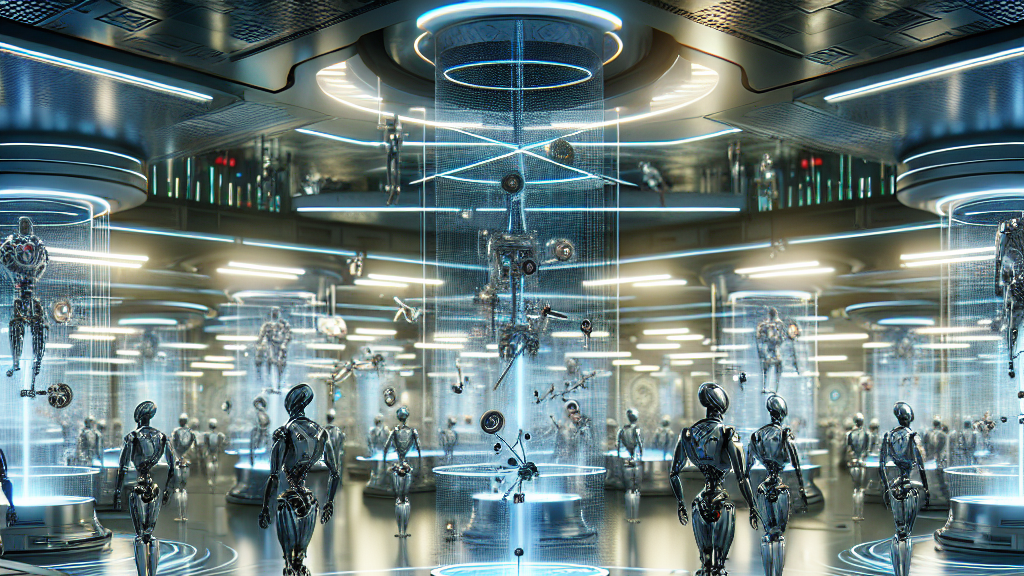
Imagine a future where robots move as freely as animals in the wild, without the need for bulky wires or clunky power sources. That’s the exciting possibility researchers are exploring by drawing inspiration from the eyes of nocturnal animals. By using light energy, they’ve created a new kind of actuator that makes robots faster and more flexible.
The researchers have designed an innovative actuator using light energy and a special material called Laser-Induced Graphene. They’ve layered this graphene inside a clear silicone layer, which means the actuator stays flexible and see-through. Thanks to its clever design, it can react 54% faster than conventional actuators, making it a game-changer in the field of robotics.
In the real world, this could mean robots that are far more adaptable, moving seamlessly in various environments without needing heavy batteries or cables. Imagine rescue missions or construction sites where robots can dart into action quickly and efficiently, powered only by light—this research could make that a reality sooner than you think!
Laser-Induced Graphene was inspired by the structure of eyes of animals that are active at night, showcasing how nature’s designs can inspire advanced technology.
FAQs
What unexpected discovery did scientists make?
Scientists discovered that by mimicking the structure of nocturnal animals’ eyes, they could create actuators that respond 54% faster to light than traditional methods.
How does this new actuator work?
It uses Laser-Induced Graphene within a silicone layer to convert light into movement efficiently, maintaining flexibility and transparency.
Why is this research important for robotics?
This research could lead to untethered robots that move more freely and efficiently, ideal for challenging environments like disaster sites or remote areas.
What makes Laser-Induced Graphene special?
It is incredibly efficient at converting light into heat, allowing it to rapidly induce movement in the actuator without compromising its flexibility.
How might this technology impact daily life?
It could lead to more versatile robots that assist in everyday tasks or emergencies without the restrictions of traditional power sources.
Background
The key to understanding this research is the concept of actuators, which are devices that allow robots to move. Typically, actuators require an external power source, such as electricity or air pressure, which can limit their mobility. This study explores using light as a power source to bypass these restrictions. Laser-Induced Graphene is a material that converts light energy into heat, enabling movement in the robots.
History
The development of robotic actuators has seen significant advancements, but they often rely on electricity or pneumatic systems requiring cumbersome wires or hoses. Prior research has attempted to make actuators more flexible and responsive, but this study stands out by using light energy, inspired by natural designs. Building on the prior work of soft robotics and materials science, the study introduces a new actuator design that could redefine the possibilities for autonomous robotic systems.
Based on “Nocturnal eye inspired liquid to gas phase change soft actuator with Laser-Induced-Graphene: enhanced environmental light harvesting and photothermal conversion” by Maina Sogabe, Youhyun Kim, Kenji Kawashima, available on arXiv (arxiv.org/abs/2501.11930), used under CC BY 4.0 (creativecommons.org/licenses/by/4.0/).