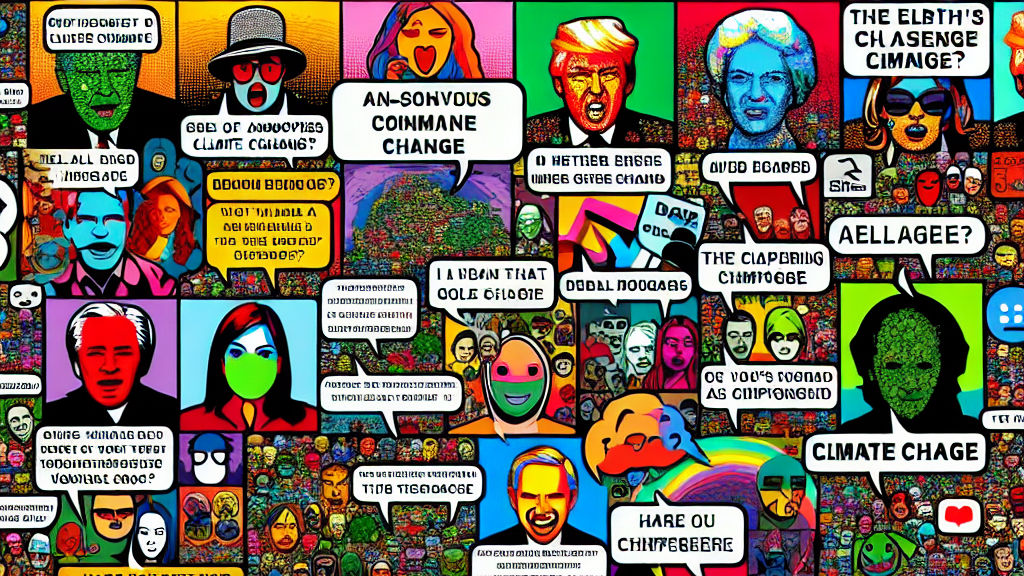
We all love a good meme, right? They’re hilarious, often relatable, and all over social media. But did you know that memes can do more than just make you laugh? When it comes to hot topics like climate change, memes might actually be swaying your opinion, whether you realize it or not. Yes, those funny pictures with captions can pack a punch when it comes to shaping public perceptions. That’s precisely the fascination of the new research exploring how memes influence our take on climate change.
The researchers developed a groundbreaking dataset called CLIMATEMEMES, which is the first to focus on memes related to climate change. They collected over a thousand memes from platforms like Reddit and carefully analyzed them to see how they’re used to push various opinions—also known as stances—alongside the media frames they feature. Two key tasks were at the heart of this study: figuring out what stance each meme takes and understanding what media frame it uses. Using advanced machine learning methods, they found that some systems can detect a meme’s stance quite well, but unraveling which media frame it uses is a bit trickier.
Imagine this research guiding future social media policies or even helping educators and communicators craft more effective messages. As we dive deeper into a digital age where memes are part of everyday conversations, understanding their underlying influence becomes incredibly valuable. Who knows? The next time you’re scrolling through memes, you might start to see them as more than just a source of amusement but as a powerful tool that can shape worldviews, including your own!
Did you know that the average person spends over 100 minutes daily consuming internet memes? That’s more time than many people spend talking to their friends or family!
FAQs
How do memes affect public perceptions of climate change?
Memes can subtly influence public opinions by emphasizing specific aspects of climate change, often aligning with the views of their creators. This framing can shape how audiences understand and react to the issue, potentially altering their perceptions or stances.
What is CLIMATEMEMES, and why is it significant?
CLIMATEMEMES is a novel dataset focusing on climate change memes. It is significant because it allows researchers to analyze how memes are framed and the stances they take, providing insights into their potential influence on public opinion and cultural discourse.
What challenges do researchers face in understanding memes’ impact on climate change?
One of the main challenges is deciphering the complex and often nuanced frames used in memes. While some systems excel at detecting the stance of a meme, understanding the media frame is more difficult, requiring sophisticated analysis and understanding of language and context.
Why do memes potentially have more influence than traditional media?
Memes are easily shareable and accessible, often spreading rapidly across social media. Their informal and engaging nature can make them more relatable and persuasive to audiences compared to traditional media formats.
How could this research on memes influence future communication strategies?
This research could guide the development of more effective communication strategies by highlighting the power of memes in shaping public opinion. It aids in crafting messages that resonate better with audiences, making complex topics like climate change more understandable and relatable.
Background
Media framing is about selecting certain aspects of a topic to highlight, influencing how audiences perceive and understand it. This concept is fundamental in communication because it can subtly shape public opinion by focusing on specific angles or points of a story. In the digital world, memes have become a new vehicle for media framing, especially on social platforms where information spreads rapidly. Understanding how memes are framed can reveal much about their influence on perceptions.
History
The exploration of media framing dates back to the early days of mass media, where it was identified as a tool for influencing public opinion. As media evolved from print to digital, so did the tools and methods of framing. The rise of the internet and social media introduced memes as a novel form of communication, combining visuals and text to convey messages. Recent studies have started to uncover the influence of memes on political discourse, public awareness, and now, environmental issues like climate change.
Based on “What Media Frames Reveal About Stance: A Dataset and Study about Memes in Climate Change Discourse” by Shijia Zhou, Siyao Peng, Simon Luebke, Jörg Haßler, Mario Haim, Saif M. Mohammad, Barbara Plank, available on arXiv (arxiv.org/abs/2505.16592), used under CC BY 4.0 (creativecommons.org/licenses/by/4.0/).