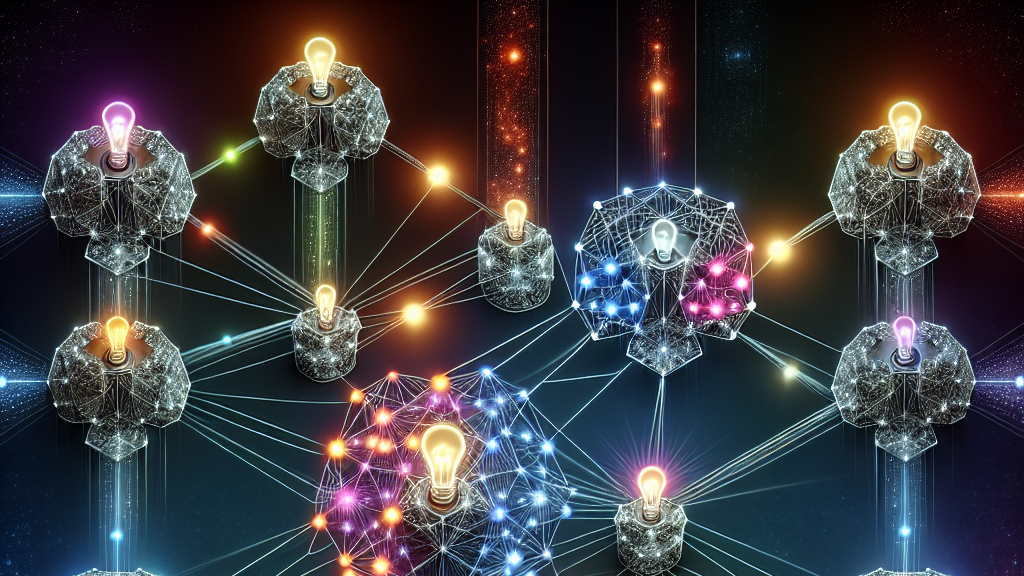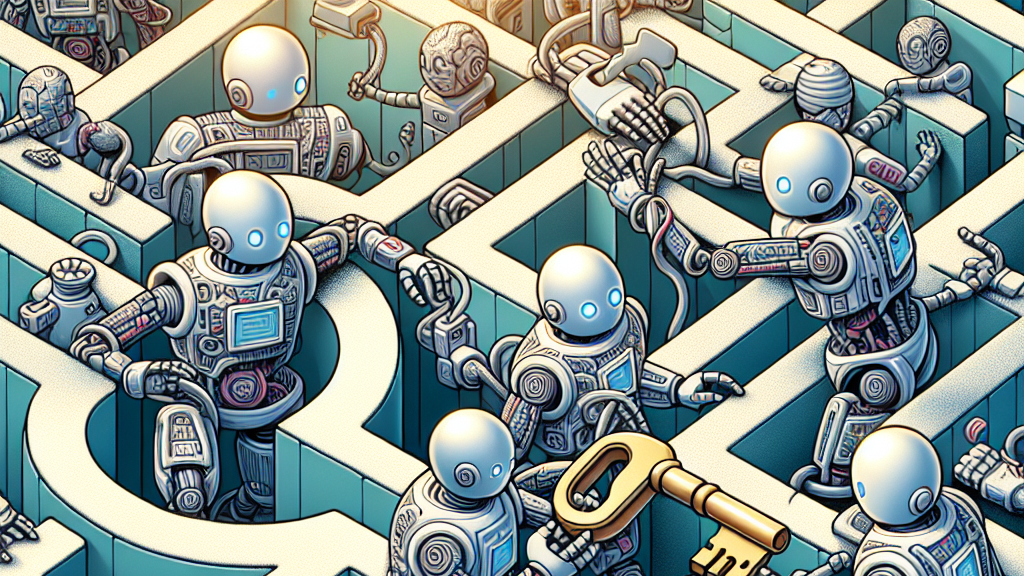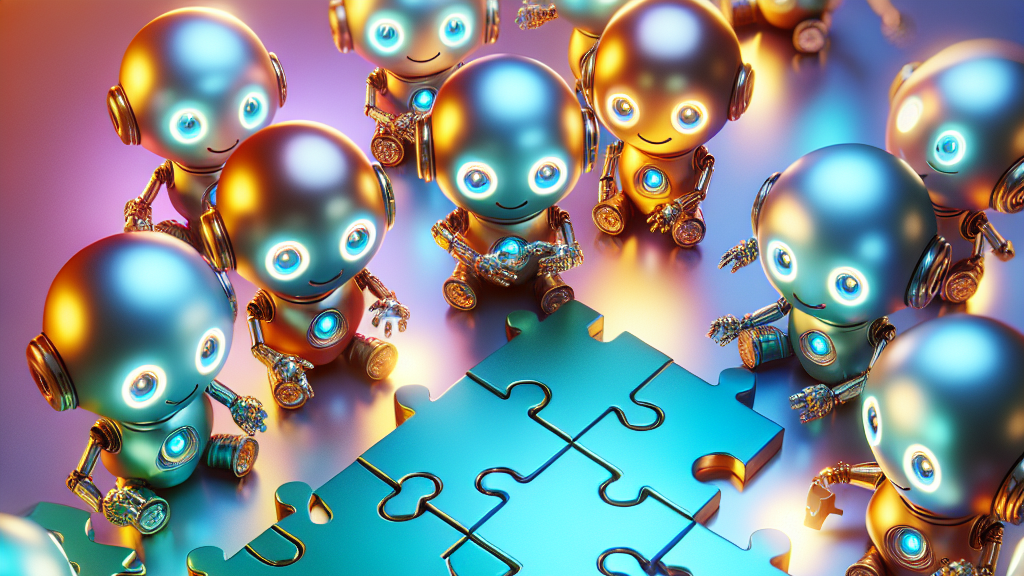
Have you ever wondered if two heads are better than one? Well, in the world of robotics, this saying might just ring true. Imagine a group of small robots working together to complete a task. The secret sauce? Each robot doesn’t need to know everything; it just needs to know a little bit to make a big impact.
In this exciting field of study, researchers are discovering surprising ways that multiple small robots can outperform one big one. Using what’s known as multi-agent reinforcement learning (MARL), these robots learn to work together by sharing limited information. Picture a soccer team where each player doesn’t need to see the entire field but can still score goals by knowing where their teammates are and relying on them. By sharing the task, they become more resilient to unexpected challenges, like a player (robot) getting a flat battery.
What does this mean for the future? Imagine having a network of mini robots cleaning your house or assembling your children’s toys. If one stops, the others adapt and keep going, ensuring that work continues smoothly without a hiccup. This kind of teamwork could revolutionize industries from home automation to space exploration. It’s a game-changer for creating systems that are strong and reliable, even when things go wrong.
Did you know that using multiple robots can make a system more resilient even if one robot fails?
FAQs
How can multiple small robots be better than one big robot?
Multiple small robots can work together, each with partial information, to complete tasks more efficiently and reliably. They can adapt to failures more easily compared to a single robot.
What is multi-agent reinforcement learning (MARL)?
Multi-agent reinforcement learning is a method by which multiple agents (or robots) learn to work together in a shared environment by focusing on their specific roles, rather than needing full information about the entire system.
Why does multi-agent learning provide more robustness?
Because each robot only has partial information, they can adapt and handle disruptions better. If one robot fails, the others can continue the task, making the system more reliable.
What are the practical implications of this research?
This approach could lead to more resilient and efficient systems in various fields, from automated home appliances to space missions, where reliability and adaptability are crucial.
How does this research change our understanding of robotic systems?
It challenges the notion that having complete information is always better, showing that sometimes, sharing tasks with limited information can lead to better performance and robustness.
Background
Robotic systems traditionally rely on complete information to operate efficiently. Single-agent reinforcement learning (SARL) has been the go-to method for training robots. Here, a robot learns by observing its actions and their results in the environment, gradually improving its performance. Multi-agent reinforcement learning (MARL), however, involves multiple robots learning to work together even when they only have partial information about the task or environment, which can improve resilience.
History
Research into robotic systems has evolved significantly over the years. Initially, the focus was on single-agent systems with centralized control, where one robot handled the task alone. With advances in computing and artificial intelligence, researchers began exploring decentralized systems, leading to the development of MARL, where each agent can operate semi-independently but in coordination with others, leading to more robust configurations.
Based on “Less Is More: Robust Robot Learning via Partially Observable Multi-Agent Reinforcement Learning” by Wenshuai Zhao, Eetu-Aleksi Rantala, Sahar Salimpour, Joni Pajarinen, Jorge Peña Queralta, available on arXiv (arxiv.org/abs/2309.14792), used under CC BY 4.0 (creativecommons.org/licenses/by/4.0/).