Connect with us

Search by keyword

Computers

Can Screens Really Understand Us?

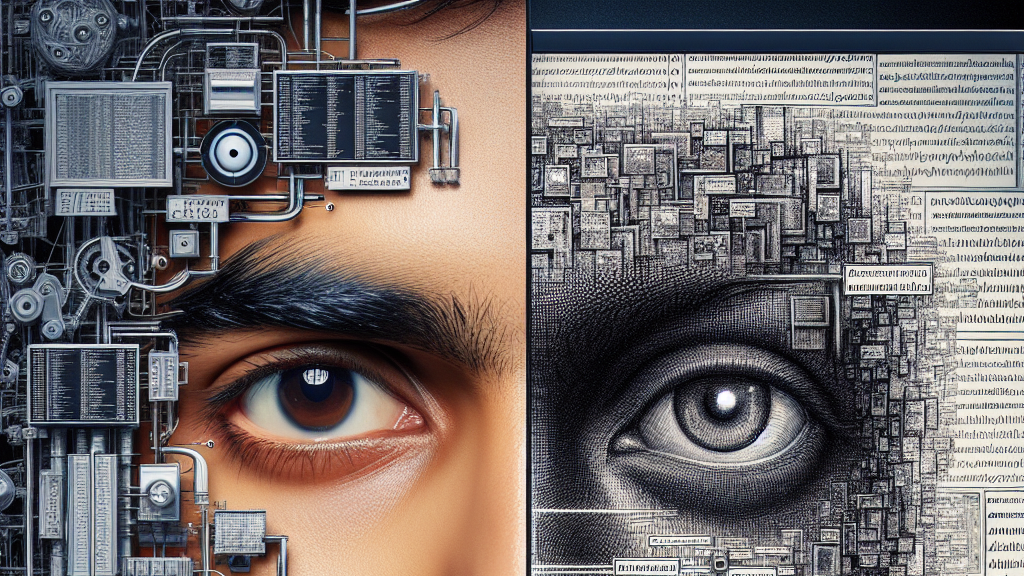
This study reveals that vision-language models, which help computers understand combinations of images and text, might not be as accurate as we thought. The research points out biases in popular tests and offers tips to make them fairer. Understanding these helps us create smarter, more reliable technology that better understands how humans communicate visually and verbally.

Can Screens Really Understand Us
✨Researched by humans. Explained by robots. Learn more.

Imagine if your smart device could truly understand everything you see and say, blending images with words just like you do. That’s the goal of vision-language models, the tech behind AI that tries to make digital devices ‘see’ and ‘hear’ like humans. But recent research has found that these models might not be measuring up as well as we thought, thanks to some tricky biases in the tests we use to check them.

Scientists took a close look at 17 popular benchmarks, or tests, that evaluate these vision-language models. They found these tests often use unfair tricks, like stacking lots of similar-looking images or captions, which can mess with the results. Surprisingly, even simple tricks like counting word lengths can match the performance of complex models. This suggests the models might not truly understand the content as we expect.

This research is crucial because, in the future, we rely on these models to power everything from smart assistants to advanced security systems. By figuring out how to test these models more fairly, we can improve technology to better understand and interact with us, making our gadgets more helpful and our interactions with machines more natural.

Did you know? Even simple word tricks can fool advanced AI, making it as effective as some complex models!

FAQs

What are vision-language models trying to achieve?

Vision-language models aim to allow computers to understand and combine both visual and textual information similarly to how humans process images and text together.

Why do biases in benchmarks matter for vision-language models?

Biases can lead to inaccurate measurements of a model’s true abilities, meaning technology might not be as reliable or effective in real-world applications as we assume.

How can these biases affect everyday technology use?

If biases lead to faulty model assessments, everyday technologies like virtual assistants and security systems may not work as well or interpret user inputs accurately.

Background

Vision-language models are systems that integrate image processing with natural language understanding. They are fundamental in AI advancement as they enable machines to ‘see’ and ‘understand’ like humans, making them capable of tasks such as image captioning and multi-lingual translation. However, these models need to be tested for their efficiency, which is where benchmarks come in. Benchmarks assess how well the models comprehend compositional inputs, combining image and text data. But biases in these benchmarks can skew perceptions of model performance.

History

The field of vision-language models has been growing rapidly with advances in neural networks and data processing. Early models focused solely on text or image recognition, but over time, the integration of both has become a key goal. Benchmarks arose as a way to systematically evaluate these models. However, as AI capabilities grew, so did the complexity of tests and, inadvertently, the introduction of biases. This study highlights these issues and suggests improvements, building on previous work to refine benchmarks and ensure robust AI performance.

Based on “A Good CREPE needs more than just Sugar: Investigating Biases in Compositional Vision-Language Benchmarks” by Vishaal Udandarao, Mehdi Cherti, Shyamgopal Karthik, Jenia Jitsev, Samuel Albanie, Matthias Bethge, available on arXiv (arxiv.org/abs/2506.08227), used under CC BY 4.0 (creativecommons.org/licenses/by/4.0/).


Trending

Latest

Can AI Save Water Discover How

Computers

AI is transforming the tech world, but it uses lots of water! A new tool, SCARF, helps us measure and reduce AI's water footprint,...

Whats a Forbush Decrease and Why Should We Care Whats a Forbush Decrease and Why Should We Care

Space

Scientists just observed the biggest solar storm event in years, revealing unexpected cosmic ray patterns. Understanding these changes could help us protect our technology...

Can Cars Spot Danger Faster Than Humans Can Cars Spot Danger Faster Than Humans

Computers

Think about how quickly you react when something unexpected happens on the road. This research brings us closer to creating self-driving cars that can...

Can Fear of the Other Stop Social Harmony Can Fear of the Other Stop Social Harmony

Physics

Fear of the unknown might make it harder for people to agree and get along. This study shows that when people have strong xenophobic...

Can AI Revolutionize Breast Cancer Diagnosis Can AI Revolutionize Breast Cancer Diagnosis

Electricity

This research introduces a groundbreaking AI model that can accurately assess HER2-positive breast cancer using widely accessible staining methods, potentially revolutionizing how we diagnose...

Can AI Transform Your Singing into a Choir Can AI Transform Your Singing into a Choir

Computers

Imagine singing solo and having AI turn you into a choir. This research unveils a groundbreaking AI tool that transforms your voice into rich...

You May Also Like

Computers

Imagine asking a smart computer to count stripes on an Adidas logo, and it can't do it right! This study reveals how AI models...

Computers

Researchers explore fairness in AI models, specifically vision-language ones, revealing biases in gender and race. They introduce a new method to balance these biases,...

Computers

Exploring how close AI is to mastering skills that humans find intuitive by testing their ability to play classic video games. This research might...

Computers

Exploring AI's ability to transform hateful memes into thoughtful ones, improving our online interactions and fostering a more respectful digital world.

Computers

This research shows how current music AI tests might be flawed because they let models succeed without truly understanding sound. A new framework changes...

Computers

AI models can be tricked by hidden cues in images, which can change how they 'see' things. As AI becomes more common in our...

Computers

Imagine giving an AI the power to recognize objects with just one visual hint! Instead of relying solely on text prompts, researchers found that...

Computers

Discover how advanced AI struggles with thinking like humans in multi-sensory scenarios and what new benchmarks reveal about their capabilities.

Computers

Think your AI's getting smarter? Think again. This study shows how Vision-Language Models can confuse certain features, but new techniques are fixing that—making AI...

Copyright © 2024 8ig8rain.

Disclaimer: The content on 8ig8rain.com consists of AI-generated summaries of scientific abstracts from arXiv. Please note that most arXiv abstracts are preprints and may not have undergone formal peer review. While these summaries aim to convey key ideas and potential applications, they are provided for informational purposes only and should not be interpreted as validated scientific findings or professional advice. The summaries are intended to educate, spark curiosity, and inspire further exploration of science.