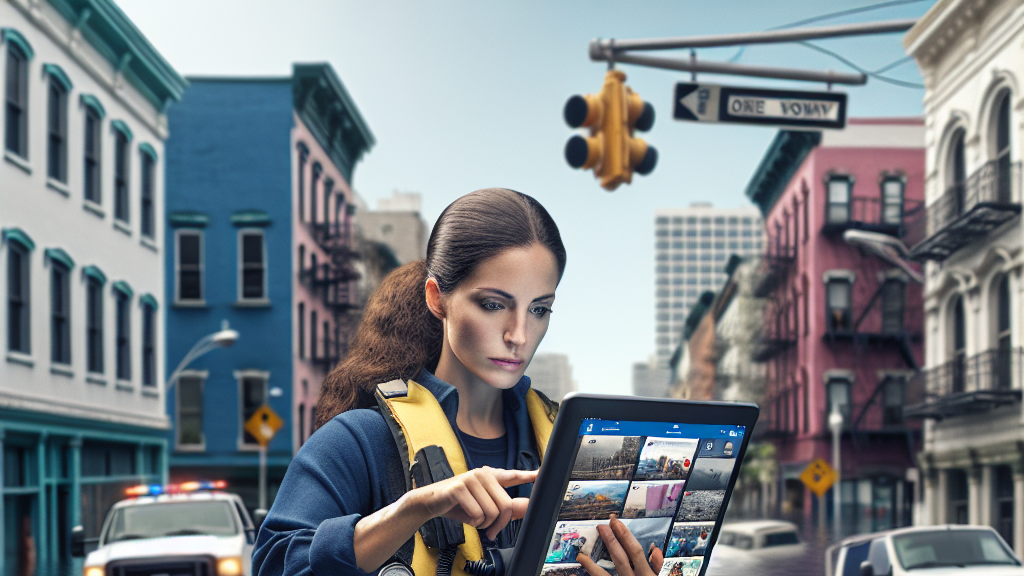
In the chaos of a disaster, every second counts. Imagine if emergency responders could tap into a wealth of real-time information to guide their efforts. That’s precisely what researchers are exploring with social media platforms like X (formerly Twitter) during floods. By understanding how people behave online during such crises, we can unlock crucial insights that help save lives.
The research analyzed thousands of tweets and public inquiry submissions during the 2022 floods in New South Wales, Australia. While tweets are quick bursts of information, inquiry submissions provide more detailed stories. By integrating these two data streams using advanced AI techniques, researchers were able to identify patterns and even geographical hotspots of concern. This innovation helps cut through the noise to find the most important and actionable information for those on the ground.
Imagine a future where emergency responders can instantly pinpoint where help is most needed during a flood or storm, thanks to an AI that sifts through millions of social media posts. This technology could also guide long-term planning for communities at risk, improving resilience before the next disaster strikes. By blending human insights with AI precision, this research promises a new era in crisis management.
Did you know that during a disaster, social media can be more informative than traditional news sources?
FAQs
How can social media be used in disaster response?
Social media provides real-time information from people experiencing the event, allowing for faster and more focused response efforts.
What makes this research different from past studies?
This study combines social media with public inquiry submissions using advanced AI, offering a richer understanding of how people communicate during a disaster.
How was AI used to analyze social media data in the study?
The research employed Latent Dirichlet Allocation for topic modeling and Large Language Models to filter and prioritize relevant information, improving the situational awareness of emergency responders.
Why are public inquiry submissions important in this research?
Unlike social media posts, inquiry submissions are detailed and structured, providing a comprehensive view of public sentiments and behaviors during a crisis.
What does this research mean for future disaster response efforts?
This research suggests that combining social media with AI can significantly enhance real-time situational awareness and inform better preparedness strategies for future emergencies.
Background
Disaster response teams rely heavily on timely information. Social media platforms like Twitter provide immediate, but often chaotic, updates. To sift through this noise, the study combines two analytical methods. Latent Dirichlet Allocation helps identify the main topics and opinions within a large set of texts, while Large Language Models focus on understanding and filtering these in a more nuanced way.
History
Traditionally, disaster response relied on official reports and media coverage. However, as social media use exploded, it became a valuable tool for real-time updates. This research builds on the evolving use of digital data by combining advanced machine learning techniques to extract even more valuable insights.
Based on “Signals from the Floods: AI-Driven Disaster Analysis through Multi-Source Data Fusion” by Xian Gong, Paul X. McCarthy, Lin Tian, Marian-Andrei Rizoiu, available on arXiv (arxiv.org/abs/2505.17038), used under CC BY 4.0 (creativecommons.org/licenses/by/4.0/).