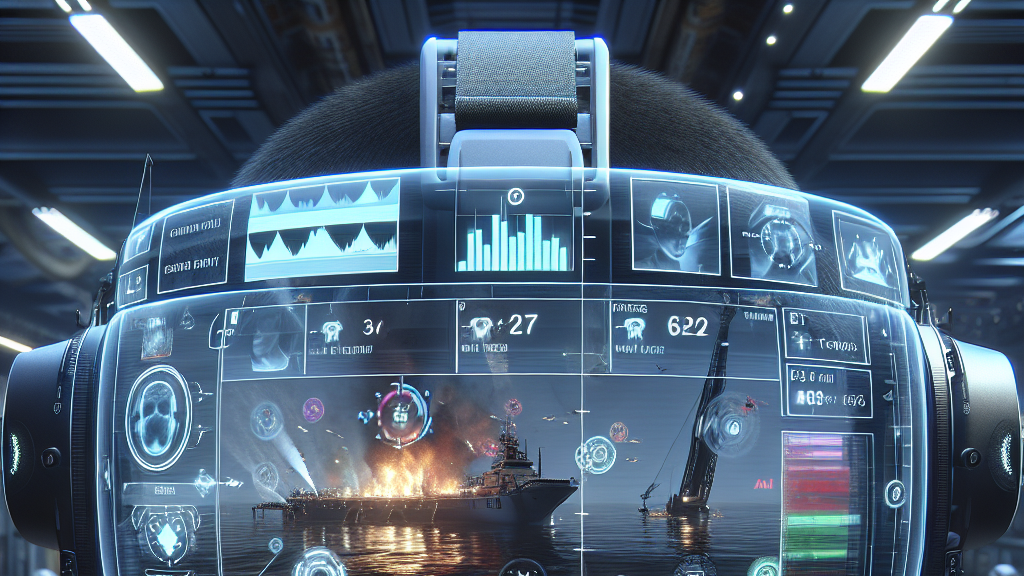
Imagine a VR world where your emotions shape the experience! That’s what a recent study on an emotion-aware VR fire drill simulator has achieved. It’s designed to train ship crews by detecting their emotional reactions in real time, enhancing how they learn under stress. But it’s not just about the tech—it’s about making sure the experience is as immersive and educational as possible.
This innovative simulator uses advanced gadgets like the Meta Quest Pro headsets to track your eyes and facial expressions. It presents challenges in the form of emergencies, where each level gets tougher as you advance. The main goal is to monitor how users deal with stressful situations, improving their decision-making skills and emotional resilience in real emergencies.
So, what does this mean for the future? Think about how emergency training, or any kind of learning, could be transformed. By understanding and adapting to each person’s emotional responses, such simulators could provide more tailored and effective learning experiences. Imagine a future where your emotions guide your training, making it not only educational but also engaging and personal!
Did you know? Real-time emotion detection can reduce task completion times by up to 32% in VR environments!
FAQs
How does the VR fire drill simulator detect emotions?
The VR fire drill simulator uses advanced eye-tracking and facial expression analysis to detect emotions in real time, helping improve learning outcomes by assessing trainees’ responses under stress.
Why is emotion detection important in virtual reality training?
Emotion detection is crucial because it allows training programs to adapt to individual needs, enhancing decision-making and emotional resilience in stressful situations, making the experience more immersive and educational.
What improvements were made in the VR simulator’s second version?
The second version of the VR simulator included a better user interface, visual cues, and a real-time task tracker, which significantly improved user performance and reduced task completion times by up to 32%.
How does prior experience with VR or gaming affect training efficiency?
Participants with previous experience in VR or gaming navigated the fire drill scenarios more efficiently, indicating that familiarity with virtual environments can lead to better performance in similar simulations.
What future applications could emotion-aware VR technology have?
Emotion-aware VR technology could revolutionize various training programs, education, and even entertainment by providing personalized experiences that adapt to users’ emotional states for more effective and engaging outcomes.
Background
Virtual Reality (VR) is a simulated experience that can be similar to or entirely different from the real world. Key methodologies in this research involve using VR to create simulated environments and integrating emotion detection through eye-tracking and facial expression analysis to adapt the experience based on the user’s emotional state.
History
VR technology has evolved significantly, offering immersive experiences across various fields. Initially focused on gaming and entertainment, recent advancements have shifted towards education and training. This study builds on the trend of using VR for practical applications, such as emergency preparedness, by incorporating emotional intelligence into the experience.
Based on “Towards an Emotion-Aware Metaverse: A Human-Centric Shipboard Fire Drill Simulator” by Musaab H. Hamed-Ahmed, Diego Ramil-López, Paula Fraga-Lamas, Tiago M. Fernández-Caramés, available on arXiv (arxiv.org/abs/2503.03570), used under CC BY 4.0 (creativecommons.org/licenses/by/4.0/).