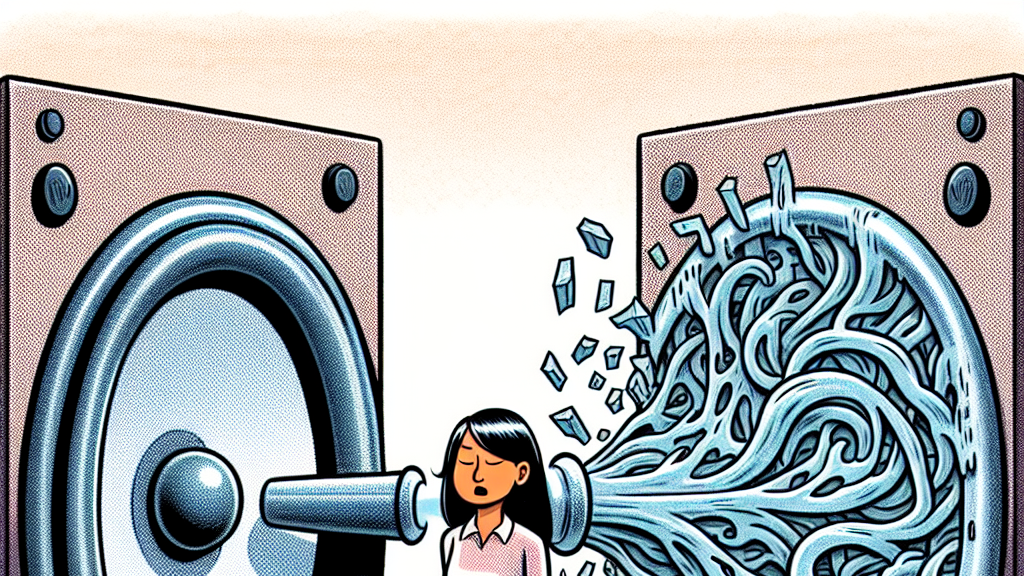
Imagine if every time you sent a message, there was a chance someone could intercept and read it—scary, right? In today’s digitally connected world, the privacy of our communication is a top concern. Whether you’re chatting with a friend or discussing confidential work information, you want assurance that your words remain between you and the intended recipient.
This research delves into the nitty-gritty of something called physical layer security within channels affected by α-F fading, which are common in wireless communication. This involves preventing eavesdropping, both passive (where someone’s quietly listening in) and active (where they’re actively trying to break into your conversation). It does this by figuring out how likely it is that these messages can remain secure and how strong the channel needs to be to ensure privacy can be maintained.
These findings could revolutionize how we protect our digital communications in the future. Imagine a world where your online chats, whether on social media or email, are as secure as a concrete bunker. Businesses could safeguard their trade secrets, and individuals could speak freely without fear. This research is a step towards making that dream a reality.
Did you know? The probability of strictly positive secrecy capacity is like a secret sauce that boosts your chance of keeping chats private!
FAQs
What are α-F fading channels, and why are they important for digital security?
α-F fading channels are types of communication channels that experience changes in signal strength, which can affect the reliability of data transmission. They’re crucial for digital security because understanding them helps in designing systems that can protect data from being intercepted during transmission.
How does this research help against eavesdropping?
This research provides new analytical methods to measure how secure a communication channel is against passive and active eavesdropping. It calculates key metrics like secrecy capacity and secure outage probability to enhance privacy in digital communications.
What is the significance of Monte Carlo simulations in this study?
Monte Carlo simulations are used to validate the theoretical results obtained from the research. They involve running numerous simulations to ensure that the analytical expressions derived are accurate and that the proposed security methods will hold up under various conditions.
How might this research impact everyday digital communication?
This research could lead to the development of more secure communication systems that ensure our digital conversations remain private, protecting individuals and businesses from potential eavesdropping in the future.
What is strictly positive secrecy capacity, and why is it important?
Strictly positive secrecy capacity is a measure of how likely it is for a communication channel to maintain privacy against eavesdroppers. It indicates the robustness of a system in keeping sensitive information secure.
Background
To grasp this study, one needs to understand that communication channels are like highways for data, sometimes experiencing ‘fading’ where signals weaken. In the digital realm, especially wireless, these channels can be exploited by eavesdroppers. Physical layer security (PLS) focuses on making these channels inherently secure by analyzing and tweaking the signals themselves. Key metrics like secrecy capacity measure how well a channel can keep information private, even in varying conditions.
History
The concept of maintaining secrecy in communication is as old as communication itself, but the digital age has brought new challenges. Early studies focused on encrypting data after it was transmitted, but recent advances have turned attention to securing the transmission itself. This study adds to a growing body of work seeking to secure the very pathways data travels on, building on fundamental principles of signal processing and communication theory.
Based on “On the Secrecy Performance of α-𝔽 Channels with Pointing Errors” by Gabriel M. C. Neves, Hugerles S. Silva, Higo T. P. Silva, Wamberto J. L. Queiroz, Felipe A. P. Figueiredo, Rausley A. A. de Souza, available on arXiv (arxiv.org/abs/2503.15618), used under CC BY 4.0 (creativecommons.org/licenses/by/4.0/).