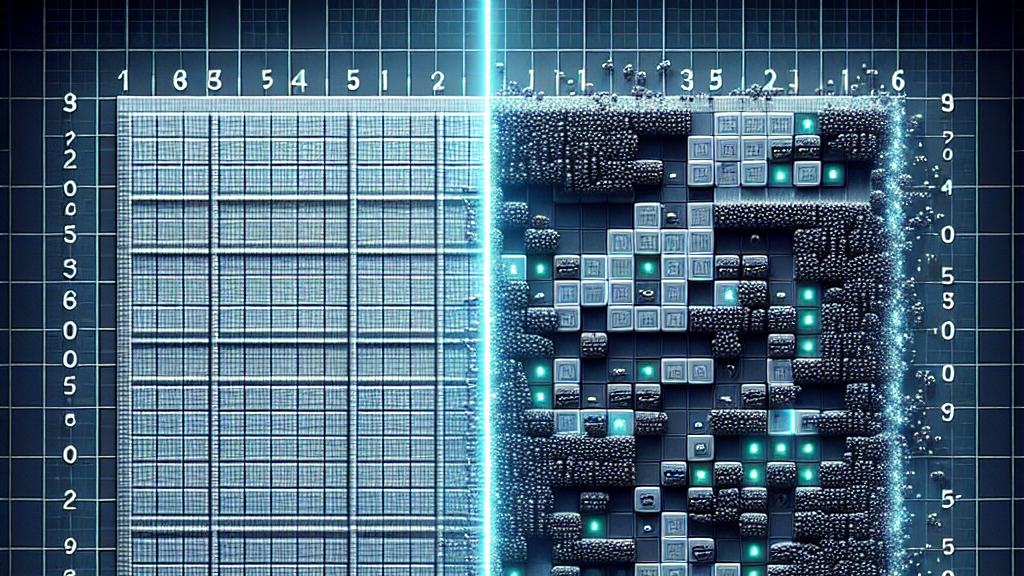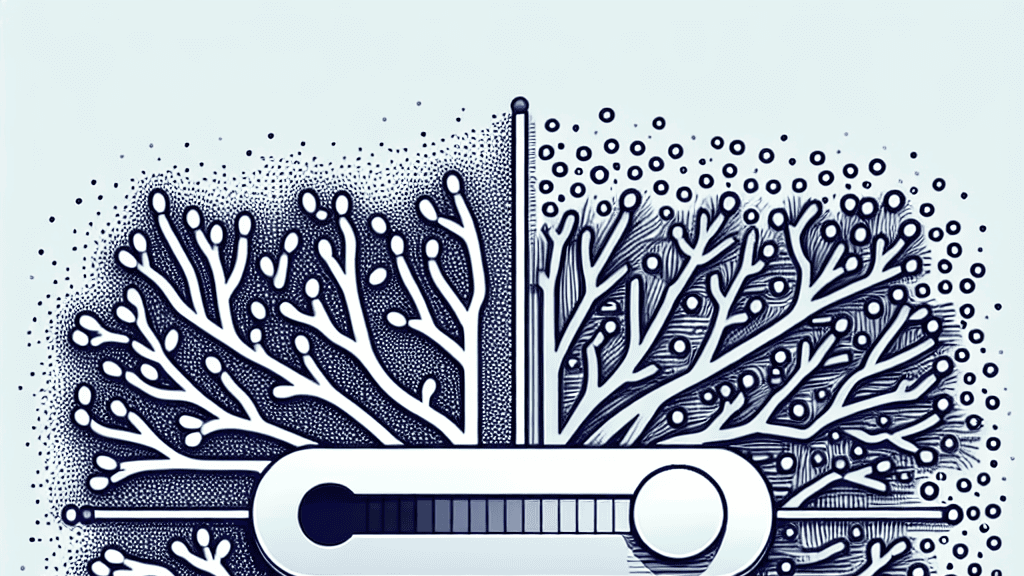
Imagine trying to spot the difference between two dense forests, tree by tree—that’s what computers do when they compare data structures called merge trees. This can be super slow, way slower than any of us would like. But what if we could make it faster, almost as if by magic? That’s where this new research comes in; it’s like giving computers a map with shortcuts.
The scientists have come up with a new algorithm that lets you decide how fast you want your computer to work. Imagine a volume knob that lets you decide between perfect accuracy and lightning speed. The algorithm is all about spotting changes in merge trees, which are used to understand complex datasets. It’s called a ‘heuristic’ approach, meaning it’s like a smart guess that helps the computer zoom through the calculations.
In the real world, this means we could quickly handle big data, like the kind used for weather forecasts or in the latest blockbuster movies, even if the data gets a bit messy or changes over time. So, whether you’re trying to predict tomorrow’s weather more accurately or speed up computer animations, this algorithm could be a game-changer!
Did you know? The term ‘NP-complete’ refers to some of the most challenging puzzles in computer science, which can take a computer forever to solve without smart tricks!
FAQs
What unexpected discovery did scientists make?
They found a way to make data comparisons much faster by tweaking accuracy settings, which could revolutionize how we handle complex datasets.
How does this new algorithm work?
It introduces a user-controlled look-ahead parameter, allowing a trade-off between speed and accuracy in analyzing data structures called merge trees.
Why should I care about merge trees?
Merge trees help make sense of huge amounts of data in various fields, from meteorology to movie production, affecting our daily weather updates and the films we enjoy.
What are saddle swaps?
Saddle swaps refer to specific changes or errors in data structures that this algorithm handles effectively, maintaining accuracy while speeding up calculations.
How can this affect my everyday life?
Faster data comparisons could lead to quicker and more accurate weather forecasts, improved technology in streaming services, and even smoother software updates.
Background
A merge tree is a data structure that helps computers understand the hierarchy and relationships within complex datasets. It’s essential for simplifying and analyzing large amounts of information efficiently. However, comparing these structures is computationally intense, typically running into problems known as ‘NP-complete,’ which are notoriously hard puzzles for computers to solve quickly.
History
The journey of understanding and manipulating merge trees has been evolving steadily. Initially, the focus was on accuracy alone, often at the expense of speed. Prior breakthroughs centered on finding efficient methods to manage changes and errors in these structures. This latest study builds on prior work by introducing a balance between precision and efficiency, allowing for more practical applications in real-world scenarios.
Based on “Accelerating Computation of Stable Merge Tree Edit Distances using Parameterized Heuristics” by Florian Wetzels, Heike Leitte, Christoph Garth, available on arXiv (arxiv.org/abs/2501.05529), used under CC BY 4.0 (creativecommons.org/licenses/by/4.0/).