Connect with us

Search by keyword

Computers

Could AI Attacks Spike Your Energy Bill?

AI models you rely on for things like driving and security cameras might suddenly gulp more power than expected because of sneaky image tricks. This could mean higher energy costs and potential tech disruptions.

Could AI Attacks Spike Your Energy Bill
✨Researched by humans. Explained by robots. Learn more.

Imagine you’re driving a smart car, or your city relies on surveillance cameras to keep things safe. But what if I told you that someone could make these AI systems burn a surprising amount of extra energy without you even knowing it? It’s like sneaky energy vampires at work, invisible to the eyes but deadly to your energy bill.

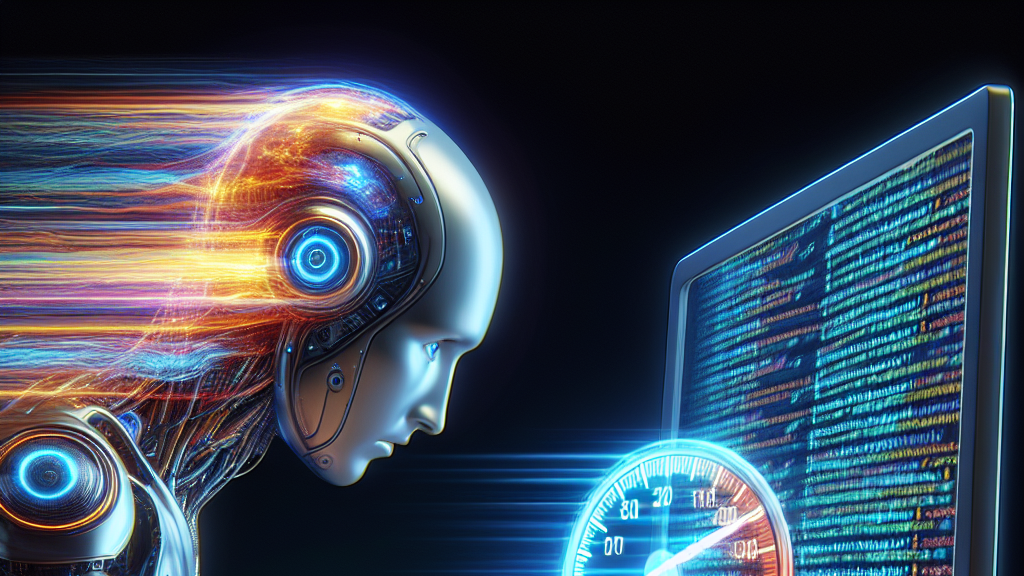
Researchers have found a way to trick vision language models, the brains behind recognizing things in images, into using more GPU power by showing them seemingly normal pictures. They call it EO-VLM, which stands for Energy Overload via Vision Language Models. By mixing up some imperceptible noise that AI can see, but humans can’t, it’s possible to churn up energy use by 50%! And the kicker? Anyone can do it without knowing what kind of AI model is running the show.

Think about the possibilities. In the future, this kind of attack could make running smart tech a lot more expensive than it needs to be. It could even disrupt services that a lot of people rely on every day. This research shows us how important it is to build stronger, more energy-efficient systems to keep these kinds of vulnerabilities at bay before they affect our wallets.

Did you know? AI systems can be tricked into using more energy just by showing them specific images!

FAQs

How does the energy overload attack on vision models work?

This attack uses special image prompts that are invisible to the human eye but make AI models crank up their energy use, much like taking the stairs to burn more calories—even if you didn’t plan to exercise!

Why is the EO-VLM attack on AI models a concern?

The concern is that these attacks can cause significant energy waste, which could lead to higher costs and affect the availability of technology services we depend on daily, such as autonomous vehicles and surveillance systems.

Can the EO-VLM method target any AI vision model?

Yes, the EO-VLM framework is model-agnostic, meaning it can affect any AI vision model regardless of its architecture, making it a widespread potential threat.

How much can energy consumption increase due to these attacks?

The research has shown that energy consumption can rise by up to 50% when these special images are used, which is a substantial increase that could disrupt normal operations.

What can be done to prevent this type of AI attack?

Implementing better safety filters and designing more energy-efficient AI models can help prevent such vulnerabilities that lead to increased energy use.

Background

Vision models are crucial in technologies like self-driving cars and security systems because they analyze visual information. They rely on powerful processing units like GPUs, which can consume significant energy based on the tasks they perform. If an image is designed to cause more processing, it can lead to higher energy use.

History

The field of AI attacks has evolved from direct manipulation of inputs to more covert methods like energy overloads. Previous work focused on fooling AI with incorrect outputs, but this research highlights a new dimension—indirectly harming systems by increasing their power demands.

Based on “EO-VLM: VLM-Guided Energy Overload Attacks on Vision Models” by Minjae Seo, Myoungsung You, Junhee Lee, Jaehan Kim, Hwanjo Heo, Jintae Oh, Jinwoo Kim, available on arXiv (arxiv.org/abs/2504.08205), used under CC BY 4.0 (creativecommons.org/licenses/by/4.0/).


Trending

Latest

Can AI Save Water Discover How

Computers

AI is transforming the tech world, but it uses lots of water! A new tool, SCARF, helps us measure and reduce AI's water footprint,...

Whats a Forbush Decrease and Why Should We Care Whats a Forbush Decrease and Why Should We Care

Space

Scientists just observed the biggest solar storm event in years, revealing unexpected cosmic ray patterns. Understanding these changes could help us protect our technology...

Can Cars Spot Danger Faster Than Humans Can Cars Spot Danger Faster Than Humans

Computers

Think about how quickly you react when something unexpected happens on the road. This research brings us closer to creating self-driving cars that can...

Can Fear of the Other Stop Social Harmony Can Fear of the Other Stop Social Harmony

Physics

Fear of the unknown might make it harder for people to agree and get along. This study shows that when people have strong xenophobic...

Can AI Revolutionize Breast Cancer Diagnosis Can AI Revolutionize Breast Cancer Diagnosis

Electricity

This research introduces a groundbreaking AI model that can accurately assess HER2-positive breast cancer using widely accessible staining methods, potentially revolutionizing how we diagnose...

Can AI Transform Your Singing into a Choir Can AI Transform Your Singing into a Choir

Computers

Imagine singing solo and having AI turn you into a choir. This research unveils a groundbreaking AI tool that transforms your voice into rich...

You May Also Like

Computers

Understanding how small changes in computer settings can lead to big differences in AI performance has huge implications for reliability in AI applications. This...

Computers

Imagine a world where your car charges itself while you drive! As electric vehicles become more popular, we might soon see special lanes that...

Computers

Imagine charging your electric car while you're on the go! Charging While Driving (CWD) lanes could solve range anxiety and boost eco-friendly tech but...

Computers

Scientists are exploring whether artificial intelligence models are stable enough to rely on in real-world situations. Understanding this could mean more efficient AI systems...

Computers

AI models can be tricked by hidden cues in images, which can change how they 'see' things. As AI becomes more common in our...

Computers

Imagine if computers could write their own super-efficient programs, making your gadgets faster and smarter. Scientists are testing AI to do just that, which...

Computers

Backdoor attacks on time series data are a big security risk, but the new TrojanTime method offers a smart way to carry out these...

Copyright © 2024 8ig8rain.

Disclaimer: The content on 8ig8rain.com consists of AI-generated summaries of scientific abstracts from arXiv. Please note that most arXiv abstracts are preprints and may not have undergone formal peer review. While these summaries aim to convey key ideas and potential applications, they are provided for informational purposes only and should not be interpreted as validated scientific findings or professional advice. The summaries are intended to educate, spark curiosity, and inspire further exploration of science.