Ever wished your TV knew exactly what you wanted to watch next? Welcome to the world of Internet Protocol Television (IPTV), where cutting-edge technology transforms living room entertainment. IPTV ditches the old-school cables, bringing high-quality content straight to your screen via the internet, making your viewing experience smoother and more interactive than ever.
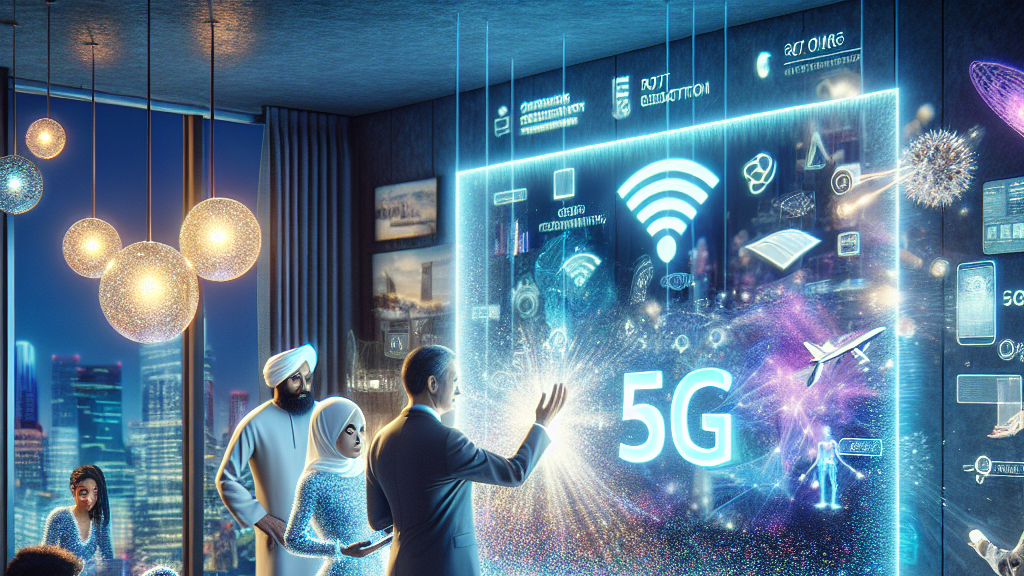
At its core, IPTV uses advanced internet tech to enhance your TV experience. Through managed networks and nifty data compression techniques, it delivers shows and movies with incredible quality. This is different from open-network Internet TV, which often struggles with network issues. IPTV is like a fine-tuned concert versus a street corner performance. And here’s where it gets even cooler: AI and machine learning are onboard to learn your likes and dislikes, offering personalized recommendations that make finding your next binge-worthy series a breeze. Plus, emerging tech like 5G ensures speeds that keep up with your cravings for seamless streaming.
In the future, IPTV could redefine how we consume entertainment. Imagine a hybrid model combining the best of traditional TV and online streaming in one neat package. With enhancements like AI-driven content suggestions and extra-secure delivery, it could mean endless content choices, minus the headaches of buffering. So, whether you’re a tech geek or just someone who loves a good TV marathon, the IPTV revolution is ready to knock on your door.
Did you know? IPTV allows you to pause, rewind, or record live TV, unlike traditional cable TV!
FAQs
What makes IPTV different from regular cable TV?
IPTV delivers content via the internet using dedicated networks, offering superior quality and interactivity, while cable TV relies on traditional networks with limited flexibility.
How does artificial intelligence enhance IPTV viewing?
AI in IPTV learns users’ preferences to provide personalized content recommendations, making it easier to discover shows and movies tailored just for you.
Why is 5G important for IPTV?
5G technology boosts IPTV with faster internet speeds and lower latency, ensuring smooth and high-quality streaming experiences without buffering.
What role do security measures play in IPTV?
Security measures like encryption and digital rights management (DRM) protect IPTV services from unauthorized access and piracy, ensuring that content is secure and accessible only to subscribed users.
Will IPTV replace traditional television services?
While IPTV offers a modern alternative with many advantages, hybrid models that combine traditional and streaming services are expected to provide the best of both worlds, enhancing accessibility and user experience.
Background
IPTV, or Internet Protocol Television, is a way to stream TV shows and movies using the internet instead of traditional broadcast methods. This involves using managed networks to ensure quality service, advanced data compression to efficiently deliver high-quality video, and complex protocols like IGMP and RTSP to manage content delivery. Security measures such as encryption and digital rights management are also crucial to protect content from unauthorized access.
History
The journey of IPTV began as an alternative to cable and satellite TV, leveraging the internet for content delivery. Over years, the evolution of high-speed internet, data compression, and network protocols have allowed IPTV to offer high-quality service. With AI and machine learning now enhancing personalized recommendations, and 5G enabling fast and seamless streaming, IPTV continues to transform the landscape of digital entertainment.
Based on “The Future of IPTV: Security, AI Integration, 5G, and Next-Gen Streaming” by Georgios Giannakopoulos, Peter Adegbenro, Maria Antonnette Perez, available on arXiv (arxiv.org/abs/2503.13450), used under CC BY 4.0 (creativecommons.org/licenses/by/4.0/).