Connect with us

Search by keyword

Computers

Could Social Media Filters Be Tracking You?

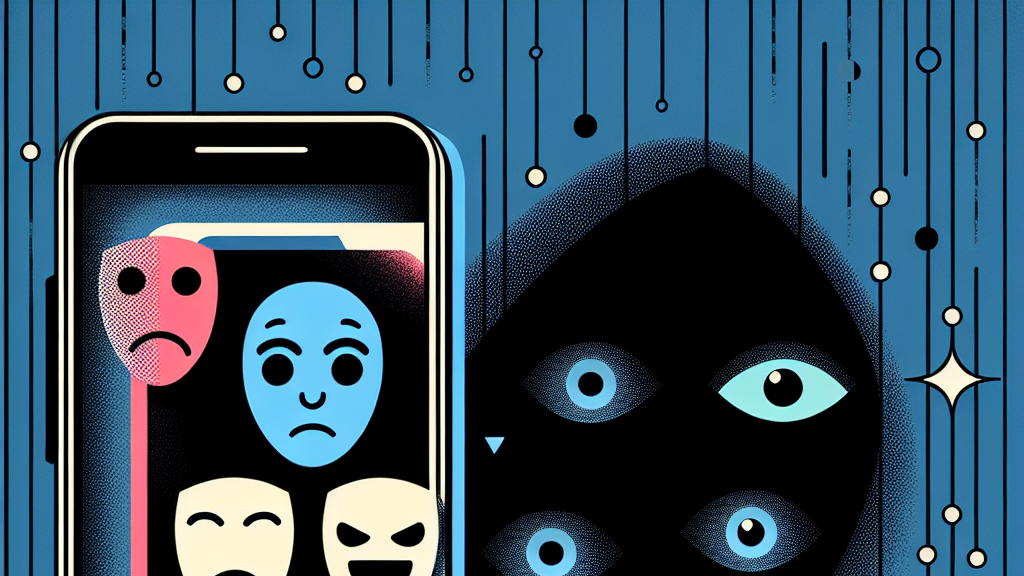
Did you know those fun face filters on social media might be collecting personal data about you? This research shows that users often aren’t aware of when and how their data is used by these machine learning models, leading to surprising shifts in behavior once they learn the truth.

Could Social Media Filters Be Tracking You
✨Researched by humans. Explained by robots. Learn more.

Social media is now a big part of our daily lives, and those playful face filters make it even more engaging. But there’s something you might not know: the machine learning models behind these filters could be collecting sensitive information you didn’t agree to share. Sounds alarming, right? Imagine if your favorite app is watching your every move without you even knowing it.

Research highlights that users of popular platforms like Instagram and TikTok are often in the dark about when these models are active and what data they gather. By talking to 21 users, scientists discovered that most had no clue about this constant data collection. When the users found out, many of them decided to change how they interact with these apps, showing how important transparency really is.

In the future, as we become more digitally savvy, understanding and controlling our data will be as important as updating our apps. Imagine a world where your data is truly yours, and you know exactly how it’s being used at all times. This research could pave the way for more user-friendly social media, where transparency is a given and privacy isn’t just a luxury. It’s time we demand that these platforms become more open about their practices, so we can use technology without compromising our privacy.

Did you know that face filters on your favorite apps might be secretly collecting your personal data?

FAQs

What is the link between face filters and user privacy?

Face filters use machine learning models that can collect sensitive data, making them a privacy concern for unsuspecting users.

How aware are users of data collection by social media apps?

According to the research, many users of Instagram and TikTok are unaware of when and how their data is being collected by machine learning models, leading to surprising behavior changes when they find out.

Why is transparency important in social media apps?

Transparency ensures that users understand what data is being collected and how it’s used, allowing them to make informed decisions about their digital footprint and privacy.

How can this research influence future social media platforms?

The findings could promote the development of more transparent and user-friendly platforms, where data privacy is prioritized and users are informed about data usage.

What long-term behavior changes occurred after users learned about the data collection?

Once users were made aware of the machine learning models and data collection, some altered their social media habits, like using fewer filters or being more cautious about what they share.

Background

Machine learning models are powerful tools that help social media apps identify faces and apply filters in real-time. These models are built using algorithms that can ‘learn’ from the data they process, which often includes personal and sensitive information. However, these processes are usually hidden from users, leading to potential privacy concerns.

History

The use of machine learning in social media has dramatically increased over the years, with early applications focusing on image recognition and improving user experiences. However, as the technology advanced, so did the complexity and opacity of data collection processes. Previous studies have shown various concerns over data privacy, but this research specifically highlights user awareness and behavior in relation to these hidden processes.

Based on “’Impressively Scary:’ Exploring User Perceptions and Reactions to Unraveling Machine Learning Models in Social Media Applications” by Jack West, Bengisu Cagiltay, Shirley Zhang, Jingjie Li, Kassem Fawaz, Suman Banerjee, available on arXiv (arxiv.org/abs/2503.03927), used under CC BY 4.0 (creativecommons.org/licenses/by/4.0/).


Trending

Latest

Can AI Save Water Discover How

Computers

AI is transforming the tech world, but it uses lots of water! A new tool, SCARF, helps us measure and reduce AI's water footprint,...

Whats a Forbush Decrease and Why Should We Care Whats a Forbush Decrease and Why Should We Care

Space

Scientists just observed the biggest solar storm event in years, revealing unexpected cosmic ray patterns. Understanding these changes could help us protect our technology...

Can Cars Spot Danger Faster Than Humans Can Cars Spot Danger Faster Than Humans

Computers

Think about how quickly you react when something unexpected happens on the road. This research brings us closer to creating self-driving cars that can...

Can Fear of the Other Stop Social Harmony Can Fear of the Other Stop Social Harmony

Physics

Fear of the unknown might make it harder for people to agree and get along. This study shows that when people have strong xenophobic...

Can AI Revolutionize Breast Cancer Diagnosis Can AI Revolutionize Breast Cancer Diagnosis

Electricity

This research introduces a groundbreaking AI model that can accurately assess HER2-positive breast cancer using widely accessible staining methods, potentially revolutionizing how we diagnose...

Can AI Transform Your Singing into a Choir Can AI Transform Your Singing into a Choir

Computers

Imagine singing solo and having AI turn you into a choir. This research unveils a groundbreaking AI tool that transforms your voice into rich...

You May Also Like

Computers

Imagine a machine capable of reading ancient books, deciphering complex pages with precision! This research is paving the way for AI to unlock the...

Computers

Imagine keeping your digital secrets safe as they zoom across the web thanks to a clever tech trick. By breaking data into pieces and...

Computers

Dive into the world of AI mistrust, where computers don't always know when they're wrong! Discover how teaching AI to see like us might...

Computers

This research digs into the tricky process of putting together hate speech datasets, revealing the hidden choices researchers make and suggesting ways to be...

Economics

Social media might not always be the villain when it comes to spreading fake news. In regions with strong public engagement, social media can...

Computers

New research reveals that the internal 'thinking process' of AI personal assistants could be leaking your sensitive information. This could affect how we trust...

Computers

Discover potential dangers in using artificial intelligence to count votes and how even a small error could change election outcomes.

Computers

Did you know that Google might be hiding info from you? This research shows that Google's algorithms can suppress certain online content, like conspiracy...

Computers

Imagine AI systems helping businesses plan and carry out tasks—but they're relying on potentially fake online reviews. Sound risky? This research dives into how...

Copyright © 2024 8ig8rain.

Disclaimer: The content on 8ig8rain.com consists of AI-generated summaries of scientific abstracts from arXiv. Please note that most arXiv abstracts are preprints and may not have undergone formal peer review. While these summaries aim to convey key ideas and potential applications, they are provided for informational purposes only and should not be interpreted as validated scientific findings or professional advice. The summaries are intended to educate, spark curiosity, and inspire further exploration of science.