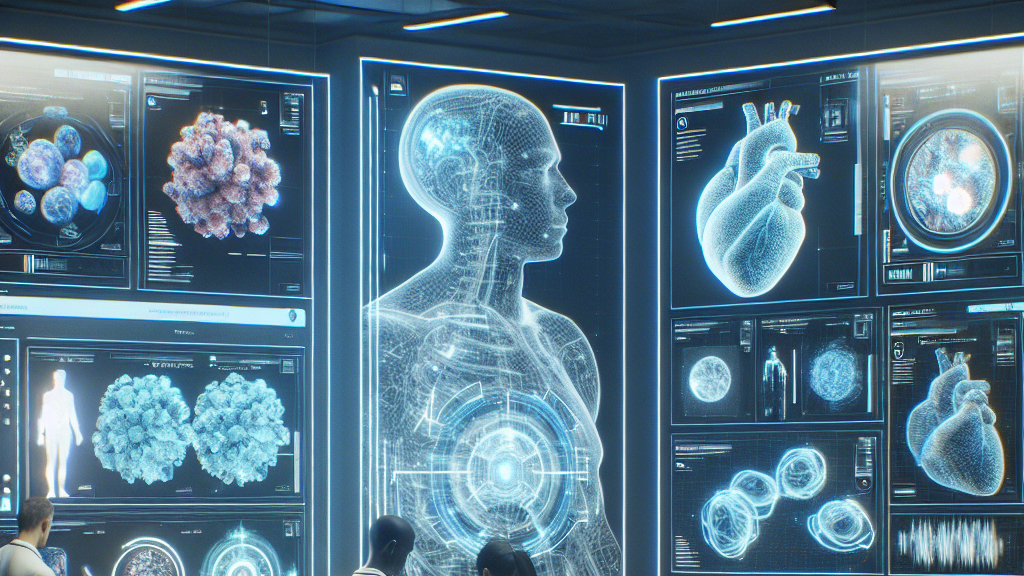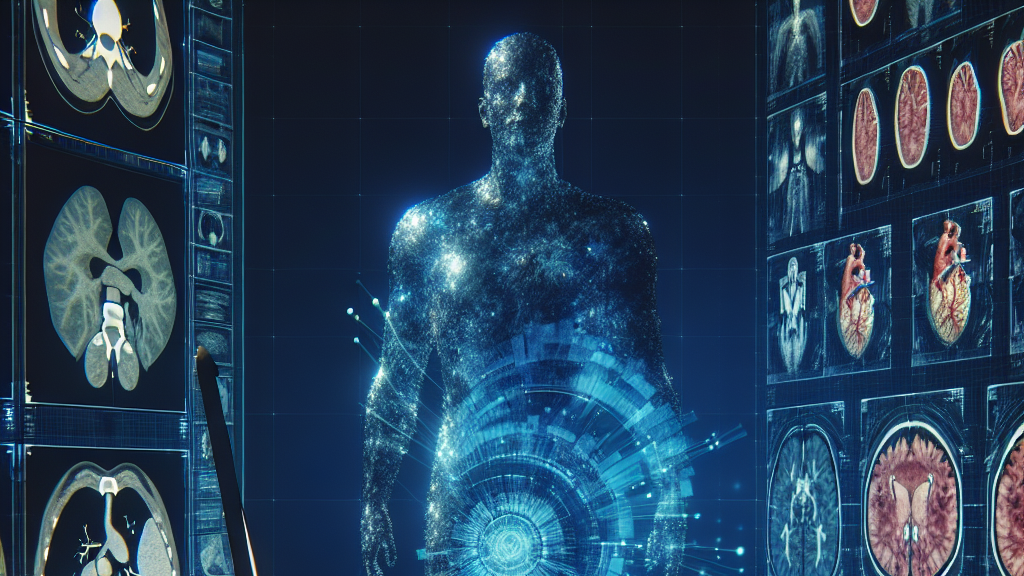
Imagine a world where your doctor doesn’t just treat symptoms but has a digital replica of you to predict how diseases progress and tailor treatments specifically for you. This isn’t sci-fi—it’s the potential of digital twins in medicine. These digital replicas use your imaging data to give personalized insights, which could mean better decisions for your health and well-informed therapies.
In recent research, scientists have developed new methods that blend your non-invasive imaging data with sophisticated models to predict how tumors grow inside your body. By accounting for your unique anatomy, these models can provide a personalized road map for your health journey. The process involves solving complicated equations that estimate how a tumor might evolve, offering a clearer picture of what’s happening inside your body than ever before.
In practical terms, think about having regular scans that feed into this digital twin. The data helps doctors decide if you need a treatment adjustment, potentially catching issues before they become critical. This approach could redefine how we think about medicine—transforming it from reactive to proactive, and ultimately, offering a future where treatments are as unique as you are.
Did you know? Digital twins can potentially predict health issues before they occur, allowing for preemptive healthcare!
FAQs
What are digital twins in medicine?
Digital twins in medicine are virtual replicas of patients that use their unique health data to simulate and predict disease progression, allowing for personalized treatment plans.
Why is predictive modeling important for personalized medicine?
Predictive modeling is crucial because it helps tailor treatment to individual patients rather than applying a one-size-fits-all solution, potentially leading to better outcomes.
How does this research improve tumor progression understanding?
This study uses advanced imaging and mechanistic models to create personalized predictions of how tumors might grow, offering valuable insights for patient-specific treatment planning.
What is the significance of integrating patient data with disease models?
Integrating patient data with disease models allows for more accurate, individualized predictions and better risk assessment, ultimately improving healthcare decisions.
What challenges does the research address?
The research tackles the challenge of quantifying uncertainty in predictive models using sparse and noisy patient data, ensuring more reliable and trustworthy medical insights.
Background
Digital twins in medicine leverage patient-specific data to create detailed digital representations of individuals, allowing for simulation and analysis that would be impossible to do on a person. This requires integrating complex mathematical models with real-world patient data to accurately represent biological processes like tumor growth.
History
The concept of digital twins originated in the engineering field, where they are used to simulate and predict the performance of physical systems. Recently, this approach has crossed into medicine, fueled by advances in data collection and computational power, and is particularly impactful in areas like tumor progression, where understanding the specifics of disease dynamics on a personalized level is crucial.
Based on “Predictive Digital Twins with Quantified Uncertainty for Patient-Specific Decision Making in Oncology” by Graham Pash, Umberto Villa, David A. Hormuth II, Thomas E. Yankeelov, Karen Willcox, available on arXiv (arxiv.org/abs/2505.08927), used under CC BY 4.0 (creativecommons.org/licenses/by/4.0/).