**Imagine opening a book only to find the words inside are not what they seem. That’s the tricky situation researchers face with retracted papers in science. Despite being discredited, these papers often continue to get cited, spreading false information further and eroding trust in scientific research. This fascinating study sheds light on two surprising culprits: plagiarism and fake peer reviews.**
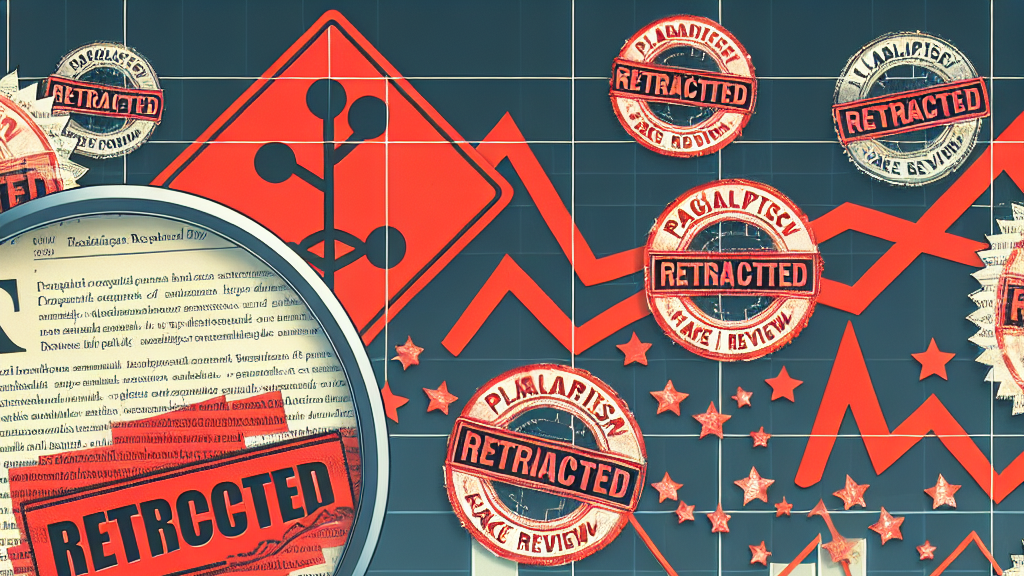
**At first glance, plagiarism seems straightforward—it’s copying someone else’s work. However, what might shock you is that these plagiarized papers, even after being retracted, are still frequently cited. This research found that cases of fake peer reviews, where unauthorized evaluations falsely boost research credibility, have grown at an alarming rate. While fewer plagiarized papers get retracted than fake peer review cases, the former actually gathers more citations, illustrating how deeply embedded misinformation can become!**
**Why does this matter to you? Well, imagine relying on a science fact that’s wrong because of bad citations in research papers. It might lead to misguided discoveries or wrong conclusions. By addressing these retractions more promptly and effectively, the research community can maintain the credibility of academic literature, ensuring that what you read and learn is both accurate and trustworthy—making us all a little wiser in our quest for knowledge!**
Did you know? Fake peer-reviewed papers can grow in numbers 5.5 times faster than those retracted for plagiarism!
FAQs
Why do retracted citations in academic research still cause problems?
Retracted citations can spread misinformation by continuing to be cited even after discreditation, leading to false conclusions and eroding trust in scientific literature.
How does plagiarism compare to fake peer reviews in terms of retraction impact?
While fewer papers are retracted due to plagiarism, they receive more citations than fake peer-reviewed papers, indicating deep-rooted misinformation.
Why is the issue of fake peer reviews growing so quickly?
Fake peer reviews show a fluctuating pattern with rapid average growth, potentially due to sophisticated means of bypassing traditional review systems.
How quickly are fake peer reviews retracted compared to plagiarism cases?
Fake peer review cases tend to be identified and retracted more rapidly than plagiarism cases, suggesting more efficient detection mechanisms.
What role do self-citations play in retracted papers?
Self-citations, though a small percentage, are notably higher in retracted papers, suggesting a bias in citing one’s own, possibly flawed work.
Background
In academia, retracted citations refer to references to papers that have been discredited or withdrawn post-publication. Such retractions typically occur due to issues like plagiarism—where someone copies another’s work—and fake peer reviews, which involve fraudulent evaluation processes to falsely elevate research credibility. These retractions are critical to maintaining scientific integrity as they prevent the spread of misinformation.
History
The issue of retracted citations isn’t new but has gained more attention with the accessibility of digital databases like Scopus. Previous studies have shown that retractions do not immediately stop misinformation spread. Technological advancements have improved detection of plagiarism and fake peer reviews, though the challenge remains to rapidly retract faulty research and minimize its impact.
Based on “Retracted Citations and Self-citations in Retracted Publications: A Comparative Study of Plagiarism and Fake Peer Review” by Kiran Sharmaa, Parul Khurana, available on arXiv (arxiv.org/abs/2502.00673), used under CC BY 4.0 (creativecommons.org/licenses/by/4.0/).