Connect with us

Search by keyword

Electricity

Can Remote Drivers Beat the Learning Curve?

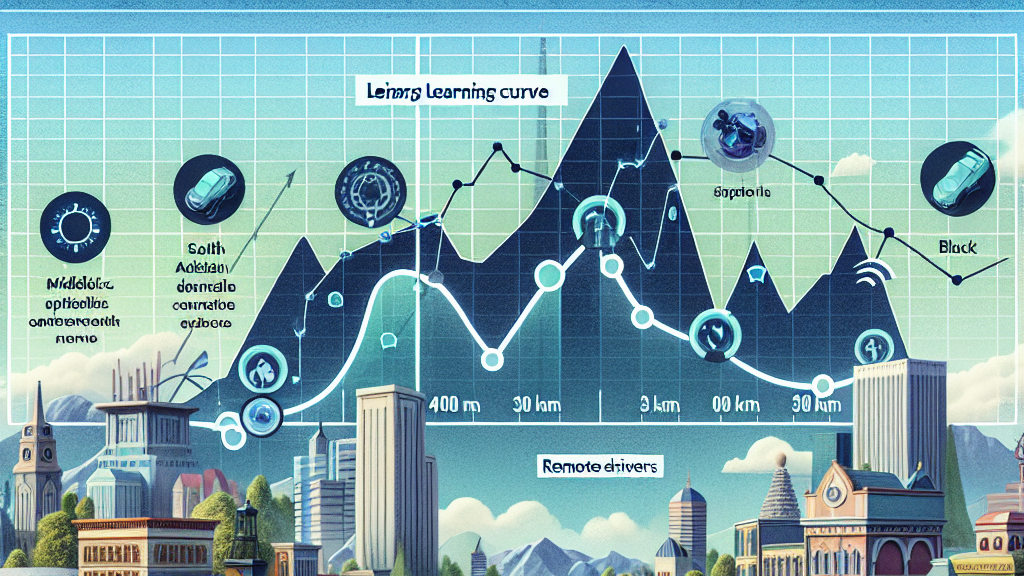
Training remote drivers results in fewer interventions from safety drivers and enhances safety, especially in complex environments. This study reveals how quickly remote drivers can learn and improve over just 400 km of driving!

Can Remote Drivers Beat the Learning Curve
✨Researched by humans. Explained by robots. Learn more.

Imagine a world where cars are driven remotely, and safety is the top priority. That’s what researchers are focusing on with Remote Driving Systems. They’ve discovered something fascinating: the more experience remote drivers get, particularly in the first 400 kilometers, the less they need safety drivers to step in. Think of it like learning to ride a bike—all those wobbles get smoother with practice.

The study involved data from a whopping 14,000 kilometers of remote driving. It showed that remote drivers, with just a little bit of training, quickly reduce the number of times safety drivers have to take over. They analyzed what caused remote drivers to disengage and even identified four common scenarios where safety drivers were most likely to intervene. It’s like they uncovered a secret playbook on how remote drivers can get better and safer, faster.

This research could change how we think about driving. As remote driving becomes more common, especially in busy city environments, the efficiency and safety of these systems hinge on solid driver training. Imagine hopping into a remotely driven car that glides through city streets, knowing that the remote driver has been trained to handle complex scenarios with ease. One day soon, this could be the norm, keeping us safer while cutting down on traffic chaos.

Did you know? Remote drivers can significantly improve their skills in just 400 kilometers of training!

FAQs

What is the significance of studying remote driver training?

Understanding how remote drivers improve their skills can lead to better safety and efficiency in remote driving systems, especially in complex urban environments.

How quickly can remote drivers reduce safety driver interventions?

Remote drivers can significantly reduce the need for safety drivers to intervene after just 400 kilometers of driving experience.

What are the common scenarios for safety driver interventions in remote driving?

The study identified four main scenarios necessitating safety driver interventions, helping enhance training and improve remote driving systems.

Why focus on the first 400 kilometers of remote driving experience?

The data shows that significant improvements occur within this range, highlighting a crucial learning phase for remote drivers.

How does this research impact urban driving environments?

By boosting remote driver skills, the research enhances the safety and controllability of remote driving systems in busy urban settings.

Background

Remote Driving Systems allow a person to drive a vehicle from a location other than inside the car. This technology is often used in complex urban areas to help navigate and control vehicles more efficiently and safely. Safety drivers are often present to take control if needed, but the goal is to minimize their interventions through effective training.

History

Remote driving technology has evolved rapidly, particularly as urban areas look for ways to manage traffic and improve safety. Early versions of remote driving systems required frequent interventions by safety drivers. However, this study focuses on how experience can reduce those interventions, showcasing a significant improvement over past systems.

Based on “Learning from Disengagements: An Analysis of Safety Driver Interventions during Remote Driving” by Ole Hans, Jürgen Adamy, available on arXiv (arxiv.org/abs/2504.00246), used under CC BY 4.0 (creativecommons.org/licenses/by/4.0/).

Trending

Latest

Can AI Save Water Discover How

Computers

AI is transforming the tech world, but it uses lots of water! A new tool, SCARF, helps us measure and reduce AI's water footprint,...

Whats a Forbush Decrease and Why Should We Care Whats a Forbush Decrease and Why Should We Care

Space

Scientists just observed the biggest solar storm event in years, revealing unexpected cosmic ray patterns. Understanding these changes could help us protect our technology...

Can Cars Spot Danger Faster Than Humans Can Cars Spot Danger Faster Than Humans

Computers

Think about how quickly you react when something unexpected happens on the road. This research brings us closer to creating self-driving cars that can...

Can Fear of the Other Stop Social Harmony Can Fear of the Other Stop Social Harmony

Physics

Fear of the unknown might make it harder for people to agree and get along. This study shows that when people have strong xenophobic...

Can AI Revolutionize Breast Cancer Diagnosis Can AI Revolutionize Breast Cancer Diagnosis

Electricity

This research introduces a groundbreaking AI model that can accurately assess HER2-positive breast cancer using widely accessible staining methods, potentially revolutionizing how we diagnose...

Can AI Transform Your Singing into a Choir Can AI Transform Your Singing into a Choir

Computers

Imagine singing solo and having AI turn you into a choir. This research unveils a groundbreaking AI tool that transforms your voice into rich...

You May Also Like

Computers

Think about how quickly you react when something unexpected happens on the road. This research brings us closer to creating self-driving cars that can...

Computers

AI is changing how products are made, promising faster innovation but needing rules to keep it safe and beneficial for everyone.

Computers

Virtual reality might be the key to training humans to control robots on the Moon or Mars, cutting down mission time and errors. This...

Math

Imagine juggling the need for privacy, safety, and smart decision-making all at once. This study explores how we can make effective decisions while protecting...

Computers

Imagine a floating robot that's not only safe and soft but also loves a good pat! This new flying robot, inspired by animal movements,...

Computers

This research shows how combining human brain waves with autonomous vehicle systems can predict dangerous driving situations. Imagine your car reading your mind to...

Computers

Imagine cars out-maneuvering danger like Hollywood stunt drivers! This research uses AI to teach cars how to perform high-risk maneuvers safely, offering a thrilling...

Computers

Imagine tiny robots working together to explore underwater environments more safely and efficiently! This research shows how these robots can create clear maps, cut...

Computers

Discover how researchers are uncovering vulnerabilities in AI language models to keep them safe from malicious prompts that could turn them into digital troublemakers.

Copyright © 2024 8ig8rain.

Disclaimer: The content on 8ig8rain.com consists of AI-generated summaries of scientific abstracts from arXiv. Please note that most arXiv abstracts are preprints and may not have undergone formal peer review. While these summaries aim to convey key ideas and potential applications, they are provided for informational purposes only and should not be interpreted as validated scientific findings or professional advice. The summaries are intended to educate, spark curiosity, and inspire further exploration of science.