Connect with us

Search by keyword

Electricity

Can Traffic Jams Boost Your Commute?

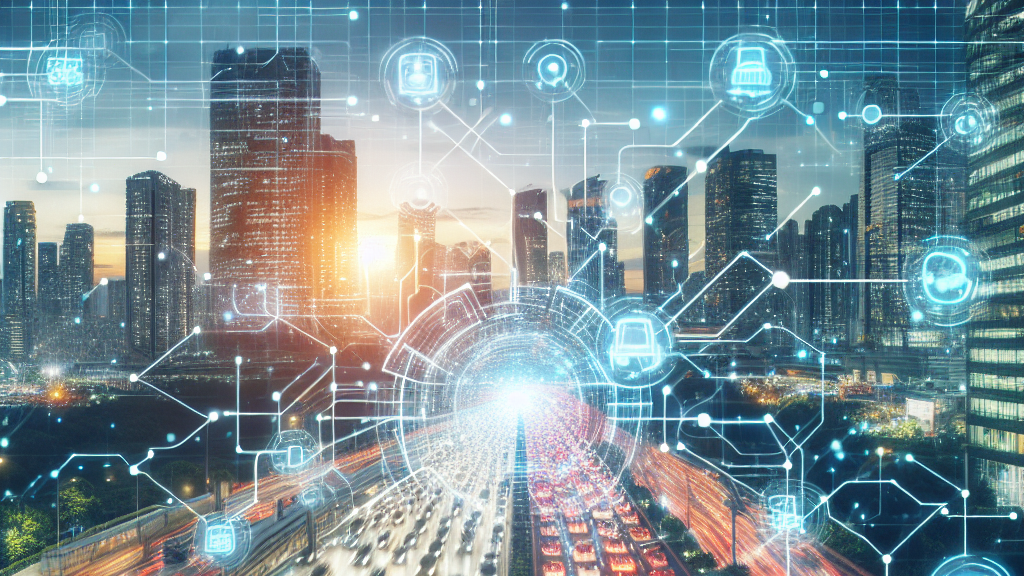
Imagine if instead of getting stuck, your commute got better during traffic jams! This research explores how smart algorithms can make city traffic not just survive disruptions but thrive in them.

Can Traffic Jams Boost Your Commute
✨Researched by humans. Explained by robots. Learn more.

We all know the frustration of sitting in traffic, wondering if there will ever be a way to beat the jams. But what if, instead of just enduring these disruptions, our city streets could actually improve because of them? That’s exactly what this exciting new research is proposing—a way to make city traffic not just resilient but ‘antifragile,’ meaning it thrives under pressure.

The research introduces a groundbreaking concept: using a smart learning algorithm that adapts to traffic challenges in real-time. Unlike old systems that merely resist disruptions, this method learns from them and gets better. It analyzes traffic patterns and anticipates issues, making the flow smoother even when you’d expect chaos. It’s like having a traffic smart assistant that learns from every hiccup to ensure a better driving experience next time.

Imagine a future where your commute isn’t a daily frustration, but something that constantly improves. This research could lead to technology capable of making urban traffic networks less congested and more efficient. So, during rush hour, instead of more delays, you could experience a smoother drive, saving time and reducing stress on the roads.

Did you know that the term ‘antifragile’ describes a system that gets stronger with stress? Unlike being just robust or resilient, it’s like a city traffic network that thrives on chaos!

FAQs

What makes antifragility different from robust traffic systems?

While robust systems resist changes, antifragile ones learn and improve from them, making city traffic more efficient under stress.

How does reinforcement learning help in traffic management?

Reinforcement learning adapts to real-time traffic changes, predicting and responding to disruptions to enhance flow and reduce jams.

Could this research actually reduce my commute time?

Yes, by adapting and thriving on disruptions, the new system aims to make traffic flow smoother, potentially leading to quicker commutes.

Why are current traffic systems struggling with disruptions?

Traditional models fail to account for real-world unpredictability, unlike the new model that learns and improves with each challenge.

What’s the future impact of antifragile traffic systems?

These systems could revolutionize urban mobility, turning traffic disruptions into opportunities for better flow and reduced congestion.

Background

Understanding the concept of antifragility requires realizing that most systems at best only withstand stress and return to their original state—this is resilience. But antifragility is different; it means that a system actually improves when faced with stressors or disruptions. In the context of traffic, this means that instead of merely resisting jams and maintaining status quo, the traffic system learns from each disruption to become more efficient over time.

History

The journey towards understanding and improving traffic systems has come a long way. Earlier efforts were focused on robust and resilient systems that could effectively handle routine disruptions without failing. However, they lacked the ability to improve when facing recurring challenges. Antifragility in traffic systems is inspired by this need for continuous improvement under stress and the limitations of past models, paving the way for more advanced, self-improving traffic networks.

Based on “Antifragile Perimeter Control: Anticipating and Gaining from Disruptions with Reinforcement Learning” by Linghang Sun, Michail A. Makridis, Alexander Genser, Cristian Axenie, Margherita Grossi, Anastasios Kouvelas, available on arXiv (arxiv.org/abs/2402.12665), used under CC BY 4.0 (creativecommons.org/licenses/by/4.0/).

Trending

Latest

Can AI Save Water Discover How

Computers

AI is transforming the tech world, but it uses lots of water! A new tool, SCARF, helps us measure and reduce AI's water footprint,...

Whats a Forbush Decrease and Why Should We Care Whats a Forbush Decrease and Why Should We Care

Space

Scientists just observed the biggest solar storm event in years, revealing unexpected cosmic ray patterns. Understanding these changes could help us protect our technology...

Can Cars Spot Danger Faster Than Humans Can Cars Spot Danger Faster Than Humans

Computers

Think about how quickly you react when something unexpected happens on the road. This research brings us closer to creating self-driving cars that can...

Can Fear of the Other Stop Social Harmony Can Fear of the Other Stop Social Harmony

Physics

Fear of the unknown might make it harder for people to agree and get along. This study shows that when people have strong xenophobic...

Can AI Revolutionize Breast Cancer Diagnosis Can AI Revolutionize Breast Cancer Diagnosis

Electricity

This research introduces a groundbreaking AI model that can accurately assess HER2-positive breast cancer using widely accessible staining methods, potentially revolutionizing how we diagnose...

Can AI Transform Your Singing into a Choir Can AI Transform Your Singing into a Choir

Computers

Imagine singing solo and having AI turn you into a choir. This research unveils a groundbreaking AI tool that transforms your voice into rich...

You May Also Like

Computers

This research explores how AI models designed to understand both images and words might improve their performance simply by teaching themselves to think better....

Computers

Imagine a world where AI doesn't just follow orders but feels for us, understanding our emotions to help more effectively. This research shows that...

Computers

Researchers are exploring new ways to make robots and artificial systems learn new skills and adapt faster, similar to how humans do. This could...

Computers

Discover how hidden acts of kindness among AI agents might unlock better teamwork and problem-solving strategies, offering insights into both machine learning and real-world...

Computers

This research unveils how unnoticed good deeds, or 'hidden gifts,' impact the decision-making of AI agents in teamwork scenarios. Revealing the complexity of how...

Computers

Imagine a video game designed not just for fun, but to teach AI to learn and adapt endlessly, like a super-smart buddy that never...

Computers

Imagine robots that can move as easily across rocky landscapes as they do on flat ground. New research shows a cutting-edge method that helps...

Computers

Imagine AI teaching us to communicate like ancient humans! Researchers are using artificial intelligence to study how symbolic writing systems might have evolved, helping...

Computers

Have you ever wondered how computers learn to play games with barely any hints? This research explores how AI can get better at learning...

Copyright © 2024 8ig8rain.

Disclaimer: The content on 8ig8rain.com consists of AI-generated summaries of scientific abstracts from arXiv. Please note that most arXiv abstracts are preprints and may not have undergone formal peer review. While these summaries aim to convey key ideas and potential applications, they are provided for informational purposes only and should not be interpreted as validated scientific findings or professional advice. The summaries are intended to educate, spark curiosity, and inspire further exploration of science.