Imagine if a simple U-turn could be the hero in making roads safer and traffic flow smoother. Sounds like magic, right? But it’s actually all about smart design and technology. This research dives into how the way U-turns are set up at intersections can seriously impact how safe and efficient our roads are. Think of it as a blueprint for safety that could keep you from gritting your teeth the next time you’re stuck at a busy intersection.
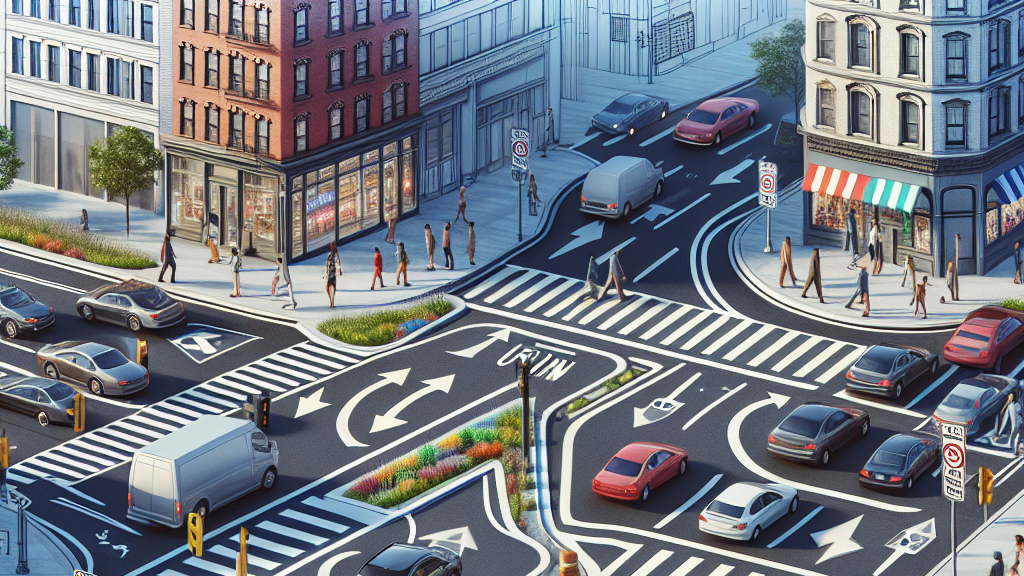
The study carefully reviewed tons of different U-turn designs and setups, looking at how each one affects safety and traffic flow. Specifically, it looked at new, innovative designs like restricted crossing U-turns (RCUTs) and median U-turn intersections (MUTs). By examining different traffic settings and combining them with technology, like real-time traffic updates, researchers show how these designs can minimize crashes and improve how well traffic moves. It’s like having a roadmap to designing intersections that work for drivers, pedestrians, and cyclists alike.
This isn’t just for engineers or city planners—it’s something that affects anyone who drives, walks, or bikes on our streets. Imagine a future where traffic jams are less frequent and intersections aren’t frustratingly chaotic. Applying these research findings could mean fewer accidents and better traffic flow on our daily commutes. This is a big step toward turning what seems like everyday traffic headaches into smooth, seamless journeys for everyone.
Did you know that implementing smart U-turn designs can reduce accidents by up to 30% at intersections?
FAQs
How do innovative U-turn designs impact road safety at intersections?
Innovative U-turn designs, like restricted crossing U-turns and median U-turns, help reduce crash risks by improving traffic flow and minimizing points of conflict where accidents often occur.
Why are technological advancements important for U-turn configurations?
Leveraging technology, such as real-time traffic updates, allows for better traffic management and can lead to smoother and safer intersection operations.
What makes restricted crossing U-turns and median U-turn intersections effective?
These designs strategically manage vehicle movements to reduce delays and enhance safety by limiting the number of direct crossing paths at intersections.
How can this research on U-turns influence everyday commuting?
By applying these design principles, cities can create safer and more efficient roads, potentially reducing daily traffic jams and commute times for drivers and cyclists.
Are these U-turn designs applicable to all types of traffic environments?
While particularly beneficial in high-traffic urban areas, these designs can be adapted for different environments to enhance overall road safety and traffic flow across various regions.
Background
Understanding intersection safety is crucial for road design because it’s a common spot for accidents due to conflicting traffic flows. U-turn designs like restricted crossing U-turns (RCUTs) and median U-turns (MUTs) aim to simplify these flows, making intersections safer and more efficient. Using technology, such as sensors for real-time data, can further optimize traffic management, allowing for adaptive responses to current traffic conditions.
History
Road intersections have long been a focus of safety studies because of their complexity and high accident rates. Traditional designs often led to congestion and crashes, prompting research into alternative strategies. In the past, innovations like roundabouts partially addressed these issues, but U-turn configurations offer a fresh approach. By examining past successes and failures, this research builds on a legacy of continuous improvement in intersection safety.
Based on “From Maneuver to Mishap: A Systematic Literature Review on U-Turn Safety Risks” by Syed Aaqib Javed, Anannya Ghosh Tusti, Biplov Pandey, Subasish Das, available on arXiv (arxiv.org/abs/2502.12556), used under CC BY 4.0 (creativecommons.org/licenses/by/4.0/).