Imagine being able to witness the majestic power of black holes without needing a space telescope. Sounds like science fiction, right? Well, it’s quickly becoming reality as researchers develop innovative lab experiments that mimic the gravity of these cosmic giants. By using clever tricks with sound waves and matter, scientists can now recreate black hole-like conditions on a tabletop.
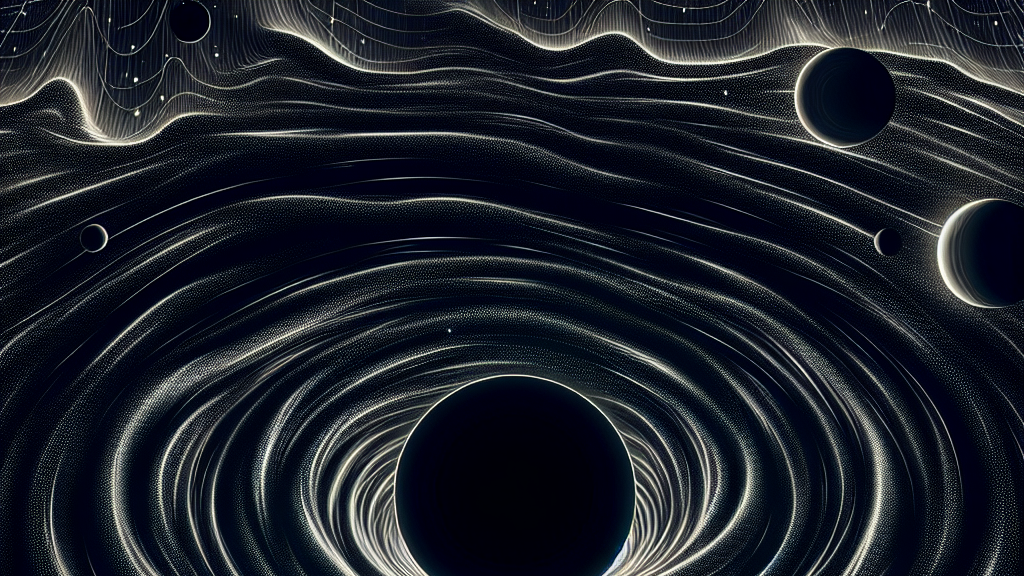
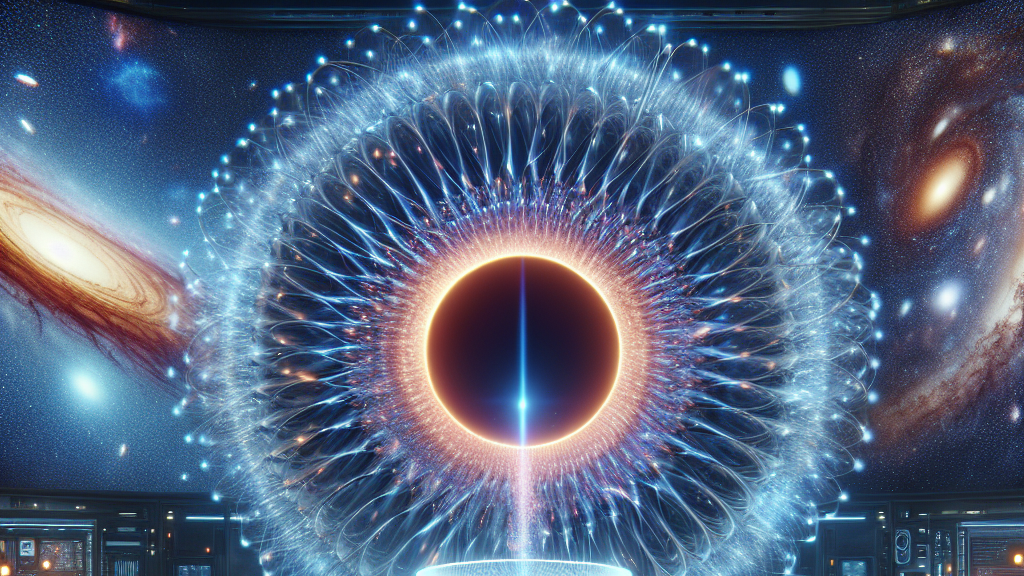
In these experiments, a rotating acoustic vortex acts like a black hole by warping sound waves in a way similar to how black holes warp light. This is possible by tweaking certain parameters in the experiment, allowing researchers to study both the presence and absence of what’s called a ‘sonic horizon’—a point of no return for sound waves. When this is done right, scientists can simulate the effects seen around enormous vortices found in superfluid helium, a state of matter that behaves like a typical liquid, but with zero viscosity, adding another layer of wow to the experiment.
Why does this matter? On a grand scale, understanding these phenomena could help solve some of the universe’s biggest mysteries, such as how black holes warp space-time. On a smaller scale, these studies might one day lead to practical applications in technology, like improving sensors or creating ultra-precise measurement devices. Imagine devices that could revolutionize the way we capture and interpret the fundamental forces of the universe, right from our own planet.
Did you know that scientists can create a mini version of a black hole using sound waves? By manipulating how sound travels, researchers can mimic the gravitational effects that real black holes have on light.
FAQs
{“How are black holes studied in the lab?“:”
Scientists use tabletop experiments that simulate the gravitational properties of black holes by creating rotating acoustic vortices. These experiments mimic how black holes warp sound waves, similar to how they affect light in space.
“}, {“What is a sonic horizon?“:”
A sonic horizon is the point in an acoustic black hole where sound waves can no longer escape. This concept is similar to the event horizon in real black holes, where nothing, not even light, can escape their gravitational pull.
“}, {“Why is simulating black holes important?“:”
Simulating black holes in the lab allows scientists to study their properties in a controlled setting. This can unlock insights into the nature of gravity, the behavior of matter under extreme conditions, and potentially lead to technological advancements.
“}, {“What are analog vortex experiments?“:”
Analog vortex experiments create a rotating system that mimics the behavior of black holes using sound waves. These setups can be fine-tuned to study different aspects of black hole physics, offering insights otherwise gained only through theoretical models.
“}, {“Can these experiments lead to technological advancements?“:”
Yes, studying black hole-like phenomena can inspire new technologies, such as advanced sensors or measurement devices, by applying principles of how these cosmic entities interact with their surroundings.
“}
Background
Analog gravity is an exciting field where scientists create systems that mimic the behavior of gravitational fields found around black holes. By using sound or other waves in specially designed setups, researchers can simulate the complex interactions that occur in the vicinity of actual black holes, allowing detailed study without leaving the planet.
History
The idea of simulating black holes isn’t new. Since the 1980s, scientists have proposed creating ‘sonic black holes’ by using sound waves and matter to simulate gravitational effects. Over the years, advances in technology and understanding of quantum mechanics have brought these simulations from theoretical proposals to real-world laboratory setups.
Based on “Eye of the vortex: bound spectra in tunable horizonless rotational analogs” by H. S. Vieira, Kyriakos Destounis, available on arXiv (arxiv.org/abs/2506.03451), used under CC BY 4.0 (creativecommons.org/licenses/by/4.0/).