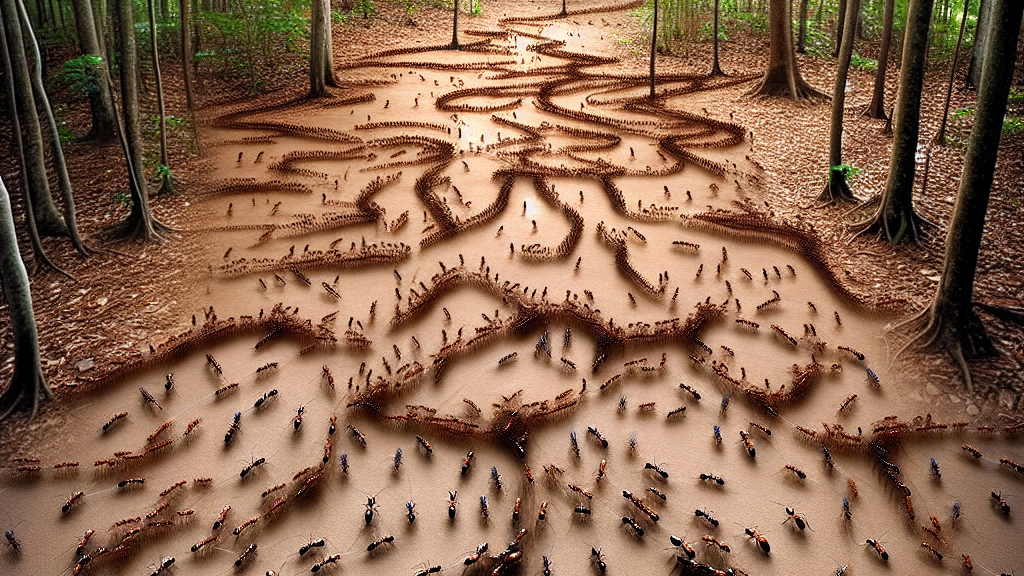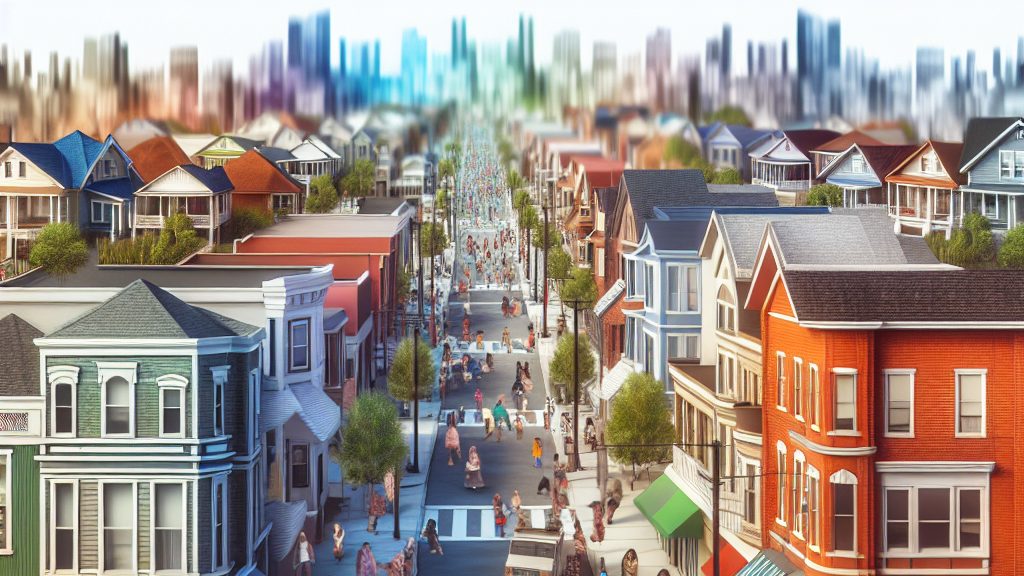
Ever wonder why your neighborhood can change so drastically in what seems like the blink of an eye? Researchers have found a fascinating way to explain these sudden shifts by looking at people’s decisions and movements in the same way we study water flow. It’s like turning the streets into rivers of people, each making choices that collectively shape the community.
Using data from the US Census and sociological surveys, scientists developed a model that combines personal preferences with physical principles, like those that govern how liquids move. This approach helps predict when and how neighborhoods might undergo rapid transformations, such as shifts in demographics or business landscapes. It’s not just about numbers; it’s about understanding the ‘why’ behind where people choose to live and work.
Imagine your neighborhood as a living, breathing entity where small changes ripple through it, much like how tipping just one domino can lead to a cascade. This research doesn’t just apply to urban environments; it could also help explain patterns in nature, like how animals choose their habitats, or even how human genes might evolve over time. It’s a new way of looking at our world, blending people’s choices with movement to predict the future of our communities.
Did you know? Like dominos, a minor shift in a neighborhood’s population can trigger a massive demographic change!
FAQs
Why do neighborhoods change quickly according to sociohydrodynamics?
Sociohydrodynamics explains neighborhood change as a collective behavior, where individual preferences and movements are seen like the flow of water, leading to rapid demographic shifts even with minor changes.
How does this new model help us understand residential dynamics?
By combining data on people’s decisions with physical principles of fluid dynamics, this model predicts how small changes can lead to large-scale transformations in neighborhoods, offering insights into social phenomena like gentrification.
What is the role of social memory in neighborhood changes?
Social memory, akin to hysteresis in magnets, means past decisions influence current behaviors, which can explain the swift transition of a community’s demographic makeup when small triggers are present.
Can sociohydrodynamics be applied outside of neighborhood studies?
Yes, this approach can be applied to other systems where decision-guided motility is present, such as micro-organisms choosing habitats or even gene evolution in abstract spaces.
How can this research impact urban planning?
Understanding how small changes affect community dynamics can help urban planners predict and manage neighborhood transformations, fostering more balanced and inclusive developments.
Background
The concept of sociohydrodynamics merges two fields: sociology, the study of social behavior and structures, and hydrodynamics, which deals with the motion of fluids. In this context, people’s movements and decisions are viewed through the lens of fluid-like behaviors, creating a framework to understand complex collective behaviors in society.
History
In the past, models trying to predict social behavior often separated physical motion from decision-making processes. This study innovatively combines the two by adding personal preferences into hydrodynamic models, drawing inspiration from natural phenomena and previous studies on fluid dynamics to provide deeper insights into social systems.
Based on “Sociohydrodynamics: data-driven modelling of social behavior” by Daniel S. Seara, Jonathan Colen, Michel Fruchart, Yael Avni, David Martin, Vincenzo Vitelli, available on arXiv (arxiv.org/abs/2312.17627), used under CC BY 4.0 (creativecommons.org/licenses/by/4.0/).