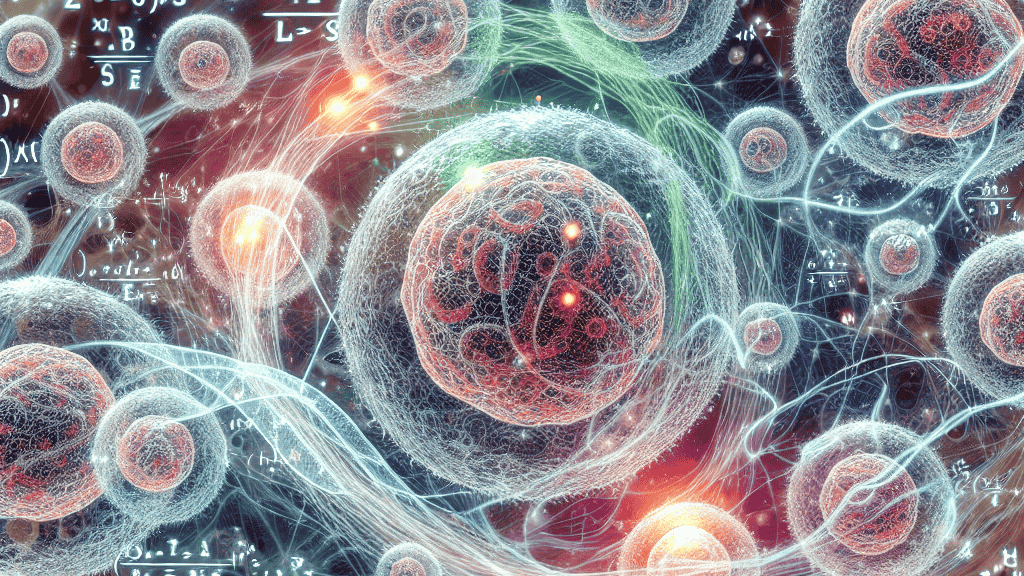
Imagine if finding a mate was all about running some complex math equations. That’s what scientists are exploring with chemotaxis and anomalous diffusion—two processes that play a big role in how cells like sperm and eggs (gametes) find each other. It’s not just a chaotic swim—these cells follow chemical signals like a breadcrumb trail, making their movements more efficient, even when potential partners are far away and scarce. This research dives into how these processes work together, using advanced math to predict and enhance cell behavior.
The study’s trick is using something called the fractional Laplacian, which helps make sense of ‘superdiffusion’—a kind of movement where cells don’t just drift randomly but leap and bound over longer distances than expected. Traditional models of diffusion weren’t cutting it for these scientists because they couldn’t explain how cells find each other in sparse environments. By improving these mathematical models, researchers can better describe and predict cellular behaviors in biological systems, helping scientists understand everything from disease spread to fertility treatments.
On a practical level, these insights could revolutionize how we approach fertility treatments. Imagine a situation where doctors can anticipate and manipulate how sperm cells move to improve chances of successful fertilization. This math isn’t just about numbers—it’s opening doors to potential advancements in medical science, ensuring more precise, tailored interventions that could lead to higher success rates in fertility treatments. The possibilities of this research stretch from the lab directly into clinics, offering new hope for families hoping to grow.
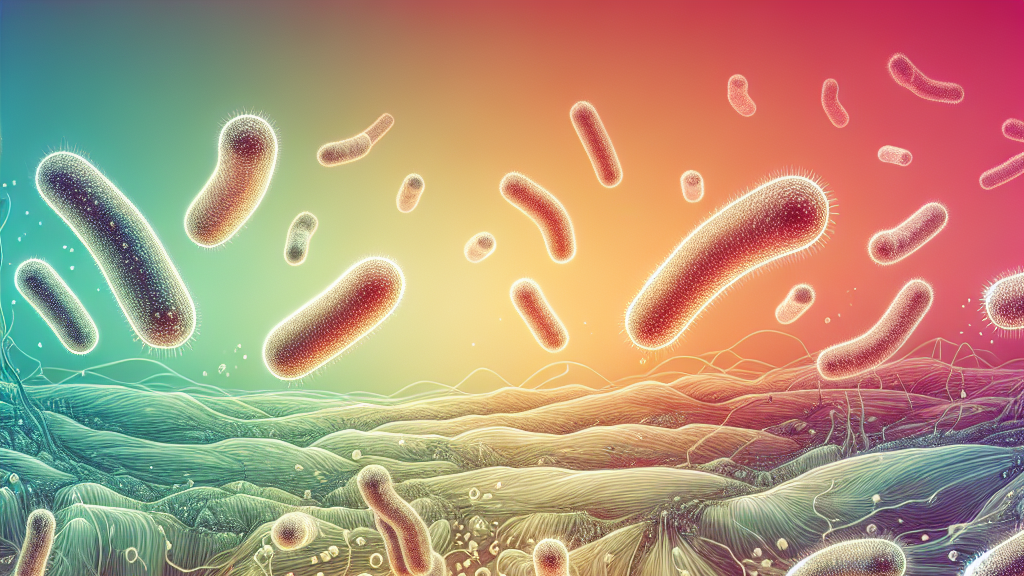
Chemotaxis allows bacteria to find food in a way similar to how fish find food in a lake.
FAQs
What unexpected discovery did scientists make about cell movement?
Scientists found that using the fractional Laplacian can better model how cells move in tricky environments by allowing for superdiffusion.
How does chemotaxis affect biological processes?
Chemotaxis enables cells like sperm to follow chemical signals towards their targets, improving efficiency in reproduction and other processes.
Why does this research use the fractional Laplacian?
The fractional Laplacian is used to incorporate the nonlocal nature of superdiffusion processes, providing more accurate models than traditional diffusion.
How might these findings impact fertility treatments?
This research could lead to improved fertility treatments by enhancing our understanding of how sperm and egg cells find each other in the body.
What are the broader implications of this research?
Beyond fertility, this research could improve our understanding of various biological processes and disease transmission, offering new intervention strategies.
Background
Chemotaxis is the movement of organisms or cells in response to a chemical stimulus. It’s an essential biological process, especially for cells like bacteria or sperm, which move toward higher concentrations of specific chemicals they find attractive. Anomalous diffusion refers to a kind of movement that’s not regular or ‘normal’—it’s often seen in systems with irregular environments or obstacles. This study uses the fractional Laplacian, a mathematical tool, to better understand these irregular movements as it accurately represents complex travel paths over distances that traditional models can’t capture effectively.
History
Chemotaxis has been studied for decades, ever since scientists realized that bacteria could move toward nutrients in their environment. The study of anomalous diffusion is more recent, arising from observed phenomena where particles didn’t follow predictable paths. This specific research builds on previous work by kiselev et al. to incorporate advanced mathematical models, like the fractional Laplacian, to predict cellular movements under these complex conditions more accurately.
Based on “Chemotaxis and Reactions in Anomalous Diffusion Dynamics” by Crystianne L. De Andrade, Alexander A. Kiselev, available on arXiv (arxiv.org/abs/2412.19940), used under CC BY 4.0 (creativecommons.org/licenses/by/4.0/).