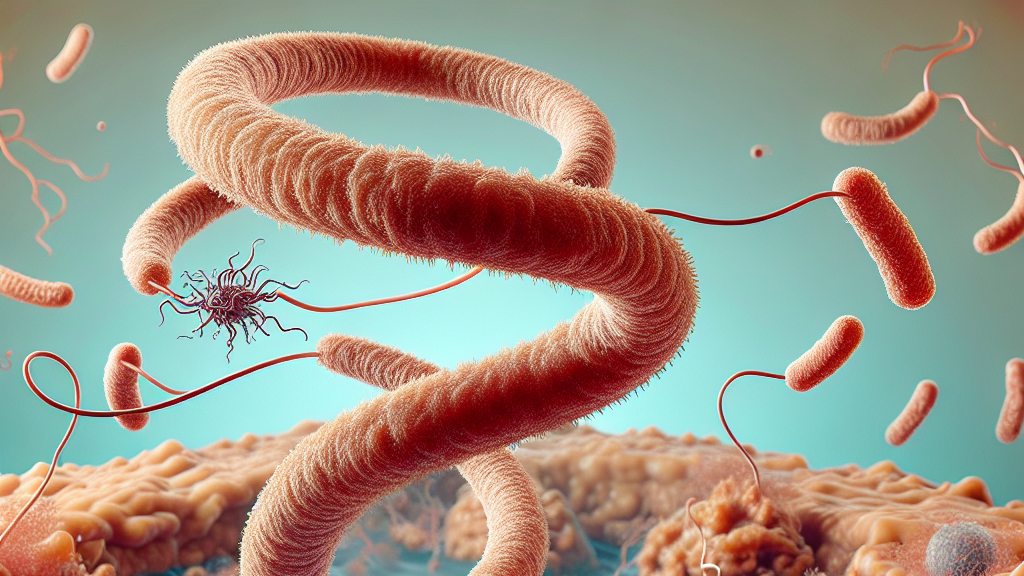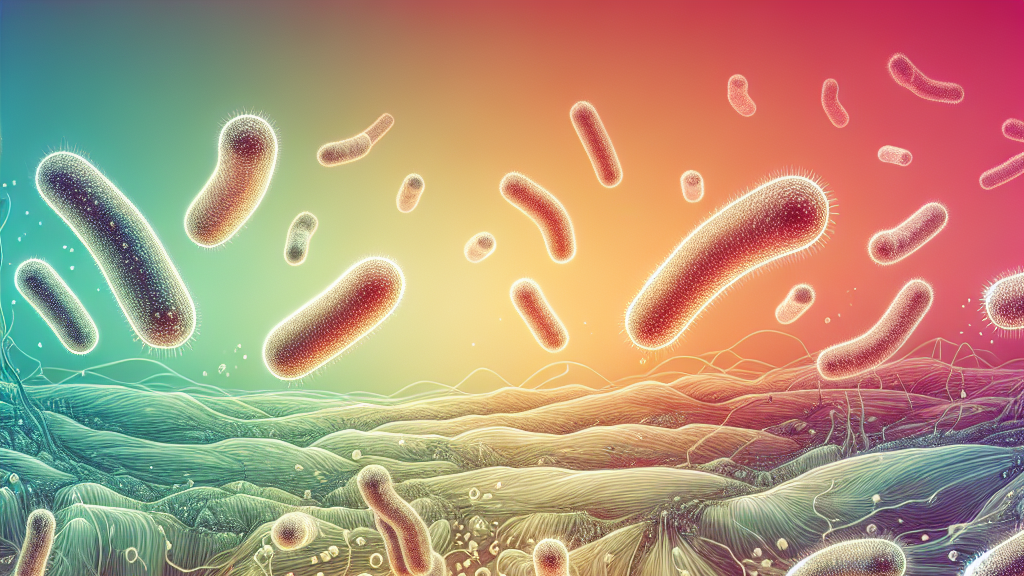
Imagine bacteria having a little get-together party when things get tough. That’s right! When faced with stressful situations, Escherichia coli, a common type of bacteria, doesn’t go solo. Instead, these tiny creatures team up and form clusters, much like how people might form groups on a crowded beach to secure a spot. This behavior allows them to survive better through thick and thin.
Scientists have delved deep into this fascinating bacterial trait by combining hands-on experiments with mathematical models. They found that these bacteria can detect chemical signals in their environment and move toward or away from certain areas, in a process known as chemotaxis. Over time, these movements lead to the formation of large clusters, showing a fascinating dance of bacteria that helps them thrive even under stress. The study further revealed that these clusters influence each other and tend to merge over time, forming even larger bacterial communities.
This research could have some eye-popping implications for our future. For example, by understanding how bacteria clump together, we might develop innovative ways to prevent harmful bacteria from forming such clusters in our bodies, possibly aiding in tackling stubborn infections. Imagine being able to control bacteria like traffic, ensuring they don’t cause problems in the wrong places. This could open new doors in medicine and bacterial control strategies, making our lives a little bit healthier in the long run.
Did you know that Escherichia coli bacteria can form clusters visible to the naked eye when stressed? These clusters can contain hundreds of thousands of bacteria!
FAQs
What is bacterial chemotaxis and why is it important?
Bacterial chemotaxis is the process by which bacteria move in response to chemical signals in their environment. It’s crucial because it helps bacteria find food, avoid toxins, and coordinate behaviors like forming protective clusters.
How do Escherichia coli bacteria respond to stress?
Escherichia coli bacteria respond to stress by forming large clusters or condensates. This behavior helps them survive harsh conditions by working together, showcasing a fascinating form of bacterial teamwork.
What role does mathematical modeling play in studying bacteria?
Mathematical modeling helps scientists predict and understand complex bacterial behaviors, like their clustering under stress. By simulating different conditions, models can reveal insights into bacterial dynamics that experiments alone might miss.
How might this research impact future medical treatments?
Understanding how bacteria form clusters can guide the development of treatments that disrupt harmful bacterial gatherings, potentially leading to new strategies for combating infections.
What did this study reveal about bacterial cluster behavior?
The study showed that when stressed, bacteria form clusters that grow and merge over time, a process influenced by chemical surroundings and modeled accurately by mathematical equations.
Background
Chemotaxis is the movement of organisms, such as bacteria, either toward or away from a chemical stimulus. This process is vital for bacteria to efficiently locate nutrients and avoid harmful substances. Escherichia coli, a well-studied bacterium, uses chemotaxis to navigate its surroundings, adjusting its swimming patterns in response to environmental signals. Understanding this behavior is crucial for studying bacterial communities and their survival tactics.
History
The study of bacterial chemotaxis has been a focus for over a century, beginning with the pioneering work that elucidated how bacteria respond to chemical gradients. Since then, advances in microscopy and computational modeling have propelled forward our understanding of these microscopic movements. This current research builds on foundational work by employing sophisticated models to simulate bacterial clustering, offering valuable insights into the collective behaviors of these microorganisms under stress.
Based on “Pattern formation in e. coli through negative chemotaxis: instability, condensation, and merging” by Nir Livne, Ady Vaknin, Oded Agam, available on arXiv (arxiv.org/abs/2410.14244), used under CC BY 4.0 (creativecommons.org/licenses/by/4.0/).