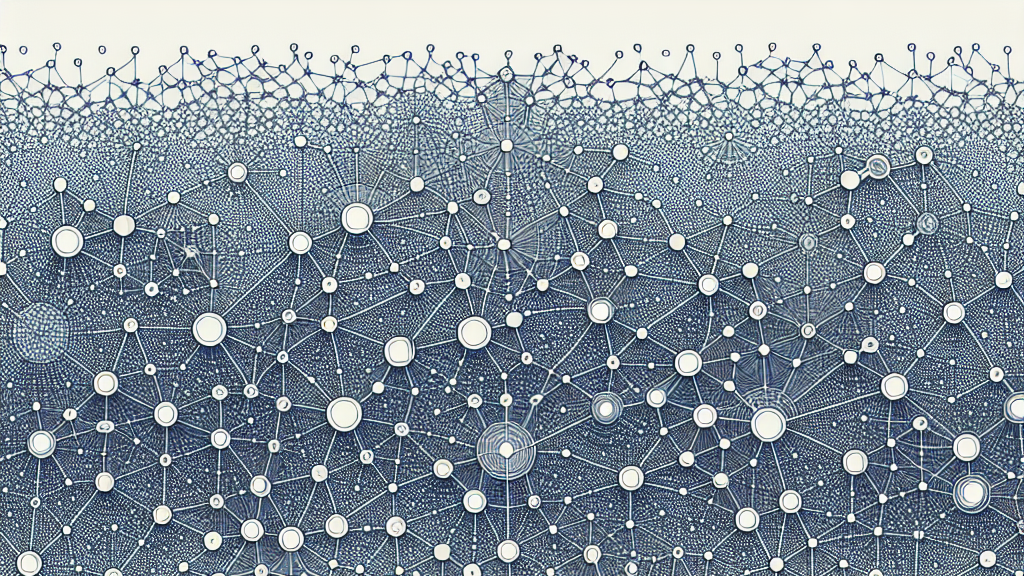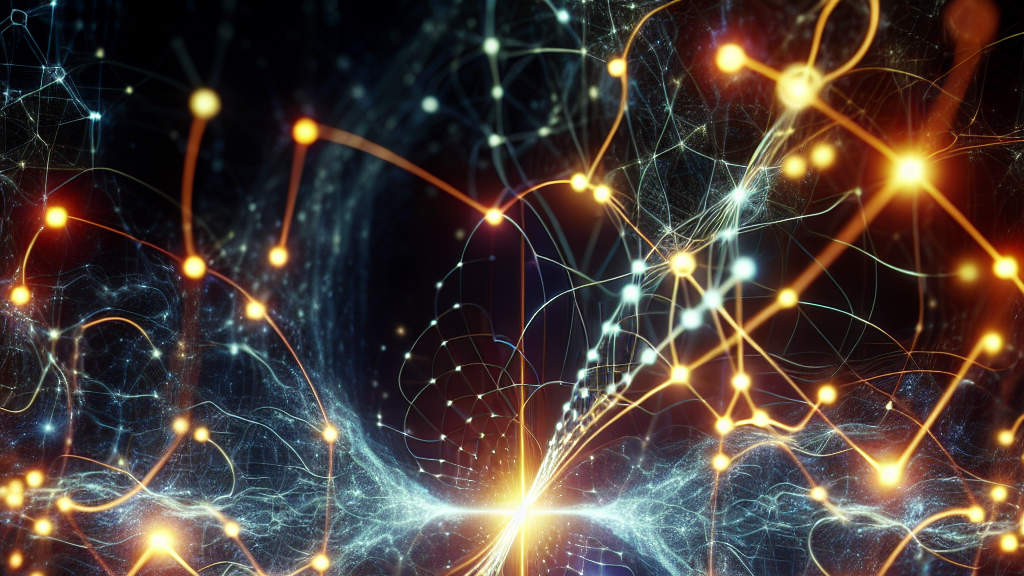
Imagine all the knowledge, connections, and data you rely on each day are like roads on a map. But what if random potholes start appearing, making some roads unusable? That’s what scientists call the ‘random dilution model,’ and it could change how we think about the internet, social networks, and even biological systems.
In this research, scientists tested how random disruptions (like flipping a coin to decide if a road stays or goes) affect the connectivity of networks. They played with different kinds of networks, from simple grids to complex webs. Interestingly, they found that even when the network is almost broken apart, it doesn’t completely lose its connectivity as expected. Instead, it enters a unique ‘Griffiths phase’ where connectivity declines slowly and predictably.
This research could reshape how we build and fix networks. Imagine applying this understanding to maintain steady internet service even during massive load spikes or improve social media platforms where connections don’t break down suddenly. It could even mean creating more resilient biological models to stand up to disease and disruption. This randomness might just make our world a little more stable!
The ‘Griffiths phase’ is named after physicist Robert Griffiths, highlighting an unexpected slowing down of network breakdown—even amidst chaos!
FAQs
Why does the contact process matter for networks?
The contact process helps scientists understand how connections in a network change or survive when some parts randomly fail. It’s crucial for maintaining stable and reliable networks in technology, biology, and society.
What is the random dilution model?
The random dilution model involves randomly removing parts of a network to study how these changes impact overall network connectivity and behavior.
How does the Griffiths phase affect network connectivity?
During the Griffiths phase, network connectivity decreases at a predictable rate, even when many connections are lost, offering insights into maintaining functionality amidst widespread failures.
What real-world systems could benefit from this research?
Internet infrastructure, social media platforms, and biological systems could use this research to enhance resilience and functionality even when parts of the system fail.
What makes the critical value for the contact process unique?
Unlike in typical cases where connectivity is lost suddenly, the critical value for the contact process in a random environment shows a gradual and predictable loss, which can be leveraged to design more robust networks.
Background
The contact process is a model used in mathematics and physics to simulate how something spreads across a network. Imagine a virus spreading through a population or information through social media. The ‘random dilution model’ takes this idea and adds randomness by removing random links, like enforcing social distancing or network failures. Researchers study how this affects the network’s overall connectivity, especially looking for ‘critical values’ or tipping points where the network suddenly loses connectivity.
History
The concept of modeling networks with random alterations isn’t new. Past research explored networks using the Erdos-Renyi model, where connections are randomly assigned. What is unique about this study is how it examines the effects of removing connections and predicts network behavior past critical thresholds. Previous findings highlighted sudden breakdowns as networks approached these thresholds, but this research identifies more nuanced, predictable changes, refining our understanding of network resilience.
Based on “Unusual properties of contact processes on percolated graphs” by Rick Durrett, available on arXiv (arxiv.org/abs/2403.18592), used under CC BY 4.0 (creativecommons.org/licenses/by/4.0/).