Connect with us

Search by keyword

Math

Can Smarter Energy Models Save Time and Resources?

Imagine a smarter way to plan energy systems that cuts down on time and resources without sacrificing quality. This research uses graph theory to streamline complex energy models, saving time and boosting efficiency, especially as systems get bigger.

Can Smarter Energy Models Save Time and Resources
✨Researched by humans. Explained by robots. Learn more.

What if planning our energy systems could be faster, more efficient, and not lose any accuracy? That might seem like a dream, but this research shows it’s entirely possible by reimagining the way we model these systems. By using a graph-based approach, scientists have found a way to create smaller, more efficient energy models that don’t sacrifice the details we need to make them accurate.

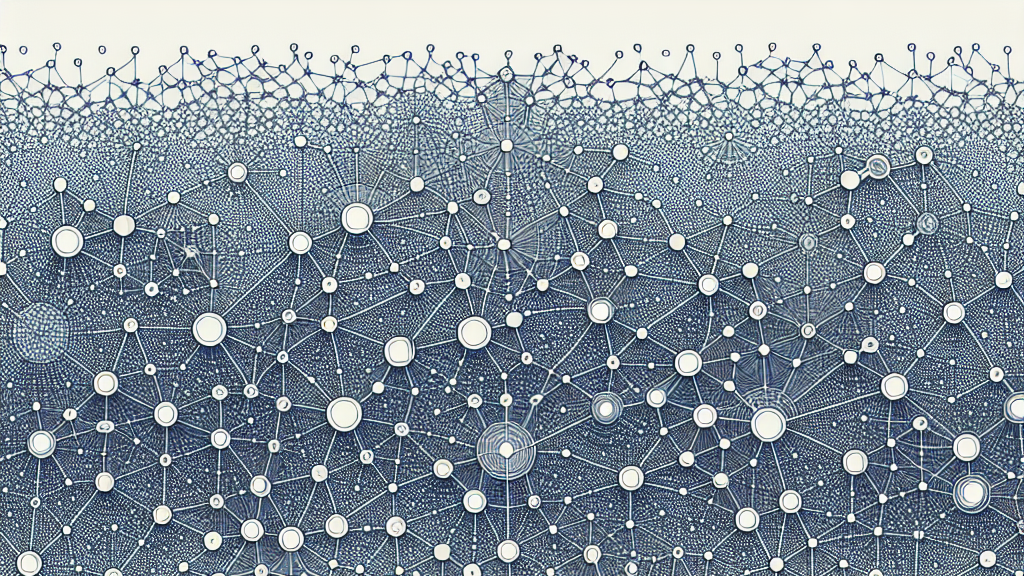
This new method treats every energy asset as a single piece of a puzzle, connecting them with flow lines. Because each piece is simpler and there’s no need for extra nodes or components, the entire system becomes more compact. When tested, this method reduced the complexity of the models—saving a significant amount of time when it comes to solving these large puzzles. Importantly, it proves that you don’t have to simplify your model to the point of losing information to make them more efficient. This breakthrough is revolutionary for energy system design.

Imagine a massive city powered by clean energy that doesn’t take forever to plan or require wasting resources. With this new approach, the planning phase of such clean energy projects could be significantly shorter and more cost-effective. This means that as our need for larger systems grows, especially with the push for renewable energy, we have a smarter way to handle this growth. It not only saves time and money but also ensures that our planet gets the energy systems it needs without unnecessary delays.

Graph theory, which inspired the new model design, is a mathematical study of how things connect and is also used in everything from social networks to the internet.

FAQs

How does using graph theory change energy system models?

Graph theory simplifies energy system models by representing assets and flows more efficiently, eliminating unnecessary nodes and connections, which reduces complexity without losing detail.

What benefits does this new energy model approach offer?

It offers reduced model size, faster computation times, and maintains accuracy, making it ideal for large-scale energy systems, saving both time and resources.

Why is model fidelity important in energy systems?

Model fidelity ensures that the models accurately represent real-world systems, which is crucial for making reliable decisions and plans in energy management and transition.

What potential applications exist for these updated energy models?

These efficient models can be crucial for planning renewable energy projects in cities, improving grid management, and streamlining energy transitions as global energy demands grow.

Background

Linear programming models are vital for optimizing complex energy systems, helping to balance supply and demand, cost, and efficiency. However, as these systems become more detailed, the models often have to be simplified to stay manageable, which can lead to less accuracy. By utilizing graph theory, which examines connections and relationships within a network, this research presents a more streamlined approach that maintains detail without unnecessary complexity.

History

Energy system models have long relied on linear programming to optimize resources and predict outcomes, but as systems became more detailed, challenges arose in maintaining model accuracy. Previous attempts to streamline these models often came with trade-offs in accuracy. This study builds on these foundations by using graph theory to provide a breakthrough solution that enhances model efficiency and fidelity.

Based on “Debunking the Speed-Fidelity Trade-Off: Speeding-up Large-Scale Energy Models while Keeping Fidelity” by Diego A. Tejada-Arango, Germán Morales-España, Juha Kiviluoma, available on arXiv (arxiv.org/abs/2407.05451), used under CC BY 4.0 (creativecommons.org/licenses/by/4.0/).


Trending

Latest

Can AI Save Water Discover How

Computers

AI is transforming the tech world, but it uses lots of water! A new tool, SCARF, helps us measure and reduce AI's water footprint,...

Whats a Forbush Decrease and Why Should We Care Whats a Forbush Decrease and Why Should We Care

Space

Scientists just observed the biggest solar storm event in years, revealing unexpected cosmic ray patterns. Understanding these changes could help us protect our technology...

Can Cars Spot Danger Faster Than Humans Can Cars Spot Danger Faster Than Humans

Computers

Think about how quickly you react when something unexpected happens on the road. This research brings us closer to creating self-driving cars that can...

Can Fear of the Other Stop Social Harmony Can Fear of the Other Stop Social Harmony

Physics

Fear of the unknown might make it harder for people to agree and get along. This study shows that when people have strong xenophobic...

Can AI Revolutionize Breast Cancer Diagnosis Can AI Revolutionize Breast Cancer Diagnosis

Electricity

This research introduces a groundbreaking AI model that can accurately assess HER2-positive breast cancer using widely accessible staining methods, potentially revolutionizing how we diagnose...

Can AI Transform Your Singing into a Choir Can AI Transform Your Singing into a Choir

Computers

Imagine singing solo and having AI turn you into a choir. This research unveils a groundbreaking AI tool that transforms your voice into rich...

You May Also Like

Computers

This study uses a technique called ray marching to create stunning visual images of flat surfaces, making it easier to explore shapes and patterns...

Math

Imagine a future where your energy bills are lower because your energy storage system knows the best times to store and use energy. This...

Computers

Discover how studying the arrangement of pages and queues in graph layouts might lead to more efficient data organization and processing tricks that could...

Electricity

Ever wondered if your car could drive perfectly on its own, handling turns and bumps like a pro? This research is taking us a...

Math

Exploring how random factors impact network connectivity could offer insights to optimize real-world systems, from internet connections to social networks.

Computers

What if we could use machine learning to decode how the parts of a complex system interact? This research opens the door to understanding...

Math

This research shows how math can predict patterns in complex networks, potentially transforming fields like computer science and network design by revealing hidden patterns...

Computers

Discover the Blindfolded Spiderman Optimization, a new approach that redefines how we solve problems using a playful yet powerful method, outperforming many existing techniques...

Computers

This research explores new ways to understand and potentially trick large language models more safely and efficiently, which could help us improve AI systems...

Copyright © 2024 8ig8rain.

Disclaimer: The content on 8ig8rain.com consists of AI-generated summaries of scientific abstracts from arXiv. Please note that most arXiv abstracts are preprints and may not have undergone formal peer review. While these summaries aim to convey key ideas and potential applications, they are provided for informational purposes only and should not be interpreted as validated scientific findings or professional advice. The summaries are intended to educate, spark curiosity, and inspire further exploration of science.