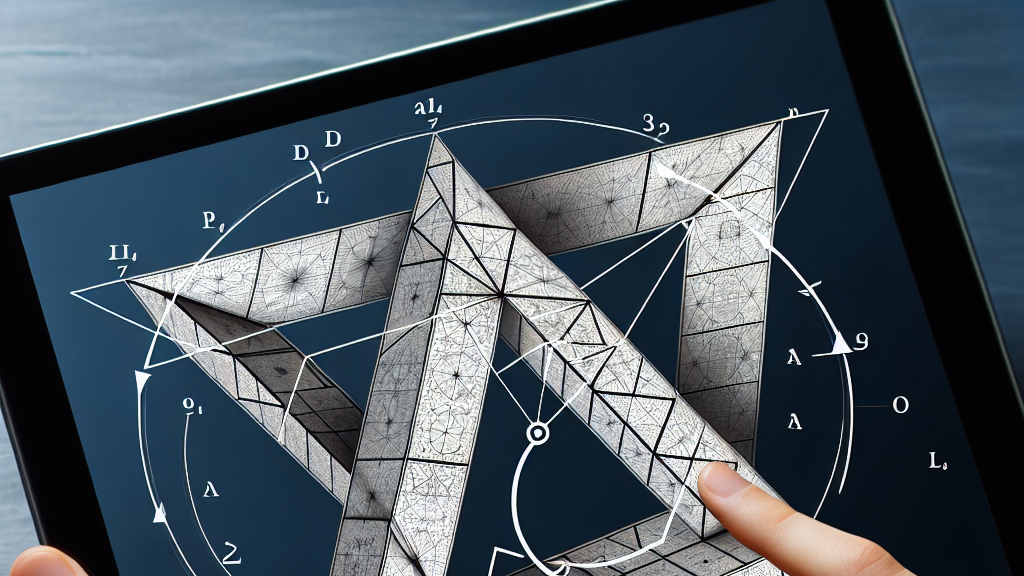
**Did you know tiny math maps can control massive geometric worlds?** These aren’t the maps you use to get home, but mathematical ones used by scientists to explore complex shapes. Imagine being able to chart the way curves interact with specific shapes and boundaries in a giant puzzle, and suddenly, you have a tool that can help decode the fabric of space. That’s what we call Gromov-Witten invariants, and they’re a big deal in understanding our world on a micro-level. Recently, researchers cracked part of this puzzle in a type of shape called a toric variety, which is like a mathematical playground made of intersecting lines and edges. By counting how many ways curves can fit into this shape, scientists can predict behaviors and solve equations with real-world applications. For instance, understanding these tiny maps can help in designing new technologies, from advanced cameras to complex algorithms that power your favorite computer animations. By mastering these complex interactions, scientists can help pave the way for innovations we haven’t even dreamed of yet. Imagine robots that can move skillfully through unpredictable terrains or virtual reality worlds that mimic our universe’s geometry seamlessly. These intriguing little math maps could be the key to making that future a reality.
Mathematical mappings, like the ones studied here, can predict the interactions of curves with surfaces in space, paving the way for new technological advances.
FAQs
What are log Gromov-Witten invariants?
Log Gromov-Witten invariants are mathematical tools that count how many ways curves can map onto geometric shapes, helping researchers understand complex spatial interactions.
Why is counting these mappings important?
Counting these mappings allows scientists to predict and solve equations that have real-world applications, from advanced graphics to enhanced robotic navigation.
How does this research impact technology?
By understanding how curves interact with shapes, this research can lead to innovations in fields like animation, robotics, and virtual reality by improving design and interaction processes.
What was recently proven about these invariants?
Researchers completely determined the log Gromov-Witten invariants for a specific type of shape, resolving a long-standing conjecture about how curves map in a projective bundle.
What are toric varieties?
Toric varieties are complex geometric shapes that serve as a playground for mathematicians to explore curve mappings, with potential applications in various scientific and engineering fields.
Background
Gromov-Witten invariants are mathematical concepts used to understand how curves map onto different surfaces or shapes. They help mathematicians study the interactions of geometric elements, especially in toric varieties, which are complex shapes formed from intersecting lines and edges. These invariants are crucial in figuring out the ‘rules’ of geometry that we can apply to technology and science.
History
The study of Gromov-Witten invariants originated in the late 20th century when researchers sought to apply mathematical concepts to understand geometric structures better. They have since been employed in various fields, from string theory in physics to complex geometry in mathematics. Recent research has focused on refining these concepts in specific varieties like toric spaces, leading to breakthroughs in understanding their potential applications.
Based on “Enumerating log rational curves on some toric varieties” by Carl Lian, Naufil Sakran, available on arXiv (arxiv.org/abs/2506.13975), used under CC BY 4.0 (creativecommons.org/licenses/by/4.0/).