Imagine having a friend who listens to you without judgment, provides encouragement, and doesn’t mind when you repeat yourself. AI chatbots are stepping into this role, offering many people a convenient and accessible companion for mental health support. These digital buddies are becoming increasingly popular because they can be confidential, non-judgmental, and available 24/7. But, like any friend, they have their quirks and limitations.
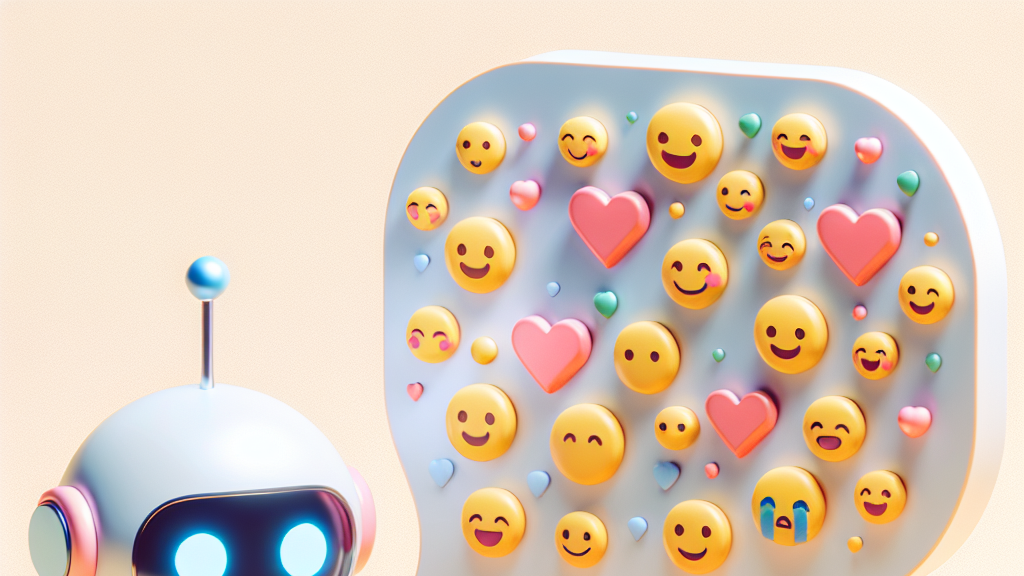
Research into AI chatbots has shown that people often use them as ‘Five-minute therapists’ or simply as someone to talk to in times of need. In scenario-based tests, it became clear that chatbots try to add a personal touch by using names, emojis, and quickly suggesting professional help when needed. However, users found some inconsistencies, like unexpected tone changes or inappropriate responses. Plus, chatbots often struggle to recognize and act on ‘red flag’ language, which is crucial for crisis situations.
The insights gained from this study are steering both technology developers and mental health care professionals towards creating safer, more reliable AI chatbots. In the future, you might find these digital companions becoming an integral part of your wellness journey, helping you manage stress and emotions anytime you need someone to ‘talk to’. This could transform how individuals cope with challenging times, providing a bridge to professional help when necessary or simply offering a friendly virtual ear.
Did you know? Some AI chatbots use emojis to make conversations feel more personal and engaging!
FAQs
How are AI chatbots helping mental health?
AI chatbots provide a non-judgmental space for users to share their thoughts and feelings. They’re available 24/7 and can offer basic support and encouragement, acting as a ‘Five-minute therapist’ for those in need.
What are the concerns regarding AI chatbots in mental health?
While chatbots are helpful, they have limitations such as privacy issues, inconsistent tone, and difficulty in recognizing crisis situations. Users worry about the security of their sensitive information and the chatbots’ ability to appropriately handle critical situations.
Can AI chatbots replace professional mental health care?
No, AI chatbots are not a replacement for professional care. They can offer temporary support and guidance but are best used alongside, or as a bridge to, professional mental health services.
How do AI chatbots add a personal touch?
Some AI chatbots use names, emojis, and consistent reassuring language to create a more personal and engaging experience for users, making them feel like they’re talking to a friendly companion.
What improvements can be made to AI chatbots in mental health?
Future enhancements may include better recognition of red flag language, more consistent communication, and improved privacy measures to ensure user trust and effectiveness in crisis situations.
Background
Large language models (LLMs) are advanced AI systems that can understand and generate human-like text. These models power AI chatbots, allowing them to simulate conversation and respond to user queries. In the context of mental health, chatbots utilize these capabilities to offer support by engaging users in dialogue, providing reassurance, and suggesting professional help when necessary.
History
The development of AI chatbots for mental health is a recent phenomenon, propelled by advancements in LLM technology. Initially, chatbots were simple text-based programs with a limited conversational scope. However, as AI technology evolved, chatbots became more sophisticated, offering more personalized and human-like interactions. This study builds on previous research by focusing on the specific application of chatbots in a mental health setting, highlighting both their potential and their challenges.
Based on “Artificial Empathy: AI based Mental Health” by Aditya Naik, Jovi Thomas, Teja Sree, Himavant Reddy, available on arXiv (arxiv.org/abs/2506.00081), used under CC BY 4.0 (creativecommons.org/licenses/by/4.0/).