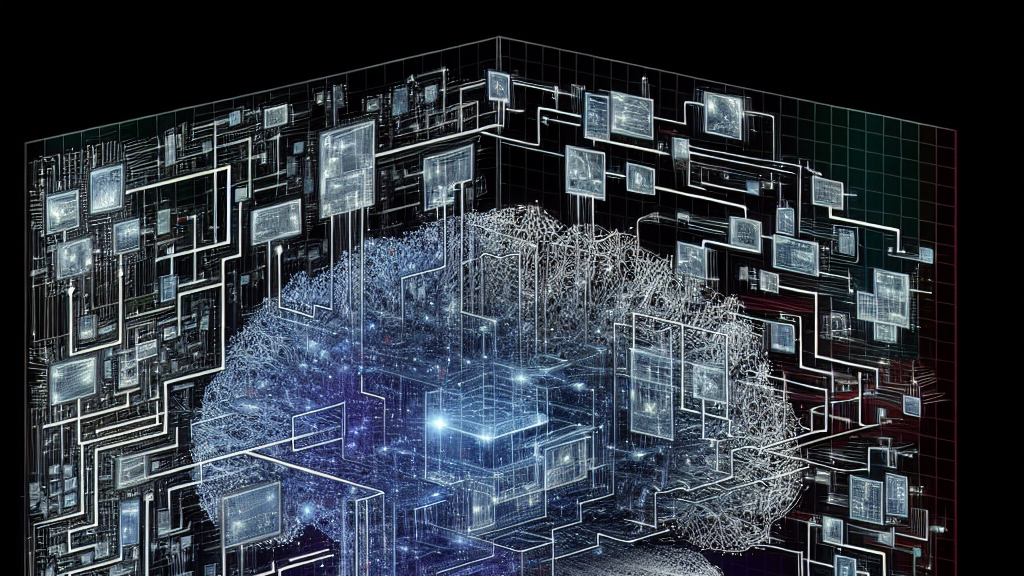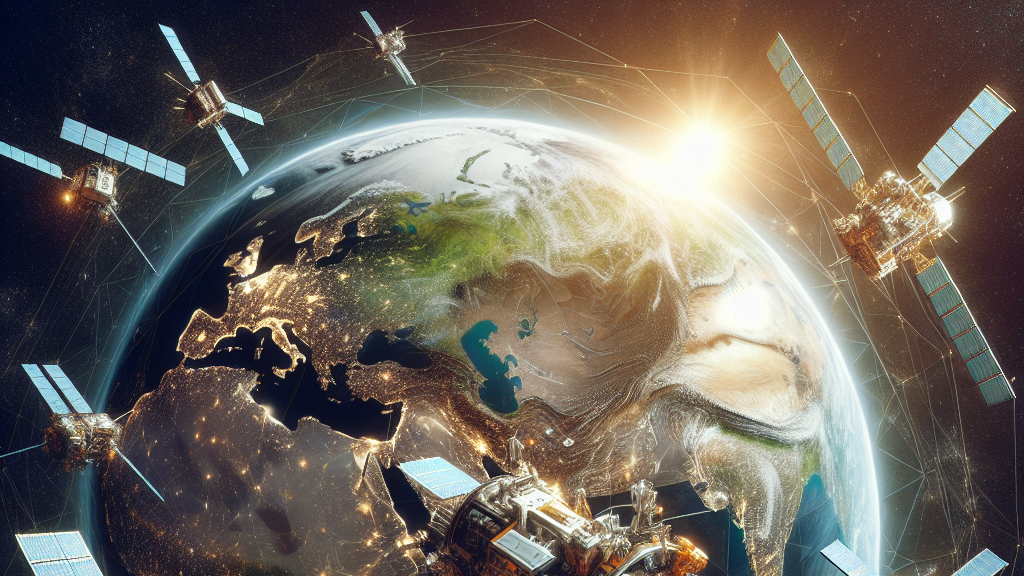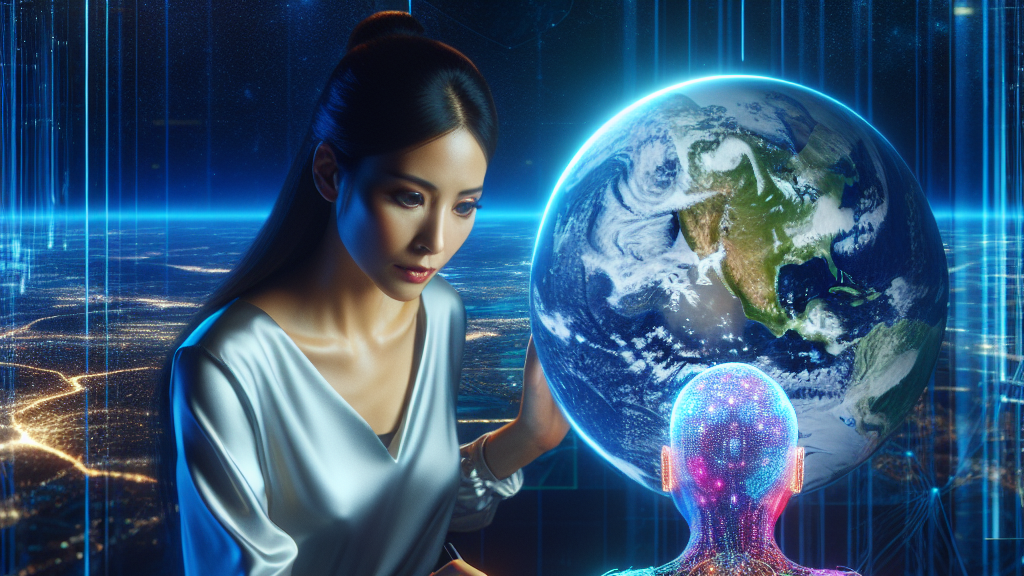
Imagine if a machine could help you understand the world in a way that makes everything click, much like having a superpowered study buddy who never sleeps. Noumenal Labs is working on AI that doesn’t just crunch numbers or spit out data but genuinely ‘gets’ the world in a fundamental way. Instead of thinking of AI as a brainy robot taking over tasks, picture it as a partner that helps uncover new knowledge and solutions, enhancing human understanding.
The key to this approach lies in tackling something called the ‘grounding problem,’ which basically means ensuring that AI systems aren’t just dealing with abstract words or figures but are anchored in the real world we all live in. By teaching machines to view the world like scientists do, integrating data from various angles and dimensions, these systems could generate insights and discoveries by themselves. This could open up new possibilities in fields as diverse as healthcare, climate change, and even everyday problem-solving.
In the future, we might see AI helping experts design better models of disease spread, predict weather patterns with unprecedented accuracy, or even help you find new ways to organize your clutter. It’s like having an incredibly smart assistant that doesn’t just follow orders but also contributes ideas on how to approach challenges more effectively. With this kind of AI, we’d be able to navigate complexities with ease, backed by data-driven insights that are grounded in the tangible world.
Did you know? AI grounded in real-world understanding could one day help us predict natural disasters before they happen!
FAQs
How does this AI research tackle the grounding problem?
The research focuses on creating AI systems that aren’t just processing words but are connected to the real-world context we live in, much like how humans perceive and understand their surroundings.
What makes this machine super intelligence different?
This machine super intelligence is designed to mirror human scientific inquiry, generating new knowledge that builds on our understanding, rather than just providing data outputs.
How can AI grounded in the real world benefit us?
Such AI can provide more accurate insights and solutions across various fields like healthcare and climate science, helping us navigate complex issues with better-informed decisions.
Why does this research prioritize real-world modeling?
Real-world modeling ensures AI systems are practically useful and relevant, offering solutions that apply to tangible scenarios rather than abstract concepts.
What are potential use cases for this kind of AI?
Potential use cases include realistic 3D world modeling, analyzing multi-dimensional time series data, and improving fields like healthcare, weather prediction, and everyday problem-solving.
Background
At the heart of this research is the grounding problem, a concept in AI that deals with ensuring systems understand concepts in a real-world context. It’s not enough for machines to recognize words or data patterns; they must anchor this knowledge in the physical world to be truly intelligent. The research advocates for AI that follows the scientific method, an approach based on observation, experimentation, and reasoning, which is crucial for generating new, grounded knowledge.
History
The grounding problem has been a significant challenge in artificial intelligence. Early AI systems were often criticized for their lack of real-world comprehension, as they were mostly designed for specific tasks like chess. The evolution from task-specific algorithms to more generalized, understanding-based AI has been a gradual process. This research builds on that progress by emphasizing the creation of models that can autonomously discover and reason, continuing from groundbreaking work in machine learning and cognitive sciences.
Based on “Noumenal Labs White Paper: How To Build A Brain” by Maxwell J. D. Ramstead, Candice Pattisapu, Jason Fox, Jeff Beck, available on arXiv (arxiv.org/abs/2502.13161), used under CC BY 4.0 (creativecommons.org/licenses/by/4.0/).