Connect with us

Search by keyword

Quantum Biology

Can We Map Aging at the Cellular Level?

Scientists created a new way to see how our cells change as we age, using powerful computer algorithms and gene data. This research might revolutionize how we understand aging and could lead to new ways to stay healthier longer.

Can We Map Aging at the Cellular Level
✨Researched by humans. Explained by robots. Learn more.

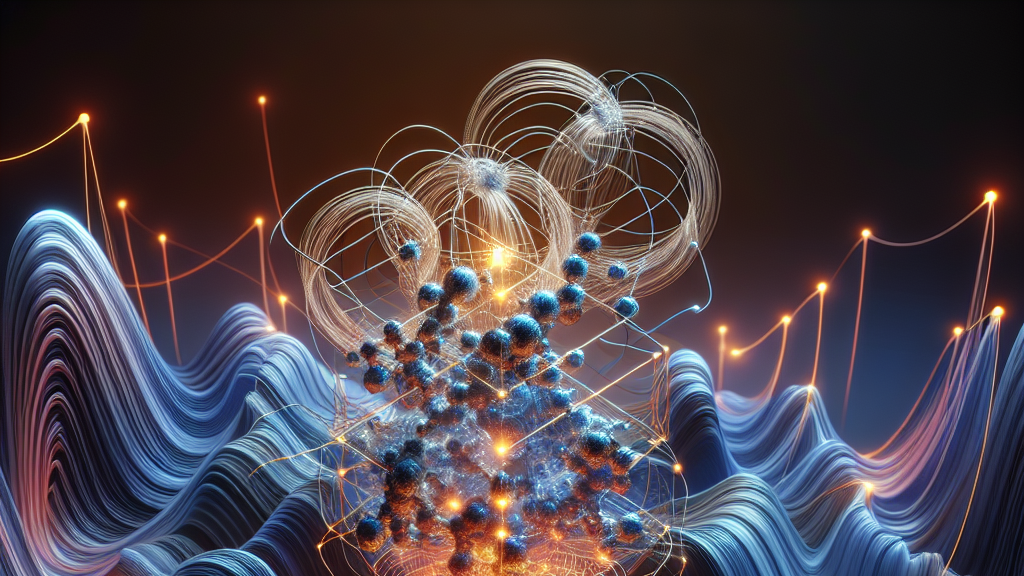
Imagine if we could actually map how our cells change as we age, just like plotting weather patterns. Scientists have proposed a groundbreaking theory that aging could be understood as a dissipative process, much like a river losing energy as it meanders downstream. They’ve developed a powerful computational method using a special type of machine learning to examine how our genes express themselves as we age.

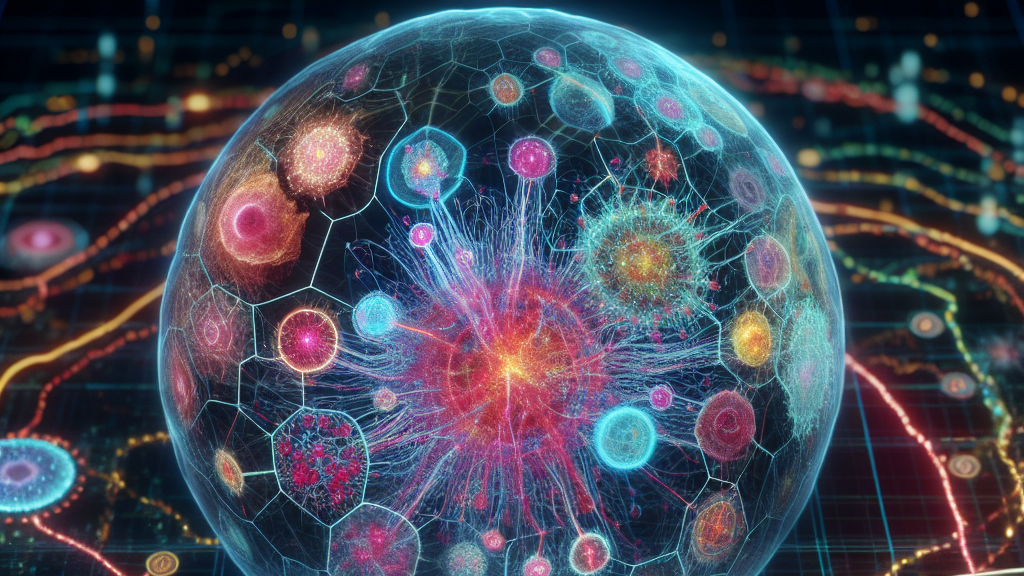
By analyzing gene expression data, researchers introduced age as a unique factor in their calculations, which allowed them to see how cellular processes shift and transform over time. This fancy process involved something called ergodic theory, a complex way to look at patterns that change over time, and it led to a unique Cellular Aging Map (CAM). This map reveals fascinating patterns, like how our gene ‘signatures’ shift and transition in nonlinear ways, and how these changes could indicate where cell processes might go awry.

So, why does this matter? Understanding aging at such a detailed level could completely change how we think about staying healthy. Imagine doctors using these cellular maps to pinpoint when and how different tissues start to age and then tailoring treatments to keep those tissues younger for longer. This could mean that getting older may not necessarily mean facing the traditional challenges of aging, like certain diseases or reduced vitality. It’s a mind-blowing concept with the potential to redefine longevity and health treatments.

Ergodic theory, used in this study, is often used in physics and mathematics to understand systems that evolve over time, making its application in biological aging truly innovative!

FAQs

What is the new theory for aging based on dynamical systems?

The new theory suggests that aging is a dissipative process in biological systems, similar to how energy is lost in systems with non-conservative forces. This is assessed using mathematical and computational methods.

How does the machine learning algorithm help in understanding cellular aging?

By analyzing gene expression data while factoring age as a unique token, the machine learning algorithm provides insights into the dynamics of cellular aging, helping to map gene and age-related changes.

What is a Cellular Aging Map (CAM)?

The CAM is a visual representation of how gene expressions change over time, providing insights into the patterns and transitions that occur in different cell types as they age.

Why is understanding aging at the cellular level important?

Having a detailed understanding of cellular aging could lead to tailored medical treatments that address age-related changes, potentially improving health and longevity.

What are potential future applications of this research in everyday life?

This research could lead to new ways to monitor and treat age-related diseases, allowing people to maintain health and vitality longer into their lives.

Background

Aging is a complex process where our cells change over time, losing efficiency and sometimes leading to diseases. Scientists believe that understanding these changes exactly, like tracking energy loss in physical systems, can help us tackle aging better.

History

The study of aging has long been focused on biological markers or external symptoms. What makes this study unique is its use of mathematical models from physics to view aging as a dissipative process, a concept usually reserved for understanding energy systems, not biology. This builds upon traditional theories but adds a fresh perspective using modern machine learning.

Based on “The Dissipation Theory of Aging: A Quantitative Analysis Using a Cellular Aging Map” by Farhan Khodaee, Rohola Zandie, Yufan Xia, Elazer R. Edelman, available on arXiv (arxiv.org/abs/2504.13044), used under CC BY 4.0 (creativecommons.org/licenses/by/4.0/).

Trending

Latest

Can AI Save Water Discover How

Computers

AI is transforming the tech world, but it uses lots of water! A new tool, SCARF, helps us measure and reduce AI's water footprint,...

Whats a Forbush Decrease and Why Should We Care Whats a Forbush Decrease and Why Should We Care

Space

Scientists just observed the biggest solar storm event in years, revealing unexpected cosmic ray patterns. Understanding these changes could help us protect our technology...

Can Cars Spot Danger Faster Than Humans Can Cars Spot Danger Faster Than Humans

Computers

Think about how quickly you react when something unexpected happens on the road. This research brings us closer to creating self-driving cars that can...

Can Fear of the Other Stop Social Harmony Can Fear of the Other Stop Social Harmony

Physics

Fear of the unknown might make it harder for people to agree and get along. This study shows that when people have strong xenophobic...

Can AI Revolutionize Breast Cancer Diagnosis Can AI Revolutionize Breast Cancer Diagnosis

Electricity

This research introduces a groundbreaking AI model that can accurately assess HER2-positive breast cancer using widely accessible staining methods, potentially revolutionizing how we diagnose...

Can AI Transform Your Singing into a Choir Can AI Transform Your Singing into a Choir

Computers

Imagine singing solo and having AI turn you into a choir. This research unveils a groundbreaking AI tool that transforms your voice into rich...

You May Also Like

Computers

Imagine a machine capable of reading ancient books, deciphering complex pages with precision! This research is paving the way for AI to unlock the...

Computers

Dive into the world of AI mistrust, where computers don't always know when they're wrong! Discover how teaching AI to see like us might...

Computers

Discover potential dangers in using artificial intelligence to count votes and how even a small error could change election outcomes.

Computers

Researchers are testing if blending sound and sight in AI could boost its smarts. This matters because it could mean smarter tech in devices...

Computers

This research introduces a new dataset to help AI systems more accurately identify images of minors online, potentially protecting children from digital exploitation and...

Computers

This research dives into why some AI models seem like mysterious black boxes, while others are easy to understand, using insights from computer science...

Electricity

This groundbreaking study shows how advanced sensors and AI can improve methane leak detection from space, helping us fight climate change more effectively. With...

Computers

Exciting new research shows our computers can be even smarter in predicting chemical reactions and properties by using hidden layers of information, promising faster...

Quantum Biology

Researchers are tapping into advanced technology, like machine learning, to decipher the complex roles of shape-shifting proteins in our bodies. Unlocking these secrets could...

Copyright © 2024 8ig8rain.

Disclaimer: The content on 8ig8rain.com consists of AI-generated summaries of scientific abstracts from arXiv. Please note that most arXiv abstracts are preprints and may not have undergone formal peer review. While these summaries aim to convey key ideas and potential applications, they are provided for informational purposes only and should not be interpreted as validated scientific findings or professional advice. The summaries are intended to educate, spark curiosity, and inspire further exploration of science.