Imagine a future where we can see earthquakes coming, allowing us to prepare and minimize damage. That’s the exciting potential behind recent research using advanced deep-learning technologies to predict microearthquakes, which are tiny tremors caused by injecting fluids deep underground. These systems could help industries safely harness geothermal energy, store carbon dioxide, or even manage underground water resources more effectively.
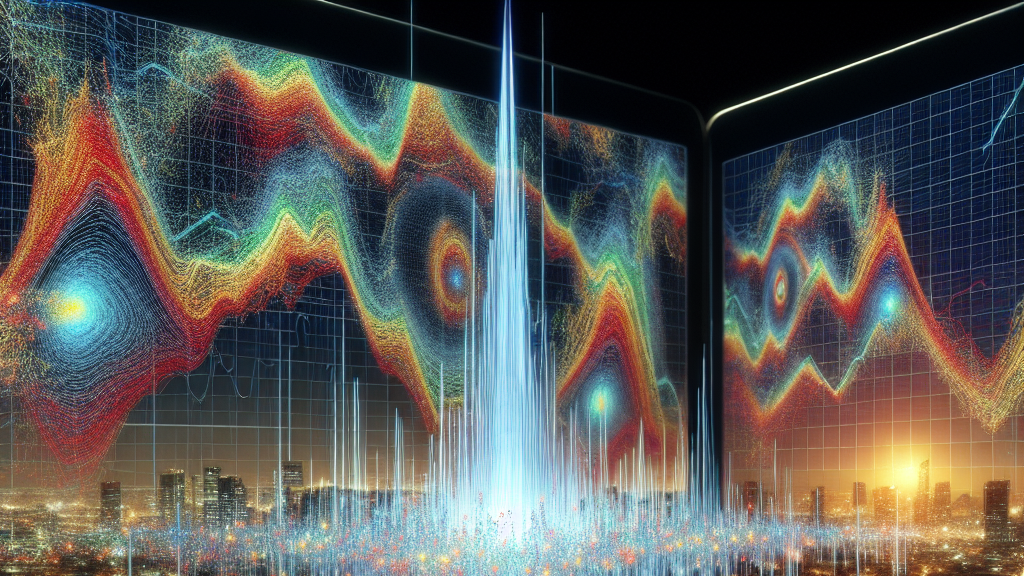
The new method involves a type of artificial intelligence that learns from past earthquake data and fluid injection histories. This smart system can predict the number of small earthquakes, their size, and how far they’ll reach. It’s kind of like having a weather forecast but for underground movements. And it’s super accurate, with predictions that hold up even over a 15-second horizon, giving us valuable time to assess risk and take action.
Imagine applying this technology to enhance geothermal systems, a renewable energy source, by ensuring that the risks of earthquakes are minimized. It could transform geo-engineering fields by providing real-time insights into the stress and permeability of subsurface reservoirs, helping decision-makers design safer operations. It’s not just about predicting earthquakes—it’s about creating a safer, more efficient future.
Microearthquakes are so small that humans can’t feel them, but they carry crucial information about underground stress and permeability!
FAQs
What are microearthquakes and why are they important?
Microearthquakes are tiny tremors often too small for humans to feel, but they provide vital information about the underground stress and permeability changes due to fluid injections, which are key for safe geo-engineering operations.
How does deep learning help in earthquake prediction?
Deep learning uses artificial intelligence to learn from past earthquake data and predict future seismic activity accurately, helping industries like geothermal energy safely manage seismic risks.
What are the practical applications of predicting microearthquakes?
Predicting microearthquakes can improve safety in geothermal energy systems, carbon dioxide sequestration, and other subsurface operations by providing real-time insights into underground stress and helping to design safer, more efficient operations.
Background
Microearthquakes are tiny seismic events that happen when fluids are injected deep underground, such as in geothermal energy production or carbon storage. Monitoring these small quakes helps scientists understand how stress and permeability change in the earth, which is crucial for managing the risks associated with these processes. Deep learning, a form of artificial intelligence, excels at recognizing patterns in data, making it ideal for predicting how these microearthquakes will unfold over time.
History
The study of earthquakes has fascinated scientists for centuries, but predicting them has always been a challenge. Traditional methods relied on historical data and complex physical models, but they often fell short in accuracy. The emergence of deep learning has revolutionized many fields, including earthquake prediction, by offering more precise and timely forecasts. This research builds on previous work by integrating advanced AI techniques to forecast microearthquakes triggered by human activities, refining our ability to assess and mitigate seismic risks.
Based on “Forecasting the spatiotemporal evolution of fluid-induced microearthquakes with deep learning” by Jaehong Chung, Michael Manga, Timothy Kneafsey, Tapan Mukerji, Mengsu Hu, available on arXiv (arxiv.org/abs/2506.14923), used under CC BY 4.0 (creativecommons.org/licenses/by/4.0/).