Connect with us

Search by keyword

Physics

Could Antimatter Defy Gravity?

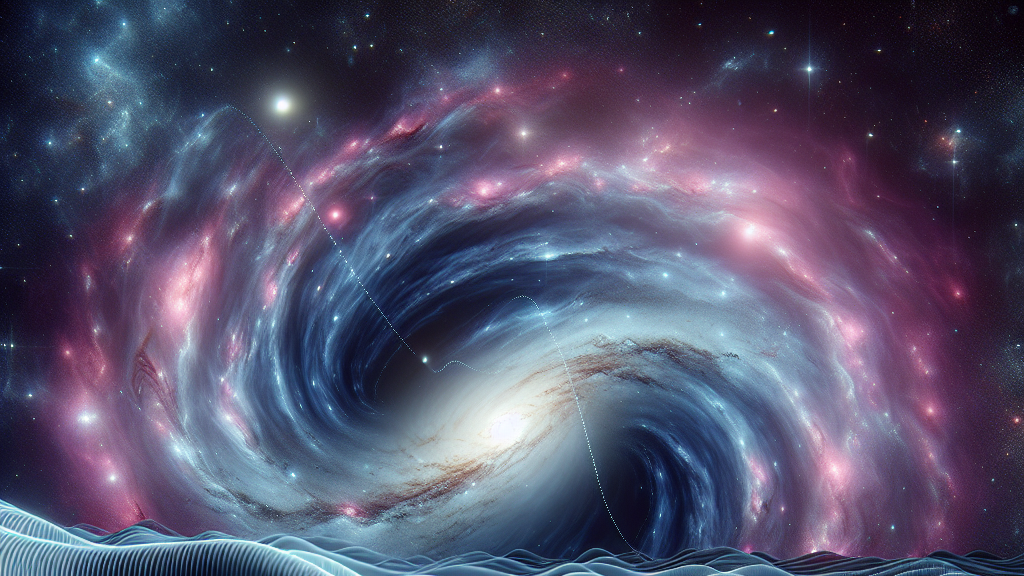
Imagine a world where antimatter repels matter, potentially solving the mystery of why our universe is expanding so fast. Scientists are diving deep into this idea, challenging old notions and exploring new cosmic possibilities.

Could Antimatter Defy Gravity
✨Researched by humans. Explained by robots. Learn more.

What if everything you know about how things fall was turned on its head? Imagine if, instead of being pulled down by gravity, some things were actually pushed away. That’s the kind of groundbreaking idea scientists are exploring in their quest to understand the mysterious forces driving the expansion of our universe. Antimatter, the exotic counterpart to the particles that make up everything around us, might just hold the key.

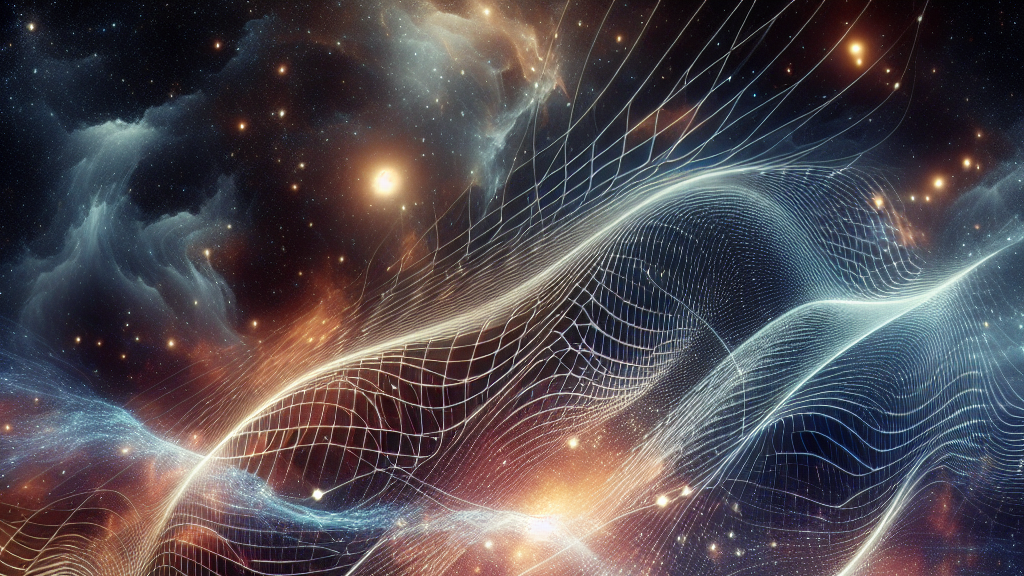
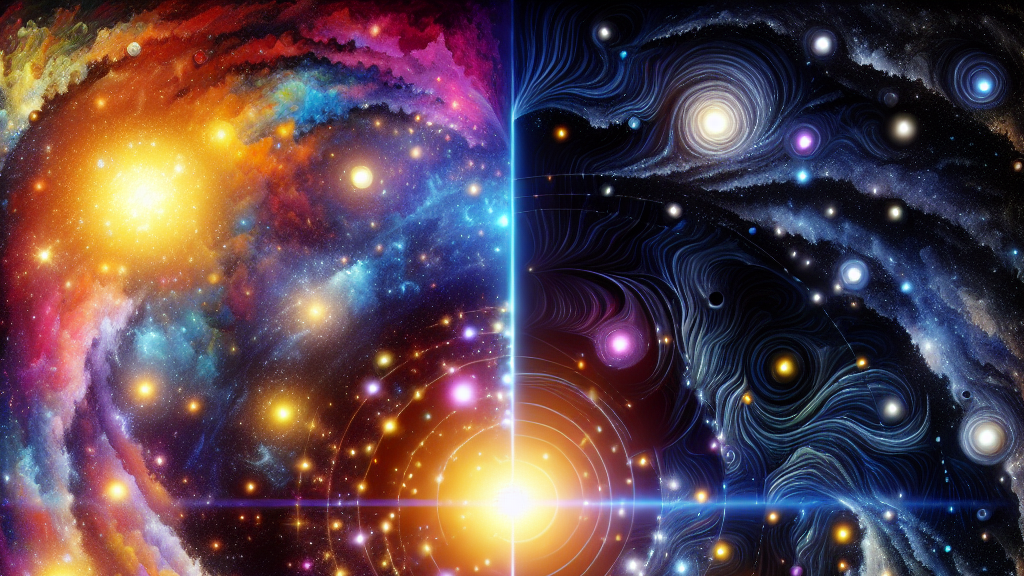
Researchers are looking at antimatter through a new lens, combining the insights of Einstein’s theory of general relativity with something called CPT symmetry. This leads to a wild idea: that antimatter, when viewed as inhabiting an ‘inverted’ space-time, could be repelled by normal matter. Recent experiments with antihydrogen suggest these ideas aren’t as straightforward as they sound, but they open up tantalizing possibilities for explaining why the universe keeps expanding without relying on dark energy.

This understanding could change everything we thought we knew about gravity. It might pave the way for future technologies that harness antimatter for unprecedented space travel or energy sources. For now, while this might feel like something straight out of a sci-fi movie, the implications reach right into our everyday understanding of the universe. Hang tight, because the journey to unravel these cosmic mysteries is just beginning!

Did you know that the idea of gravity being repulsive instead of attractive could help explain why the universe is expanding at an accelerating rate?

FAQs

What is antimatter and why is it important for this research?

Antimatter is the opposite version of the particles that make up everything we see around us. It’s important because understanding its properties might solve the mystery of why the universe is expanding so rapidly.

How does CPT symmetry relate to antimatter and gravity?

CPT symmetry is a principle that suggests combining Charge, Parity, and Time reversal could result in unexpected behaviors, like repulsion between matter and antimatter, potentially explaining cosmic phenomena.

What did the ALPHA-g experiment reveal about antimatter?

The ALPHA-g experiment showed that antihydrogen atoms are attracted to Earth, suggesting antimatter does not experience gravitational repulsion in our space-time as initially thought.

How could this research change our everyday life?

If we unlock how antimatter interacts with gravity, we could develop new technologies like advanced energy sources or even methods for space travel based on these principles.

What new possibilities does repulsive gravity suggest for the universe?

Repulsive gravity could mean the universe can expand without dark energy, providing a new perspective on cosmic expansion and potentially revolutionizing our understanding of physics.

Background

The core of this research revolves around two big ideas: general relativity, which describes how gravity works, and CPT symmetry, a principle from quantum physics suggesting that particles have symmetrical partners in terms of charge, parity, and time. This means under certain mathematical transformations, these partners could behave unexpectedly, like showing gravitational repulsion instead of attraction.

History

The concept of antimatter has captivated scientists since its prediction in the early 20th century. Major breakthroughs include the discovery of the positron, the antimatter counterpart of the electron. This research builds on efforts to unify relativity and quantum mechanics, tackling questions that have puzzled cosmologists for decades about the universe’s accelerated expansion.

Based on “Antimatter Gravity and the Results of the ALPHA-g Experiment” by Massimo Villata, available on arXiv (arxiv.org/abs/2503.03846), used under CC BY 4.0 (creativecommons.org/licenses/by/4.0/).

Trending

Latest

Can AI Save Water Discover How

Computers

AI is transforming the tech world, but it uses lots of water! A new tool, SCARF, helps us measure and reduce AI's water footprint,...

Whats a Forbush Decrease and Why Should We Care Whats a Forbush Decrease and Why Should We Care

Space

Scientists just observed the biggest solar storm event in years, revealing unexpected cosmic ray patterns. Understanding these changes could help us protect our technology...

Can Cars Spot Danger Faster Than Humans Can Cars Spot Danger Faster Than Humans

Computers

Think about how quickly you react when something unexpected happens on the road. This research brings us closer to creating self-driving cars that can...

Can Fear of the Other Stop Social Harmony Can Fear of the Other Stop Social Harmony

Physics

Fear of the unknown might make it harder for people to agree and get along. This study shows that when people have strong xenophobic...

Can AI Revolutionize Breast Cancer Diagnosis Can AI Revolutionize Breast Cancer Diagnosis

Electricity

This research introduces a groundbreaking AI model that can accurately assess HER2-positive breast cancer using widely accessible staining methods, potentially revolutionizing how we diagnose...

Can AI Transform Your Singing into a Choir Can AI Transform Your Singing into a Choir

Computers

Imagine singing solo and having AI turn you into a choir. This research unveils a groundbreaking AI tool that transforms your voice into rich...

You May Also Like

Physics

A simple tabletop experiment with a levitating magnet could unlock secrets about mysterious forces beyond gravity. Understanding these forces might change how we view...

Physics

This research is diving into the mystery of a potential 'fifth force' that could rewrite our understanding of gravity, using a magnetically levitated particle....

General Relativity and Quantum Cosmology

This study explores the possible fate of our universe—revealing that under certain conditions, it might one day collapse into a Big Bang-like singularity or...

General Relativity and Quantum Cosmology

Imagine wormholes, the stuff of science fiction, not just existing but possibly being stable cosmic shortcuts through space. This could change how we think...

Space

Gravitational waves, those ripples in space-time, hold the key to measuring the Universe's expansion by pulling data from galaxy catalogues. But watch out, ignoring...

Physics

Scientists are exploring if space sensors can detect dark matter through their gravitational pull. This research could redefine how we understand unseen parts of...

Physics

Scientists have used cosmic neutrinos, which travel across the universe, to investigate if mysterious quantum gravity effects can alter the very nature of space-time....

Physics

What if the universe was once driven by hidden, super-hot particles? This study explores a tantalizing possibility that dark matter had a secret role...

Space

This groundbreaking study of galaxy clusters could change what we know about gravity, potentially unlocking the secrets to how the universe works.

Copyright © 2024 8ig8rain.

Disclaimer: The content on 8ig8rain.com consists of AI-generated summaries of scientific abstracts from arXiv. Please note that most arXiv abstracts are preprints and may not have undergone formal peer review. While these summaries aim to convey key ideas and potential applications, they are provided for informational purposes only and should not be interpreted as validated scientific findings or professional advice. The summaries are intended to educate, spark curiosity, and inspire further exploration of science.