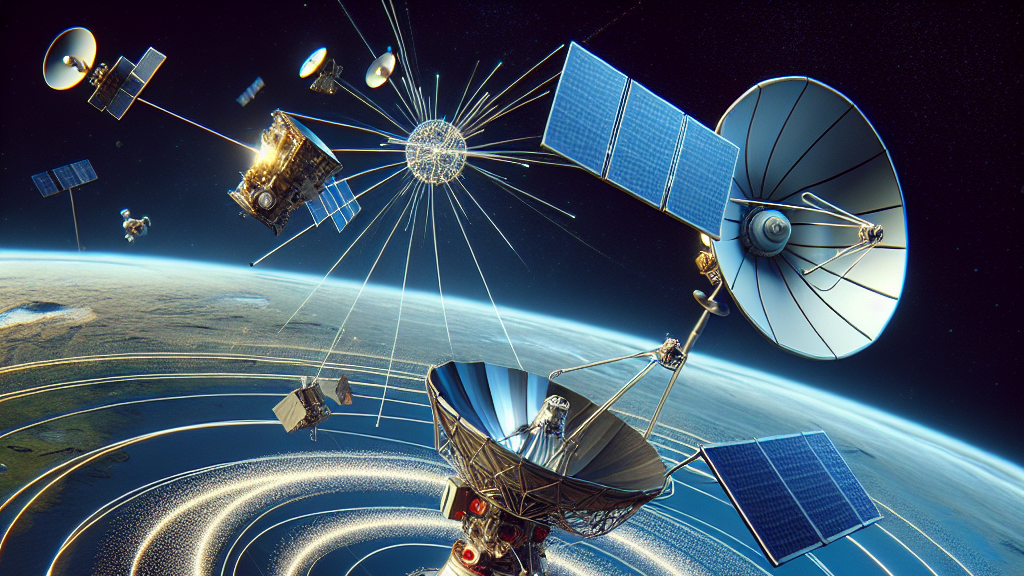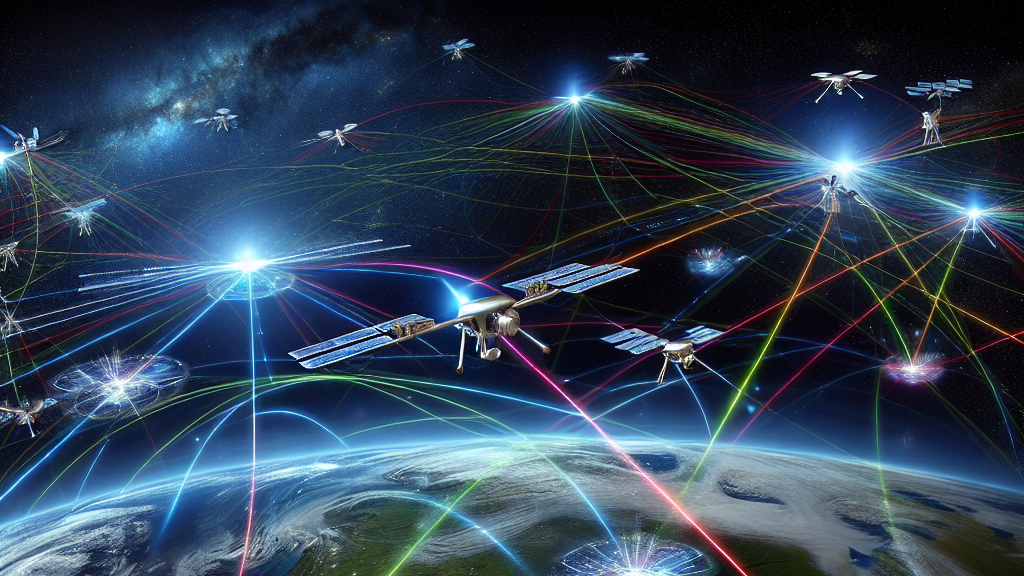
Imagine a world where your internet connection is not only fast but also incredibly secure from any eavesdropper’s prying eyes. That’s the potential of quantum networks—utilizing the bizarre and fascinating principles of quantum physics to safeguard our communications in ways traditional networks simply can’t. With quantum drones and satellites, the dream of a super-secure internet is approaching reality.
Quantum networks rely on particles of light, called photons, to transfer information in a way that, if intercepted, automatically alters the message. This makes eavesdropping virtually impossible. However, building these networks on the ground comes with its limitations. To overcome these, scientists are turning to the skies. By deploying drones, balloons, or satellites, quantum networks can expand far beyond traditional boundaries, connecting vast areas and creating a more robust and scalable system.
Think about a world where your personal data travels via laser beams between drones in the sky and orbiting satellites, ensuring it’s protected by the ultimate security measure—quantum physics. This could mean everything from secure banking transactions to private personal communications without the risk of hacking. The revolution is underway, and it might not be long before our internet infrastructure is quantum-enhanced!
A single photon in a quantum network can detect an eavesdropper because the act of spying changes its state!
FAQs
What makes quantum networks more secure than traditional networks?
Quantum networks use the properties of quantum physics, particularly the behavior of photons, to create secure communication channels. The unique property of photons in quantum networks is that any attempt at interception alters the state of these particles, making eavesdropping detectable and essentially impossible.
How do drones and satellites fit into quantum networks?
Drones, balloons, and satellites are used to create aerial links that extend the reach and scalability of quantum networks beyond ground-based limitations. By incorporating these technologies, quantum networks can cover larger areas and avoid obstacles that ground-based systems face.
How soon could quantum networks become a part of daily life?
The integration of quantum networks into everyday technology is still in its early stages, but research and development are rapidly advancing. As more aerial and satellite-based solutions are tested and refined, practical applications could emerge within the next decade, revolutionizing internet security and communication.
Why are aerial platforms like drones essential for quantum networking?
Aerial platforms like drones and satellites bypass the physical limitations and interference associated with ground-based links, enabling long-distance, seamless quantum communication networks. This increases the scalability and effectiveness of these secure systems.
What makes quantum internet different from traditional internet?
The quantum internet relies on principles of quantum mechanics, where data is transmitted through entangled particles and photons. This method ensures unparalleled security and speed, which traditional internet structures cannot match due to inherent vulnerabilities in classical data transmission.
Background
Quantum networks operate using the principles of quantum mechanics, particularly the concept of quantum entanglement and superposition, which allows for extremely secure data transmission. Photons, particles of light, are often used in these networks to carry quantum information. A key feature of quantum communication is that any attempt to intercept the data changes its state, thereby making eavesdropping detectable.
History
The concept of quantum communication has evolved from theoretical physics in the early 20th century, with significant breakthroughs in the late 20th and early 21st centuries. Early research focused on ground-based fiber optic systems, but the need for increased scalability has led to the exploration of aerial and space-based solutions, incorporating drones and satellites for larger coverage and greater security.
Based on “Towards A Global Quantum Internet: A Review of Challenges Facing Aerial Quantum Networks” by Nitin Jha, Abhishek Parakh, available on arXiv (arxiv.org/abs/2505.23603), used under CC BY 4.0 (creativecommons.org/licenses/by/4.0/).