Connect with us

Search by keyword

Physics

Did Ancient Egyptians See Nut as the Milky Way?

Did ancient Egyptians see their sky goddess, Nut, as the Milky Way? By examining coffin art, this study reveals an intriguing link, shedding light on their celestial beliefs.

Did Ancient Egyptians See Nut as the Milky Way
✨Researched by humans. Explained by robots. Learn more.

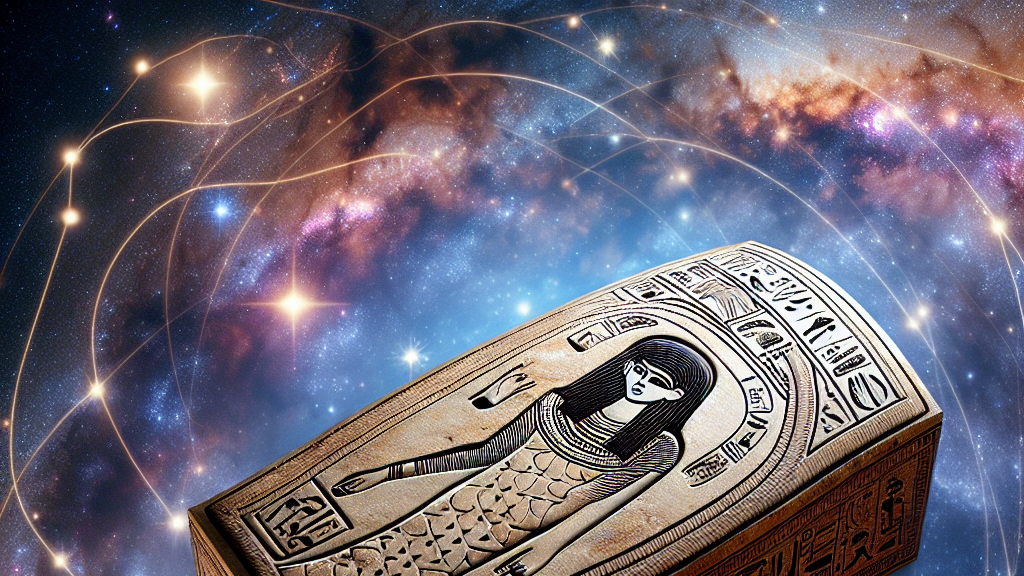
Imagine a sky filled with stars that ancient Egyptians believed to be the very body of their goddess Nut. But here’s the twist—could Nut’s depiction in artwork on coffins actually represent the Milky Way? This compelling idea has been explored by carefully studying ancient coffin art and finding common features that seem to resemble our galaxy.

The research involved analyzing an impressive collection of 555 coffin elements, including vignettes from Egypt’s 21st and 22nd Dynasties. One standout finding was from the outer coffin of a figure named Nesitaudjatakhet, where a thick, undulating black curve splits Nut’s starry form. This is thought to mimic the Great Rift in the Milky Way. Such symbolism wasn’t unique to Egypt; similar curves were used by other cultures to represent the galaxy. But here’s the catch: the rarity of this artistic feature actually suggests that while Nut was linked with the Milky Way, she wasn’t a direct representation of it.

So, what does this mean for us today? Understanding how ancient societies viewed the stars can enrich our appreciation for the night sky. It’s amazing to think how different cultures assigned meaning to similar cosmic structures. These discoveries remind us that, even thousands of years ago, people looked up at the same stars we do, finding inspiration in ways that continue to intrigue and connect us all.

Did you know? The Milky Way was depicted similarly across different cultures, including by the Navajo, Hopi, and Zuni, who saw it as an undulating curve like the Egyptians!

FAQs

How does Nut’s depiction relate to the Milky Way in ancient Egyptian art?

Ancient Egyptian coffin art sometimes includes an undulating curve on Nut’s body, symbolizing the Great Rift in the Milky Way, hinting at a connection but not a direct representation.

What was the significance of stars in Nut’s artwork?

Stars adorned Nut’s body in only a quarter of the cosmological vignettes studied, indicating a possible cultural preference for the day sky over the night during certain dynasties.

Why is Nut’s connection to the Milky Way considered rare in Egyptian art?

The undulating curve feature linking Nut to the Milky Way is rare, suggesting that while Nut was associated with the Milky Way, she was not directly represented by it.

Did other cultures depict the Milky Way similarly to the Egyptians?

Yes, various cultures, including the Navajo, Hopi, and Zuni, used similar undulating curve motifs to represent the Milky Way, showcasing a fascinating cross-cultural similarity.

Background

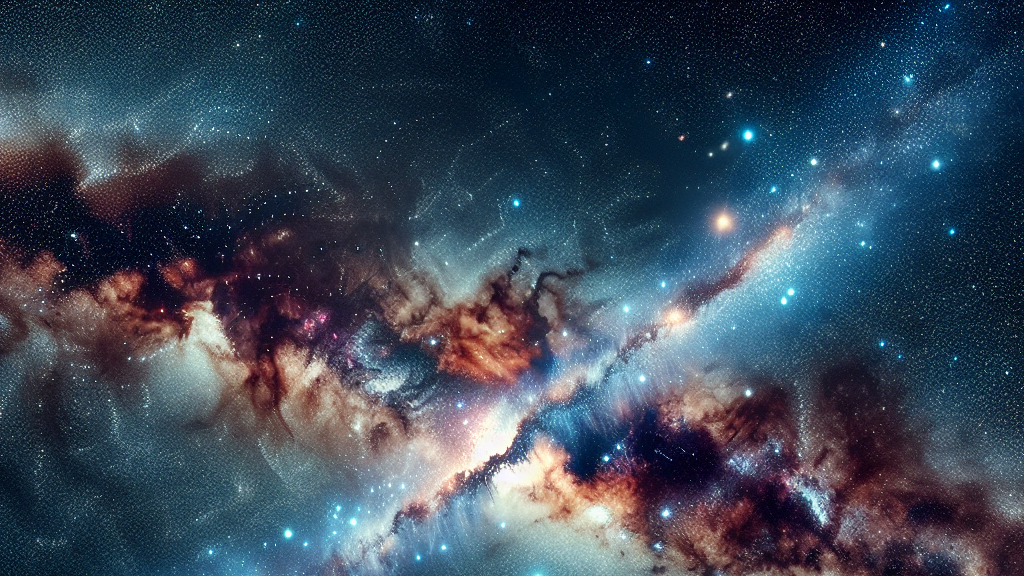
The Milky Way is a barred spiral galaxy, our home among the stars. In ancient times, different cultures saw patterns and stories in the night sky. The ancient Egyptians had a rich set of beliefs about the cosmos, often personifying celestial elements with deities like Nut, the sky goddess.

History

The idea that Nut, the Egyptian sky goddess, might represent the Milky Way has been speculated for some time. Earlier research has pointed out various celestial associations with Nut, but this study by examining coffin art seeks to more clearly define her relationship with the galaxy and other cosmic elements.

Based on “The Ancient Egyptian Cosmological Vignette: First Visual Evidence of the Milky Way and Trends in Coffin Depictions of the Sky Goddess Nut” by Or Graur, available on arXiv (arxiv.org/abs/2409.10265), used under CC BY 4.0 (creativecommons.org/licenses/by/4.0/).

Trending

Latest

Can AI Save Water Discover How

Computers

AI is transforming the tech world, but it uses lots of water! A new tool, SCARF, helps us measure and reduce AI's water footprint,...

Whats a Forbush Decrease and Why Should We Care Whats a Forbush Decrease and Why Should We Care

Space

Scientists just observed the biggest solar storm event in years, revealing unexpected cosmic ray patterns. Understanding these changes could help us protect our technology...

Can Cars Spot Danger Faster Than Humans Can Cars Spot Danger Faster Than Humans

Computers

Think about how quickly you react when something unexpected happens on the road. This research brings us closer to creating self-driving cars that can...

Can Fear of the Other Stop Social Harmony Can Fear of the Other Stop Social Harmony

Physics

Fear of the unknown might make it harder for people to agree and get along. This study shows that when people have strong xenophobic...

Can AI Revolutionize Breast Cancer Diagnosis Can AI Revolutionize Breast Cancer Diagnosis

Electricity

This research introduces a groundbreaking AI model that can accurately assess HER2-positive breast cancer using widely accessible staining methods, potentially revolutionizing how we diagnose...

Can AI Transform Your Singing into a Choir Can AI Transform Your Singing into a Choir

Computers

Imagine singing solo and having AI turn you into a choir. This research unveils a groundbreaking AI tool that transforms your voice into rich...

You May Also Like

Physics

Recent research suggests that supernova explosions in our galaxy might be key to discovering new, elusive forms of dark matter. These cosmic events could...

Physics

Supernovae might be key to unlocking the secrets of dark matter, especially through its activity in our own galaxy, the Milky Way. This research...

Space

Imagine if stars could live forever, thanks to dark matter! Upcoming telescopes may reveal a new 'dark main sequence' where stars burn longer with...

Space

When galaxies collide, they can mess up the neat streams of stars orbiting them, like the Milky Way's star streams. This research shows how...

Physics

Exploring how hidden dark matter could alter the path of neutrinos from supernovae, revealing cosmic secrets and enhancing our understanding of the universe's hidden...

Space

Discover Ursa Major III—the faintest satellite of our Milky Way ever found. Scientists reveal its surprising starry structure and what it means for our...

Space

Discover how a massive cosmic event may have torn apart a star cluster in our galaxy, revealing insights into space mysteries and stellar life...

Space

Researchers explored how small galaxies orbit larger ones, revealing they often form organized structures influenced by cosmic filaments—thin threads of matter in the universe....

Space

A new tool called Bloodhound is helping scientists better track cosmic structures that are key to understanding how galaxies like the Milky Way form....

Copyright © 2024 8ig8rain.

Disclaimer: The content on 8ig8rain.com consists of AI-generated summaries of scientific abstracts from arXiv. Please note that most arXiv abstracts are preprints and may not have undergone formal peer review. While these summaries aim to convey key ideas and potential applications, they are provided for informational purposes only and should not be interpreted as validated scientific findings or professional advice. The summaries are intended to educate, spark curiosity, and inspire further exploration of science.